Systematics Association Special Volumes – serie
Visar alla böcker i serien Systematics Association Special Volumes. Handla med fri frakt och snabb leverans.
17 produkter
17 produkter
Del 52 - Systematics Association Special Volumes
Models in Phylogeny Reconstruction
Inbunden, Engelska, 1994
2 030 kr
Skickas inom 7-10 vardagar
Phylogenetic reconstruction is the process by which biologists try to identify the evolutionary pathways which organisms have followed. The process is accomplished by examining the relationships between living and extinct organisms.With the advancement of mathematical, molecular, development, and cladistic techniques, the last ten years have seen radical changes in biologists' approaches to the problems of phylogenetic reconstruction with the advancement of mathematical, molecular, developmental, and cladistic techniques. Controversy has been abundant, and there has been a marked lack of integration of the various approaches. Views about the role of models have ranged from their being minimal to central to the process.This book examines models from a wide range of fields, at the same time providing illustrations of modern methods of classification and phylogeny reconstruction. As a result, information from development studies emerges as a significant factor in cladogram construction.
Del 43 - Systematics Association Special Volumes
Tropical Lichens
Their Systematics, Conservation, and Ecology
Inbunden, Engelska, 1991
2 373 kr
Skickas inom 7-10 vardagar
Tropical lichens are not only of interest in themselves but are of importance in the study of the ecosystems of which they are a part. Information on tropical lichens has not hitherto been readily available in book form, and the object of this volume is to synthesize what is known at present and to indicate areas where further research is needed. The material presented here is derived from a meeting held by the Systematics Association at which contributions were presented on the systematic, ecological, and biogeographical aspects of tropical lichens, together with the problems of their conservation. The resulting volume should thus be of value to a wide variety of scientists.
Del 44 - Systematics Association Special Volumes
Pollen and Spores
Patterns of Diversification
Inbunden, Engelska, 1991
2 720 kr
Skickas inom 5-8 vardagar
Pollen and spores are ubiquitous, and preserve exceptionally well. This, with their great structural diversity, offers exceptional opportunities for integrating findings from studies of both recent and fossil material, and for developing new insights into pathways and processes of diversification.This volume brings together novel approaches from such diverse fields as palaeobotany, ontogeny, molecular biology, and systematics. Three main issues are discussed: the evidence provided by the fossil record, the contribution of ontogenetic data, and methods of systematic analysis. The information provided will be of great interest and relevance to such disparate disciplines as vegetational history, geology, plant taxonomy, and plant evolution.
Del 45 - Systematics Association Special Volumes
The Biology of Free-living Heterotrophic Flagellates
Inbunden, Engelska, 1992
2 373 kr
Skickas inom 7-10 vardagar
Flagellated protozoa are important in two biological disciplines. In evolutionary biology, flagellates are critical to understanding the origins of eukaryotic cells and their diversification as protists and subsequently as plants, animals, and fungi. Flagellated protozoa also play a key role in aquatic ecosystems, where they regulate bacterial numbers and control the remineralization of nutrients. The aim of this volume is to provide a synthesis of information on these organisms. Chapters deal with the organization, diversity, ecology, and maintenance of free-living flagellates. Each chapter is written by a recognized authority in their field. The book will be of interest to protozoologists, protistologists, evolutionary biologists, and ecologists dealing with aquatic or soil ecosystems.
Del 49 - Systematics Association Special Volumes
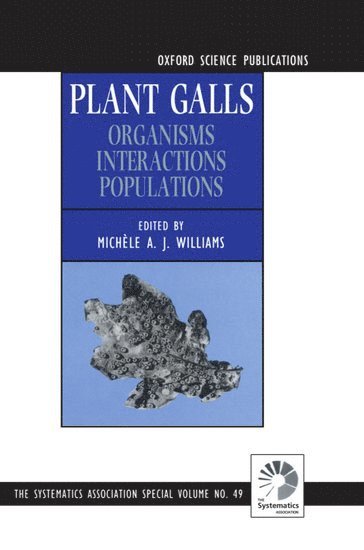
Plant Galls
Organisms, Interactions, Populations
Inbunden, Engelska, 1994
2 373 kr
Skickas inom 7-10 vardagar
Representing a wide range of scientific disciplines from ecology, evolution, molecular biology, physiology, and developmental biology, this book demonstrates the wide range of viewpoints from which plant galls can be studied.The book considers the latest issues, covering questions of classification, coevolution, ecology, physiology, and plant genetic engineering. As galls are of immense interest and debate, this book will enhance the quality of discussion surrounding these phenomena.An up-to-date picture of current topics in gall biologyMulti-disciplinary biological informationHighly topical subject in relation to coevolution
Del 51 - Systematics Association Special Volumes
The Haptophyte Algae
Inbunden, Engelska, 1994
1 131 kr
Skickas inom 5-8 vardagar
The haptophyte algae (sometimes referred to as the prymnesiophyte algae) are cosmopolitan in their distribution and are particularly important in marine ecosystems. They form a significant component of the phytoplankon and may occasionally be the dominant organisms.In recent years there has been a marked increase in these algae, partly as a result of the occurence of a number of ichthyotoxic blooms in Scandinavian coastal waters, whose effects have been dramatic in terms of both the diversity of species affected and their economic impact. It is also now recognised that some members of the Haptophyta may affect our climate through the production of volatile sulphur compounds and through the effects that calcifying biomineralization may have on ocean/atmospheric carbon dioxide exchange.This is the first monograph on the Haptophyta, each chapter having been contributed by authors experienced in their subject. The topics covered include all major aspects of haptophyte biology, such as their structure, biochemistry, ecology, climatological and economic importance, fossil record, evolution and systematics.
Häftad, Engelska, 2019
932 kr
Skickas inom 10-15 vardagar
More often than not, when people think of a neotropical forest, what comes to mind is a rain forest, rather than a dry forest. Just as typically, when they imagine a savanna, they visualize the African plains, rather than those dry woodlands and grasslands found in the Neotropics. These same preconceptions can be found among scientists, as these neotropical biomes receive nowhere near the attention they should - in terms of both research and conservation -considering the amount of land they encompass and the diversity of vegetation they contain. Neotropical Savannas and Dry Forests: Plant Diversity, Biogeography, and Conservation provides an engaging synthesis of information on the plant diversity and geography, as well as the conservation status, of these species-rich areas. This impressive compilation is the result of a plant diversity symposium that took place during an international conference on tropical savannas and seasonally dry forests held in 2003. Fifty leading scientists, representing a variety of disciplines have contributed to the chapters of this book in an effort to address three questions: What are the patterns of diversity, species-richness and endemism of the floras of neotropical seasonally dry forest and savannas? How and why did this endemism and diversity arise? Are these ecosystems adequately protected and, if not, which areas should be elevated into priorities for conservation, and how can this be best achieved?This work is the first extensive compilation of the patterns of plant biodiversity in these neotropical ecosystems. The overview also provides a summary of what is known of their evolutionary history, including an examination of the links to the development of analogous vegetation in Africa. In contrast to previously published titles that emphasize ecology and physiology, this work focuses on plant biodiversity and reviews molecular phylogenetic and molecular population genetic approache
Inbunden, Engelska, 2001
2 809 kr
Skickas inom 10-15 vardagar
A multi-author volume Major Events in Early Vertebrate Evolution examines the origin and early evolution of the backboned animals (vertebrates)-the group which comprises all fishes, amphibians, reptiles, birds and mammals, including ourselves. This volume draws together evidence from fossils, genes, and developmental biology (the study of how embryos grow and develop) to answer questions such as:*When did the first backboned animals appear?*How are the different groups of backboned animals related to each other?*How did bones and teeth evolve?The authors are all experts of international standing in their respective fields, and present some of their own recent findings in conjunction with reviews of the latest work in this fast-moving and fascinating area of biology.
Inbunden, Engelska, 2002
2 389 kr
Skickas inom 10-15 vardagar
Generally, biologists and mathematicians who study the shape and form of organisms have largely been working in isolation from those who work on evolutionary relationships through the analysis of common characteristics. Increasingly however, dialogue between the two communities is beginning to develop - but other than a handful of journal papers, there has been no formal, published discussion on this subject. This timely book summarises the interdisciplinary work that has taken place to date and will stimulate additional research into these topics. Any scientist working on evolutionary relationships will find this volume invaluable.
Häftad, Engelska, 2002
1 688 kr
Skickas inom 10-15 vardagar
A benchmark text, Developmental Genetics and Plant Evolution integrates the recent revolution in the molecular-developmental genetics of plants with mainstream evolutionary thought. It reflects the increasing cooperation between strongly genomics-influenced researchers, with their strong grasp of technology, and evolutionary morphogenetists and systematists who are more deeply rooted in comparative biology and patterns of plant evolution.The book discusses our increasing understanding of gene function and expression, along with modern phylogenies. It integrates morphological and molecular data to highlight specific key transitions in plant evolution that warrant additional intensive study. Furthermore, it explores increasing knowledge of the physical expression of plant development from disciplines such as anatomy and paleobotany. Rather than focus on the technical aspects of plant genomics, this book provides genuinely integrated explanations of plant evolution.The distinguished panel of contributors has succeeded in capturing a demanding subject in an accessible volume for a wide range of professional botanists and students in developmental biology, applied molecular biology, molecular evolution, morphogenesis, organismal botany, and theoretical systematics.
Häftad, Engelska, 1999
1 044 kr
Skickas inom 10-15 vardagar
Molecular Systematics and Plant Evolution discusses the diversity and evolution of plants with a molecular approach. It looks at population genetics, phylogeny (history of evolution) and developmental genetics, to provide a framework from which to understand evolutionary patterns and relationships amongst plants. The international panel of contributors are all respected systematists and evolutionary biologists, who have brought together a wide range of topics from the forefront of research while keeping the text accessible to students. It has been written for senior undergraduates, postgraduates and researchers in the fields of botany, systematics, population / conservation genetics, phylogenetics and evolutionary biology.
Inbunden, Engelska, 2001
3 854 kr
Skickas inom 3-6 vardagar
The growth history of a brachiopod is entombed in its shell, but research on fossil and living brachiopods has generated unanswered questions about these marine invertebrates. Several contributors to Brachiopods Past and Present comment on their differing structures and morphological detail. They use these as examples of ontogenetic and evolutionary change, as indicators of taxonomic relationships, or to discuss micro-structural shell morphology. Population studies of various species and recent progress in molecular phylogeny are presented. This single compilation is a must for postgraduate students and researchers in evolution, zoology, geology, palaeontology and related fields.
Inbunden, Engelska, 2006
2 809 kr
Skickas inom 10-15 vardagar
More often than not, when people think of a neotropical forest, what comes to mind is a rain forest, rather than a dry forest. Just as typically, when they imagine a savanna, they visualize the African plains, rather than those dry woodlands and grasslands found in the Neotropics. These same preconceptions can be found among scientists, as these neotropical biomes receive nowhere near the attention they should - in terms of both research and conservation -considering the amount of land they encompass and the diversity of vegetation they contain. Neotropical Savannas and Dry Forests: Plant Diversity, Biogeography, and Conservation provides an engaging synthesis of information on the plant diversity and geography, as well as the conservation status, of these species-rich areas. This impressive compilation is the result of a plant diversity symposium that took place during an international conference on tropical savannas and seasonally dry forests held in 2003. Fifty leading scientists, representing a variety of disciplines have contributed to the chapters of this book in an effort to address three questions: What are the patterns of diversity, species-richness and endemism of the floras of neotropical seasonally dry forest and savannas? How and why did this endemism and diversity arise? Are these ecosystems adequately protected and, if not, which areas should be elevated into priorities for conservation, and how can this be best achieved?This work is the first extensive compilation of the patterns of plant biodiversity in these neotropical ecosystems. The overview also provides a summary of what is known of their evolutionary history, including an examination of the links to the development of analogous vegetation in Africa. In contrast to previously published titles that emphasize ecology and physiology, this work focuses on plant biodiversity and reviews molecular phylogenetic and molecular population genetic approache
Inbunden, Engelska, 2008
1 758 kr
Skickas inom 10-15 vardagar
A Fresh Look at Taxonomy The most fundamental of all biological sciences, taxonomy underpins any long term strategies for reconstructing the great tree of life or salvaging as much biodiversity as possible. Initiatives reinventing taxonomy for the Internet age are leading to a resurgence in this once declining discipline. In this volume we witness the emergence of cybertaxonomy, a convergence of descriptive taxonomy with information science and computer engineering. Featuring a new paradigm of international teamwork, The New Taxonomy presents a roadmap for confronting the biodiversity crisis. Some have seen the confusion of pattern and process that followed Huxley's 1940 The New Systematics as the beginning of decline for support of taxonomy. In this answer to Huxley, contemporary taxonomists reclaim the unique mission, goals and importance of taxonomy as an independent science.
Häftad, Engelska, 2016
778 kr
Skickas inom 10-15 vardagar
Biogeography represents one of the most complex and challenging aspects of macroevolutionary research, requiring input from both the earth and life sciences. Palaeogeographic reconstruction is frequently carried out by researchers with backgrounds in geology and palaeontology, who are less likely to be familiar with the latest biogeographic techniques: conversely, biogeographic methods are often devised by neontologists who may be less familiar with the fossil record, stratigraphy, and palaeogeography. Palaeogeography and Palaeobiogeography: Biodiversity in Space and Time bridges the gap between these two communities of researchers, who work on the same issues but typically use different types of data. The book covers a range of topics, and reflects some of the major overall questions in the field such as: Which approaches are best suited to reconstructing biogeographic histories under a range of circumstances?How do we maximize the use of organismal and earth sciences data to improve our understanding of events in earth history?How well do analytical techniques devised for researching the biogeography of extant organisms perform in the fossil record? Can alternative biodiversity metrics, particularly those based on morphological measurements, enhance our understanding of biogeographic patterns and processes?This book approaches palaeobiogeography with coverage of technological applications and detailed case studies. It spans a wide selection of overlapping and integrative disciplines, including evolutionary theory, vicariance biogeography, extinctions, and the philosophical aspects of palaeogeography. It also highlights new technological innovations and applications for research. Presenting a unique discussion of both palaeogeography and palaeobiogeography in one volume, this book focuses both historically and philosophically on the interface between geology, climate, and organismal distribution.
Inbunden, Engelska, 2011
2 249 kr
Skickas inom 10-15 vardagar
Biogeography represents one of the most complex and challenging aspects of macroevolutionary research, requiring input from both the earth and life sciences. Palaeogeographic reconstruction is frequently carried out by researchers with backgrounds in geology and palaeontology, who are less likely to be familiar with the latest biogeographic techniques: conversely, biogeographic methods are often devised by neontologists who may be less familiar with the fossil record, stratigraphy, and palaeogeography. Palaeogeography and Palaeobiogeography: Biodiversity in Space and Time bridges the gap between these two communities of researchers, who work on the same issues but typically use different types of data. The book covers a range of topics, and reflects some of the major overall questions in the field such as: Which approaches are best suited to reconstructing biogeographic histories under a range of circumstances?How do we maximize the use of organismal and earth sciences data to improve our understanding of events in earth history?How well do analytical techniques devised for researching the biogeography of extant organisms perform in the fossil record? Can alternative biodiversity metrics, particularly those based on morphological measurements, enhance our understanding of biogeographic patterns and processes?This book approaches palaeobiogeography with coverage of technological applications and detailed case studies. It spans a wide selection of overlapping and integrative disciplines, including evolutionary theory, vicariance biogeography, extinctions, and the philosophical aspects of palaeogeography. It also highlights new technological innovations and applications for research. Presenting a unique discussion of both palaeogeography and palaeobiogeography in one volume, this book focuses both historically and philosophically on the interface between geology, climate, and organismal distribution.
Häftad, Engelska, 2003
996 kr
Tillfälligt slut
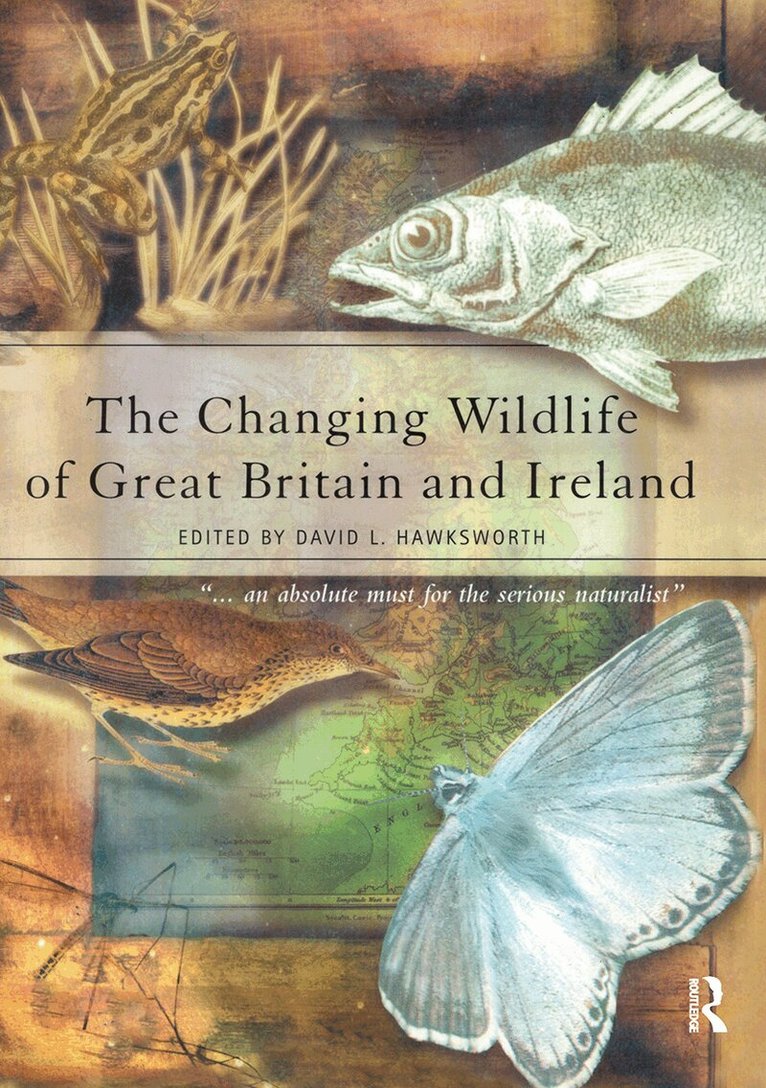
Periodic comprehensive overviews of the status of the diverse organisms that make up wildlife are essential to determining trends, threats and future prospects. Just over 25 years ago, leading authorities on different kinds of wildlife came together to prepare an assessment of their status of a wide range of organisms in Great Britain and Ireland in The Changing Flora and Fauna of Britain, also edited by Professor David L. Hawksworth CBE. Now, in The Changing Wildlife of Great Britain and Ireland, he has gathered together some of the original and also new contributors to review changes since that time and look to the future. Contributions range from viruses, diatoms, fungi, lichens, mites and nematodes; through butterflies, dragonflies, flies and slugs; to flowering plants, ferns, mammals, birds and fish. The state of knowledge in different groups is assessed, and the effectiveness of statutory and other measures taken to safeguard wildlife considered.The picture is far from bleak, ameliorating sulphur dioxide levels have benefited sensitive lichens and mosses in a dramatic way, water quality improvement has been beneficial, there have been few certain extinctions and rediscoveries of species thought to have been lost. Biodiversity Action Plans have also benefited targeted species, but habitat restoration and management for some is not always good for others.But there are worrying trends in declining populations, with an increasing number being regarded as threatened or endangered, especially in agricultural areas, and where woodland management has changed, particular threats from introduced species, and concern over the effects of climate change. Some of the smaller organisms remain poorly known, a situation unlikely to change as expertise in many is scant or being lost. This stock-check and look to the future will be a key source book to conservationists, naturalists, and professional biologists for many years to come.