The Oxford Keynotes Series - Böcker
Visar alla böcker i serien The Oxford Keynotes Series. Handla med fri frakt och snabb leverans.
10 produkter
10 produkter
1 222 kr
Skickas inom 7-10 vardagar
The popularity of Carmen endures across generations and continents, with one of the most frequently performed and instantly recognizable operatic scores of all time and a libretto derived from Prosper Mérimée's novella of the same name, written 30 years prior to the opera's 1875 debut. In Georges Bizet's Carmen--the latest volume in the Oxford Keynotes series--author Nelly Furman explores the evolution of Carmen's story and its meaning, illuminating how the titular heroine has maintained her status as a universally recognizable cultural icon.Grounded in Ludovic Halévy's and Henri Meilhac's libretto--and drawing on a wealth of mostly French critical theory--this book traces the textual, operatic, and cinematic tellings and retellings of the story, from its success as a novella in the industrial age through to its iconic position in our own cinematic era. As Furman delicately navigates the fraught terrain of racial and gendered discourse and ideology that Bizet's setting of Mérimée's work traverses, she uncovers the elements of the story that give it cultural salience and resonance, both in its own right and in support of Bizet's acclaimed musical score. In doing so, Furman reveals how past and present renderings of the Carmen tale mirror the changing concerns and shifting values of individual authors and their societies--and how each new rendering has helped to embed Carmen into the global conscience.
326 kr
Skickas inom 3-6 vardagar
The popularity of Carmen endures across generations and continents, with one of the most frequently performed and instantly recognizable operatic scores of all time and a libretto derived from Prosper Mérimée's novella of the same name, written 30 years prior to the opera's 1875 debut. In Georges Bizet's Carmen--the latest volume in the Oxford Keynotes series--author Nelly Furman explores the evolution of Carmen's story and its meaning, illuminating how the titular heroine has maintained her status as a universally recognizable cultural icon.Grounded in Ludovic Halévy's and Henri Meilhac's libretto--and drawing on a wealth of mostly French critical theory--this book traces the textual, operatic, and cinematic tellings and retellings of the story, from its success as a novella in the industrial age through to its iconic position in our own cinematic era. As Furman delicately navigates the fraught terrain of racial and gendered discourse and ideology that Bizet's setting of Mérimée's work traverses, she uncovers the elements of the story that give it cultural salience and resonance, both in its own right and in support of Bizet's acclaimed musical score. In doing so, Furman reveals how past and present renderings of the Carmen tale mirror the changing concerns and shifting values of individual authors and their societies--and how each new rendering has helped to embed Carmen into the global conscience.
966 kr
Skickas inom 5-8 vardagar
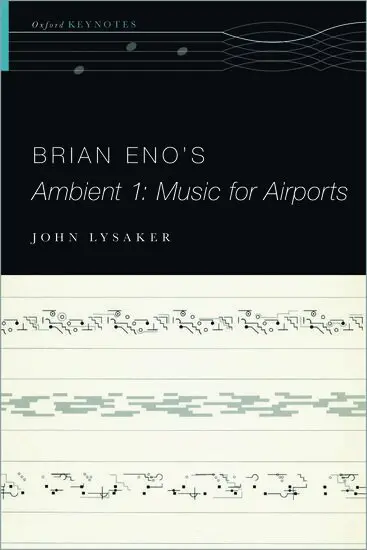
Brian Eno's seminal album Ambient 1: Music for Airports continues to fascinate and charm audiences, not only as a masterpiece of ambient music, but as a powerful and transformative work of art. Author John T. Lysaker situates this album in the context of twentieth-century art music, where its ambitions and contributions to avant garde music practice become even more apparent.To appreciate the album's multifaceted character, Lysaker advocates for "prismatic listening," an attentiveness that continually shifts registers in the knowledge that no single approach can grasp the work as a whole. Exploring each of the album's four tracks and their unique sonic arrangements, Brian Eno's Ambient 1: Music for Airports argues that the album must be approached from at least three angles: as an ambient contribution to lived environments that draws upon cybernetics and the experiments of Erik Satie, as an exploration of what John Cage has termed the "activity of sounds," and as a work of conceptual art that asks us to think freshly about artistic creativity, listening, and the broad ecology of interactions that not only make art possible, but the full range of human meaning. If one listens in this way, Music for Airports becomes a sonic image that blurs the nature-culture distinction and rescues the most interesting concerns of avant-garde music from the social isolation of concert halls and performance spaces.
175 kr
Skickas inom 5-8 vardagar
Brian Eno's seminal album Ambient 1: Music for Airports continues to fascinate and charm audiences, not only as a masterpiece of ambient music, but as a powerful and transformative work of art. Author John T. Lysaker situates this album in the context of twentieth-century art music, where its ambitions and contributions to avant garde music practice become even more apparent.To appreciate the album's multifaceted character, Lysaker advocates for "prismatic listening," an attentiveness that continually shifts registers in the knowledge that no single approach can grasp the work as a whole. Exploring each of the album's four tracks and their unique sonic arrangements, Brian Eno's Ambient 1: Music for Airports argues that the album must be approached from at least three angles: as an ambient contribution to lived environments that draws upon cybernetics and the experiments of Erik Satie, as an exploration of what John Cage has termed the "activity of sounds," and as a work of conceptual art that asks us to think freshly about artistic creativity, listening, and the broad ecology of interactions that not only make art possible, but the full range of human meaning. If one listens in this way, Music for Airports becomes a sonic image that blurs the nature-culture distinction and rescues the most interesting concerns of avant-garde music from the social isolation of concert halls and performance spaces.
876 kr
Skickas inom 5-8 vardagar
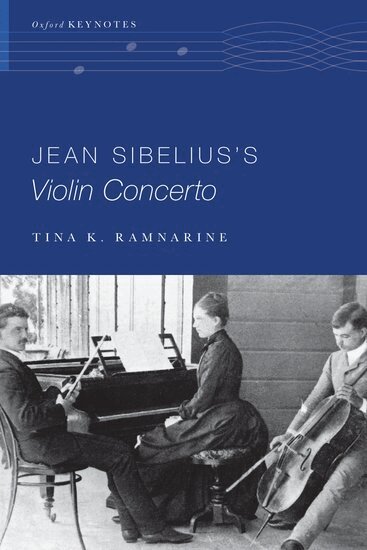
Jean Sibelius's Violin Concerto is the story of Sibelius as performer and composer, of violin performing traditions, of histories of musical transmission, and of virtuosity itself. It investigates the history and legacy of one of the most recorded concertos in the violin repertoire. Sibelius, a celebrated and influential composer of the late 19th and 20th centuries, was an accomplished violinist, whose enduring interest in the instrument has been paralleled by the broad success of the only concerto in his oeuvre: his violin concerto (premiered in 1904 and revised in 1905). Considering how violinists engage with the work, author Tina K. Ramnarine discusses technology's central role in the concerto's transmission from Jascha Heifetz's seminal 1935 recording to contemporary online performances, gender issues in violin solo careers, and nature-based musical aesthetics that lead to thinking about the ecology of virtuosity in an era of environmental crisis. Beginning with Sibelius's early training as a violinist and his aspirations as a performer, Ramnarine traces the dramatic historical context of the violin concerto. It was composed as Finland underwent a period of heightened self-determination, nationalism, and protest against Russian imperial policies, and it heralded intense political dynamics relating to Europe's East-West border that have extended to the present. This story of the violin concerto points to the notion of Sibelius - and the virtuoso more generally - as a political figure.
229 kr
Skickas inom 7-10 vardagar
Jean Sibelius's Violin Concerto is the story of Sibelius as performer and composer, of violin performing traditions, of histories of musical transmission, and of virtuosity itself. It investigates the history and legacy of one of the most recorded concertos in the violin repertoire. Sibelius, a celebrated and influential composer of the late 19th and 20th centuries, was an accomplished violinist, whose enduring interest in the instrument has been paralleled by the broad success of the only concerto in his oeuvre: his violin concerto (premiered in 1904 and revised in 1905). Considering how violinists engage with the work, author Tina K. Ramnarine discusses technology's central role in the concerto's transmission from Jascha Heifetz's seminal 1935 recording to contemporary online performances, gender issues in violin solo careers, and nature-based musical aesthetics that lead to thinking about the ecology of virtuosity in an era of environmental crisis. Beginning with Sibelius's early training as a violinist and his aspirations as a performer, Ramnarine traces the dramatic historical context of the violin concerto. It was composed as Finland underwent a period of heightened self-determination, nationalism, and protest against Russian imperial policies, and it heralded intense political dynamics relating to Europe's East-West border that have extended to the present. This story of the violin concerto points to the notion of Sibelius - and the virtuoso more generally - as a political figure.
966 kr
Skickas inom 5-8 vardagar
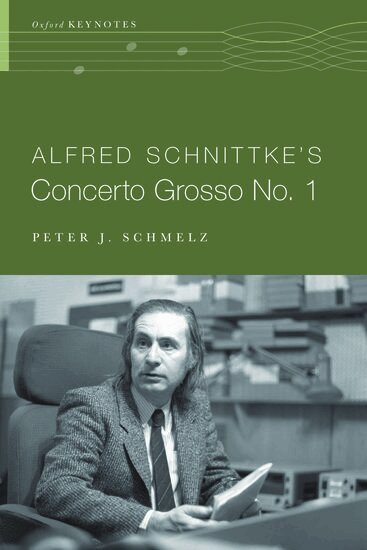
Concerto Grosso no. 1 is one of Alfred Schnittke's best-known and most compelling works, sounding the surface of late Soviet life while resonating with contemporary compositional currents around the world such as postmodernism. It marked a decisive point in Schnittke's development of the approach he called polystylism, which aimed to contain in a single composition the wide range of contemporary musical styles, including "jazz, pop, rock, or serial music." Thanks to it and his other similar compositions, Schnittke became one of the most-performed and most-recorded living composers at the end of the twentieth century.Peter J. Schmelz's Alfred Schnittke's Concerto Grosso no. 1 represents the first accessible and comprehensive study of this composition. The novel structure of the book engages with the piece conceptually, historically, musically, and phenomenologically, with the six movements of the composition framing the six chapters. Augmenting and complicating the insights of existing English, Russian, and German publications on the Concerto Grosso no. 1, the book adds new information from underused primary sources, including Schnittke's unpublished correspondence and his many published interviews. It engages further with his sketches for the piece, and with contemporary Soviet musical criticism, resulting in a more objective, historical account of this rich, multifaceted composition, its influences, and its impact on music making in the USSR and worldwide.
238 kr
Skickas inom 5-8 vardagar
Concerto Grosso no. 1 is one of Alfred Schnittke's best-known and most compelling works, sounding the surface of late Soviet life while resonating with contemporary compositional currents around the world such as postmodernism. It marked a decisive point in Schnittke's development of the approach he called polystylism, which aimed to contain in a single composition the wide range of contemporary musical styles, including "jazz, pop, rock, or serial music." Thanks to it and his other similar compositions, Schnittke became one of the most-performed and most-recorded living composers at the end of the twentieth century.Peter J. Schmelz's Alfred Schnittke's Concerto Grosso no. 1 represents the first accessible and comprehensive study of this composition. The novel structure of the book engages with the piece conceptually, historically, musically, and phenomenologically, with the six movements of the composition framing the six chapters. Augmenting and complicating the insights of existing English, Russian, and German publications on the Concerto Grosso no. 1, the book adds new information from underused primary sources, including Schnittke's unpublished correspondence and his many published interviews. It engages further with his sketches for the piece, and with contemporary Soviet musical criticism, resulting in a more objective, historical account of this rich, multifaceted composition, its influences, and its impact on music making in the USSR and worldwide.
966 kr
Skickas inom 5-8 vardagar
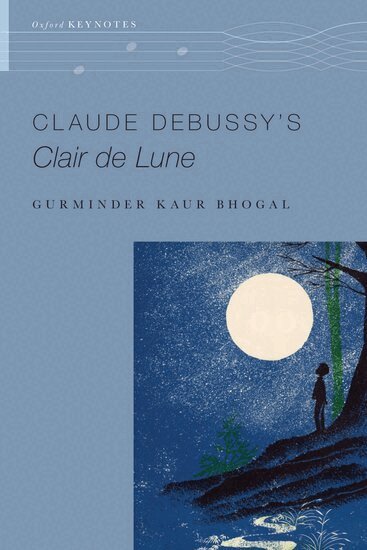
Debussy himself had little regard for Clair de Lune, and scholars have thus far followed suit--until now. Claude Debussy's Clair de Lune is the first book wholly dedicated to an historical, cultural, and analytical investigation of the French composer's famous composition for piano. Author Gurminder Kaur Bhogal explores why, over any other piece in Debussy's repertoire for piano, Clair de Lune achieved stardom in the decades following the composer's death, and how, as the third movement of the Suite Bergamasque, it managed to almost fully eclipse the other movements. Drawing on a broad range of excerpts from classical and popular music, commercials, film, and video games, Bhogal examines the various ways in which listeners have engaged with the piece. She also places it in its proper artistic context, through analysis alongside the poetry of Paul Verlaine and the paintings of Jean-Antoine Watteau. A wide range of aural, visual, and video examples energize the narrative, and demonstrate how Clair de Lune has come to achieve an iconic status within and beyond Debussy's oeuvre.
215 kr
Skickas inom 5-8 vardagar
Debussy himself had little regard for Clair de Lune, and scholars have thus far followed suit--until now. Claude Debussy's Clair de Lune is the first book wholly dedicated to an historical, cultural, and analytical investigation of the French composer's famous composition for piano. Author Gurminder Kaur Bhogal explores why, over any other piece in Debussy's repertoire for piano, Clair de Lune achieved stardom in the decades following the composer's death, and how, as the third movement of the Suite Bergamasque, it managed to almost fully eclipse the other movements. Drawing on a broad range of excerpts from classical and popular music, commercials, film, and video games, Bhogal examines the various ways in which listeners have engaged with the piece. She also places it in its proper artistic context, through analysis alongside the poetry of Paul Verlaine and the paintings of Jean-Antoine Watteau. A wide range of aural, visual, and video examples energize the narrative, and demonstrate how Clair de Lune has come to achieve an iconic status within and beyond Debussy's oeuvre.