The Papers of Frederick Law Olmsted – Serie
Visar alla böcker i serien The Papers of Frederick Law Olmsted. Handla med fri frakt och snabb leverans.
9 produkter
9 produkter
1 124 kr
Skickas inom 7-10 vardagar
"The park throughout is a single work of art, and as such, subject to the primary law of every work of art, namely, that it shall be framed upon a single, noble motive, to which the design of all its parts, in some more or less subtle way, shall be confluent and helpful."-Frederick Law Olmsted For decades Frederick Law Olmsted (1822-1903) designed parks and park systems across the United States, leaving an enduring legacy of designed public space that is enjoyed, studied, and protected today. Olmsted's plans and professional correspondence are a rich source for understanding his remarkable contribution to the quality of urban life in this country and the development of the profession of landscape architecture. His writings also provide a unique record of society and politics in post-Civil War America. Historians, landscape architects, conservationists, city planners and citizens' groups continue to turn to Olmsted for inspiration in their planning and protection of public open space in our cities. This latest volume of the Papers of Frederick Law Olmsted presents the record of his last years of residence in New York City.It includes reports on the design of Riverside and Morningside parks and Tompkins Square in Manhattan, as well as his comprehensive plan for the street system and rapid transit routes of the Bronx. It records his continuing work on Central Park and presents his final retrospective statement, "The Spoils of the Park." In addition, the volume contains an annotated version of the journal in which Olmsted recorded instances of political maneuvering and patronage politics in the years prior to his dismissal from the New York parks department in 1878. Later chapters chronicle the early stages of his planning of the Boston park system-the Back Bay Fens, Arnold Arboretum, and Riverway. Other major commissions, each with its own political complications, were the grounds of the U. S. Capitol, the completion of the new state capitol in Albany, the designing of a park on Mount Royal in Montreal, and construction of the park system of Buffalo, N. Y. The volume also presents Olmsted's commentary on issues of the times including Reconstruction policy and Civil Service reform.The Olmsted Papers project is supported by the National Endowment for the Humanities, the National Historical Publications and Records Commission, the National Trust for the Humanities, the National Association for Olmsted Parks, as well as private foundations and individuals.
1 123 kr
Skickas inom 7-10 vardagar
"An indispensable work for any student of the Old South. The book is not merely indispensable; it is challenging and controversial."—New York TimesFor decades Frederick Law Olmsted (1822–1903) designed parks and park systems across the United States, leaving an enduring legacy of designed public space that is enjoyed, studied, and protected today. His plans and professional correspondence offer a rich source for understanding his remarkable contribution to the quality of urban life in this country and the development of the profession of landscape architecture. Olmsted's writings also provide a unique record of society and politics in post–Civil War America. Historians, landscape architects, conservationists, city planners, students, and citizens' groups continue to turn to Olmsted for ideas about the development and conservation of green spaces in urban areas.The Olmsted Papers project is supported by the National Endowment for the Humanities, the National Historical Publications and Records Commission, the National Trust for the Humanities, the National Association for Olmsted Parks, as well as private foundations and individuals.
942 kr
Tillfälligt slut
The Years of Olmsted, Vaux & Company, 1865-1874 documents one of the most productive periods of Olmsted's career. During these years he and Vaux created their classic design for Prospect Park in Brooklyn, drew up plans for Riverside and Morningside parks in Manhattan, and designed Chicago's South Park. Its rich assortment of documents will be of interest to historians, landscape architects, urban planners, and anyone concerned with the roots of modern America. The Olmsted Papers project is supported by the Andrew W. Mellon Foundation, the National Endowment for the Humanities, and the National Historical Publications and Records Commission, and is sponsored by The American University.
Papers of Frederick Law Olmsted
Writings on Public Parks, Parkways, and Park Systems
Inbunden, Engelska, 1997
1 005 kr
Tillfälligt slut
This book features historians, landscape architects, conservationists, city planners, students, and citizens' groups continue to turn to Olmsted for ideas about the development and conservation of green spaces in urban areas.
1 017 kr
Skickas inom 7-10 vardagar
For decades Frederick Law Olmsted (1822-1903) designed parks and park systems across the United States, leaving an enduring legacy of designed public space that is enjoyed, studied, and protected today. His plans and professional correspondence offer a rich source for understanding his remarkable contribution to the quality of urban life in this country and the development of the profession of landscape architecture. Olmsted's writings also provide a unique record of society and politics in post-Civil War America. Historians, landscape architects, conservationists, city planners, and citizens' groups continue to turn to Olmsted for inspiration in their planning and protection of public open space in our cities. This latest and seventh volume of the Papers of Frederick Law Olmsted presents the record of his last years of residence in New York City. It includes reports on the design of Riverside and Morningside parks and Tompkins Square in Manhattan, as well as his comprehensive plan for the street system and rapid transit routes of the Bronx. It records his continuing work on Central Park and presents his final retrospective statement, "The Spoils of the Park."In addition, volume seven contains an annotated version of the journal in which Olmsted recorded instances of political maneuvering and patronage politics in the years before his dismissal from the New York parks department in 1878. Later documents chronicle the early stages of his planning of the Boston park system-the Back Bay Fens, Arnold Arboretum, and Riverway. Other major commissions, each with its own political complications, were the grounds of the U.S. Capitol, the completion of the new state capitol in Albany, the designing of a park on Mount Royal in Montreal, and construction of the park system of Buffalo, New York. The volume also presents Olmsted's commentary on issues of the times including federal Reconstruction policy and civil-service reform. The Olmsted Papers project is supported by the National Endowment for the Humanities, the National Historical Publications and Records Commission, the National Trust for the Humanities, the National Association for Olmsted Parks, as well as private foundations and individuals.
1 264 kr
Skickas inom 11-20 vardagar
Frederick Law Olmsted relocated from New York to the Boston area in the early 1880s. With the help of his stepson and partner, John Charles Olmsted, his professional office grew to become the first of its kind: a modern landscape architecture practice with park, subdivision, campus, residential, and other landscape design projects throughout the country. During the period covered in this volume, Olmsted and his partners, apprentices, and staff designed the exceptional park system of Boston and Brookline-including the Back Bay Fens, Franklin Park, and the Muddy River Improvement. Olmsted also designed parks for New York City, Rochester, Buffalo, and Detroit and created his most significant campus plans for Stanford University and the Lawrenceville School. The grounds of the U.S. Capitol were completed with the addition of the grand marble terraces that he designed as the transition to his surrounding landscape. Many of Olmsted's most important private commissions belong to these years. He began his work at Biltmore, the vast estate of George Washington Vanderbilt, and designed Rough Point at Newport, Rhode Island, and several other estates for members of the Vanderbilt family.Olmsted wrote more frequently on the subject of landscape design during these years than in any comparable period. He would never provide a definitive treatise or textbook on landscape architecture, but the articles presented in this volume contain some of his most mature and powerful statements on the practice of landscape architecture.
751 kr
Tillfälligt slut
Lavishly illustrated with over 470 images - 129 of them in color, this book reveals Frederick Law Olmsted's design concepts for more than seventy public park projects through a rich collection of sketches, studies, lithographs, paintings, historical photographs, and comprehensive descriptions. Bringing together Olmsted's most significant parks, parkways, park systems, and scenic reservations, this gorgeous volume takes readers on a uniquely conceived tour of such notable landscapes as Central Park, Prospect Park, the Buffalo Park and Parkway System, Washington Park and Jackson Park in Chicago, Boston's "Emerald Necklace," and Mount Royal in Montreal, Quebec. No such guide to Olmsted's parks has ever been published. Frederick Law Olmsted (1822-1903) planned many parks and park systems across the United States, leaving an enduring legacy of designed public space that is enjoyed and defended today. His public parks, the design of which he was most proud, have had a lasting effect on urban America.This gorgeous book will appeal to landscape professionals, park administrators, historians, architects, city planners, and students-and it is a perfect gift for Olmsted aficionados throughout North America.
1 222 kr
Skickas inom 11-20 vardagar
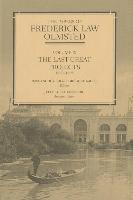
In 1890, Frederick Law Olmsted, then nearly sixty-eight years old, had risen to the pinnacle of his career. Together with his partners, stepson John Charles Olmsted and protege Henry Sargent Codman, he was involved in a number of major ongoing projects, including the Boston, Buffalo, and Rochester park systems, the campus plan for Stanford University, and numerous private estates. In July, he reported that the firm had "twenty works of considerable importance" underway, including nine large parks and six estates that he believed were "matters of public interest." Before the summer ended, the firm's commitments would expand dramatically as Olmsted and his partners were appointed landscape architects for the World's Columbian Exposition in Chicago. As commissions for new park systems, residential communities, grounds for educational institutions, and private homes increased, Olmsted feared that their commitments would exceed the partners' ability to do their best work. Despite these fears, Olmsted's work in the final six years of his professional career would only enhance his considerable reputation, as the ninth and final volume of The Papers of Frederick Law Olmsted reveals.With its impressive waterways, monumental buildings, and verdant islands and shores, the Chicago fair proved to be one of the firm's crowning achievements. The early 1890s also saw the culmination of Olmsted's wide-ranging work on one of his other great projects: the design of the grounds of George W. Vanderbilt's massive estate, Biltmore, near Asheville, North Carolina. In planning the estate's thousands of acres, Olmsted outlined new approaches to landscape design, promoted the creation of the first scientific forestry operation in the United States, designed a model residential subdivision, and proposed an arboretum that would have been the most ambitious in the nation. The Last Great Projects, 1890-1895, chronicles the history of one of the world's greatest landscape design firms while offering a fascinating retrospective on Frederick Law Olmsted's productive final years. The volume also gathers together the important documents of this last triumphant era. As Olmsted neared the end of his career, he wrote some of his most reflective letters and reports, summarizing the legacy of his involvement with the U.S.Sanitary Commission, the quality of landscape design in England and France, the biographical circumstances that proved most important to his development as an artist, and his hopes and fears for the future of his profession.
763 kr
Skickas inom 7-10 vardagar
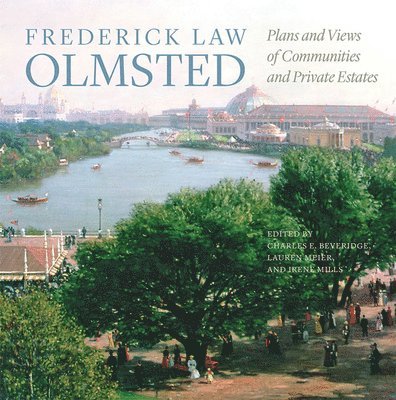
Full of original plans and historic photographs, this beautifully illustrated collection is the first comprehensive presentation of Olmsted's design concepts for communities and private estates.Silver Winner of the 2021 IBPA Benjamin Franklin Award for Best Coffee Table BookMaster landscape architect Frederick Law Olmsted (1822–1903) is renowned for his public parks, but few know the extent of his accomplishment in meeting other needs of society. Lavishly illustrated with over 500 images, this book presents Olmsted's design commissions for a wide range of projects. The rich collection of studies, lithographs, paintings, and historical photographs depicts Olmsted's planning for residential communities, regional and town plans, academic campuses, grounds of public buildings, zoos, arboreta, and cemeteries. Focusing on living spaces designed to promote physical and mental well-being, the book showcases more than seventy of Olmsted's designs, including the community of Riverside, IL; the Stanford University campus; the U.S. Capitol grounds; the World's Columbian Exposition of 1893; the National Zoo; and George W. Vanderbilt's Biltmore estate.Illuminating Olmsted's design theory, this volume displays the beautiful plans and reveals the significance of each commission within his entire body of work. Readers concerned with the quality of the environment in which we live and work, as well as architects, landscape architects, urban planners, historians, and preservationists, will find stimulating insights in Plans and Views of Communities and Private Estates.