Topics in Biomedical Engineering - Böcker
Visar alla böcker i serien Topics in Biomedical Engineering. Handla med fri frakt och snabb leverans.
4 produkter
4 produkter
2 164 kr
Skickas inom 10-15 vardagar
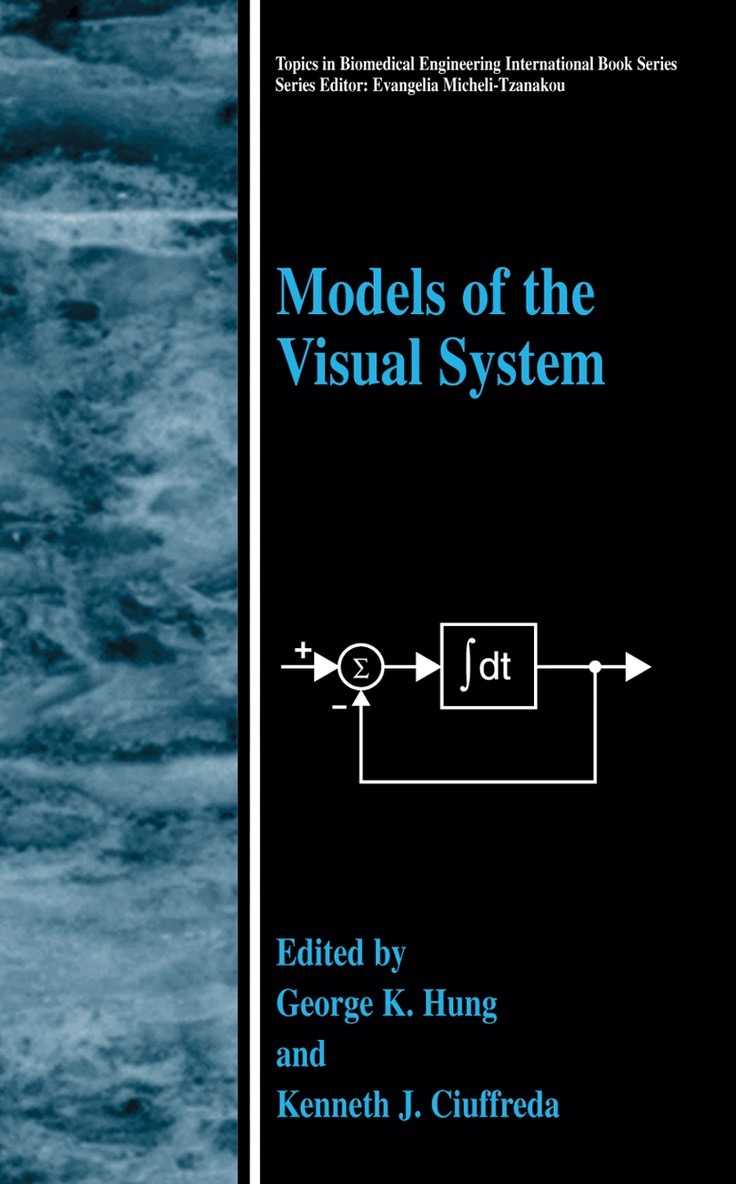
Over the past 30 years, with improvements in optics, electronics, and computer technology, great strides have been made in the quantitative analysis of the visual system. A number of books on eye movement research have been written that have dealt with specific aspects of eye movement control. This text provides a comprehensive overview of multiple aspects of the visual system, containing modelling and detailed quantitative analyses. Including the most recent research findings in 2001, this updated and quantitative model-based book contains contributions from some of the best vision scientists in the world in their respective fields. They have expertise in a wide variety of fields, including bioengineering, basic and clinical visual science, medicine, neurophysiology, optometry, and psychology. The text covers modelling and quantitative analysis of optical, neurosensory, oculomotor, perceptual and clinical systems. It includes only those techniques and models that have such fundamentally strong physiological, control system, and perceptual bases that they will serve as foundations for models and analysis techniques in the future.The book is aimed first towards seniors and beginning graduate students in biomedical engineering, neurophysiology, optometry, and psychology, who will gain a broad understanding of quantitative analysis of the visual system. In addition, it has sufficient depth in each area to be useful as an updated reference and tutorial for graduate and post-doctoral students, as well as general vision scientists.
1 625 kr
Skickas inom 10-15 vardagar
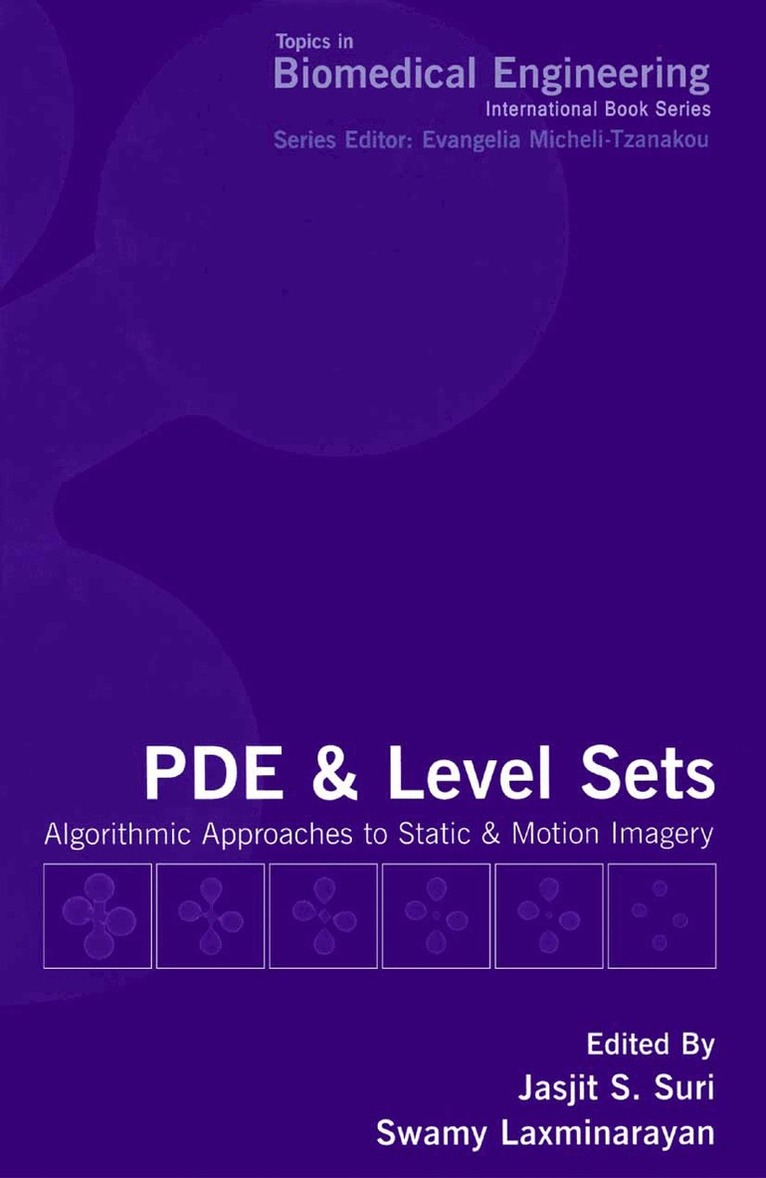
In the medical field, medical imagery has become a discipline of its own, given the nature of its applications in the understanding of the human body and medical diagnostics. Image processing techniques are the core tools for solving these biomedical problems. The applications of level sets has made a significant impact on medical imagery primarily because of its ability to perform efficient topology preservation and fast shape recovery. This has dominated the binary, grayscale and colour frameworks, which the eye can perceive. It has not only the ability to find boundaries and surfaces that are deep seated in 2-D and 3-D volumes respectively, but also provide satisfactory solutions for the completion of cognitive objects with missing boundaries.
2 164 kr
Skickas inom 10-15 vardagar
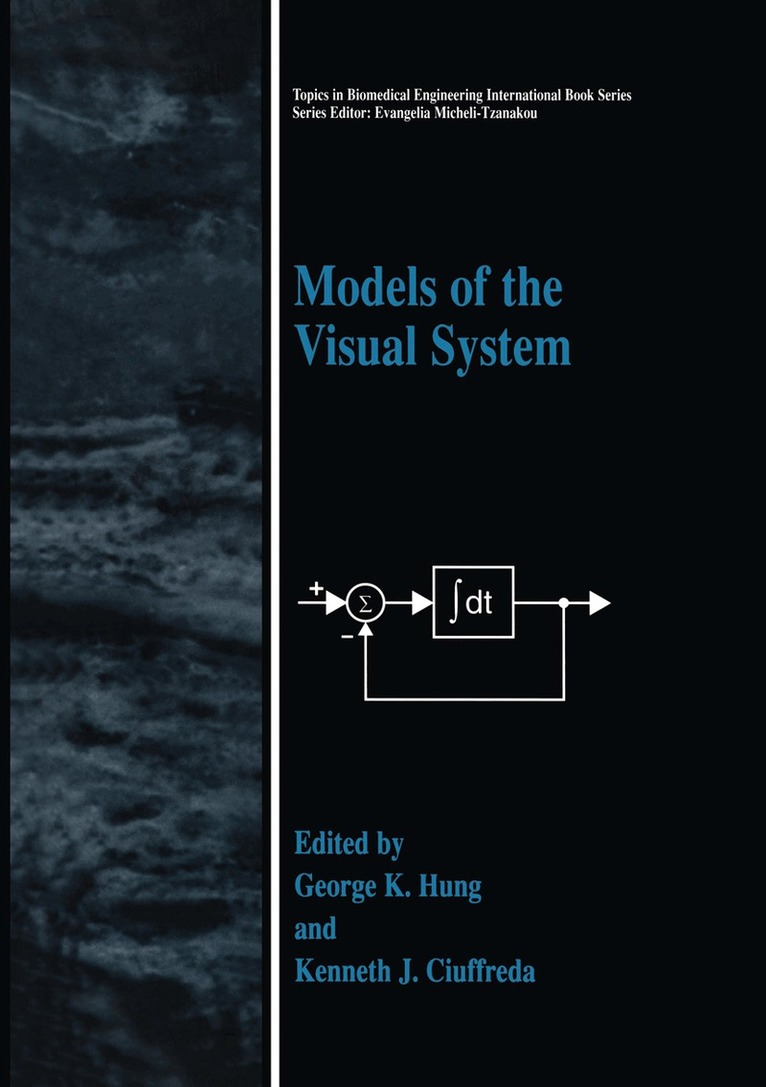
Some of the best vision scientists in the world in their respective fields have contributed to chapters in this book. They have expertise in a wide variety of fields, including bioengineering, basic and clinical visual science, medicine, neurophysiology, optometry, and psychology. Their combined efforts have resulted in a high quality book that covers modeling and quantitative analysis of optical, neurosensory, oculomotor, perceptual and clinical systems. It includes only those techniques and models that have such fundamentally strong physiological, control system, and perceptual bases that they will serve as foundations for models and analysis techniques in the future. The book is aimed first towards seniors and beginning graduate students in biomedical engineering, neurophysiology, optometry, and psychology, who will gain a broad understanding of quantitative analysis of the visual system. In addition, it has sufficient depth in each area to be useful as an updated reference and tutorial for graduate and post-doctoral students, as well as general vision scientists.
1 625 kr
Skickas inom 10-15 vardagar
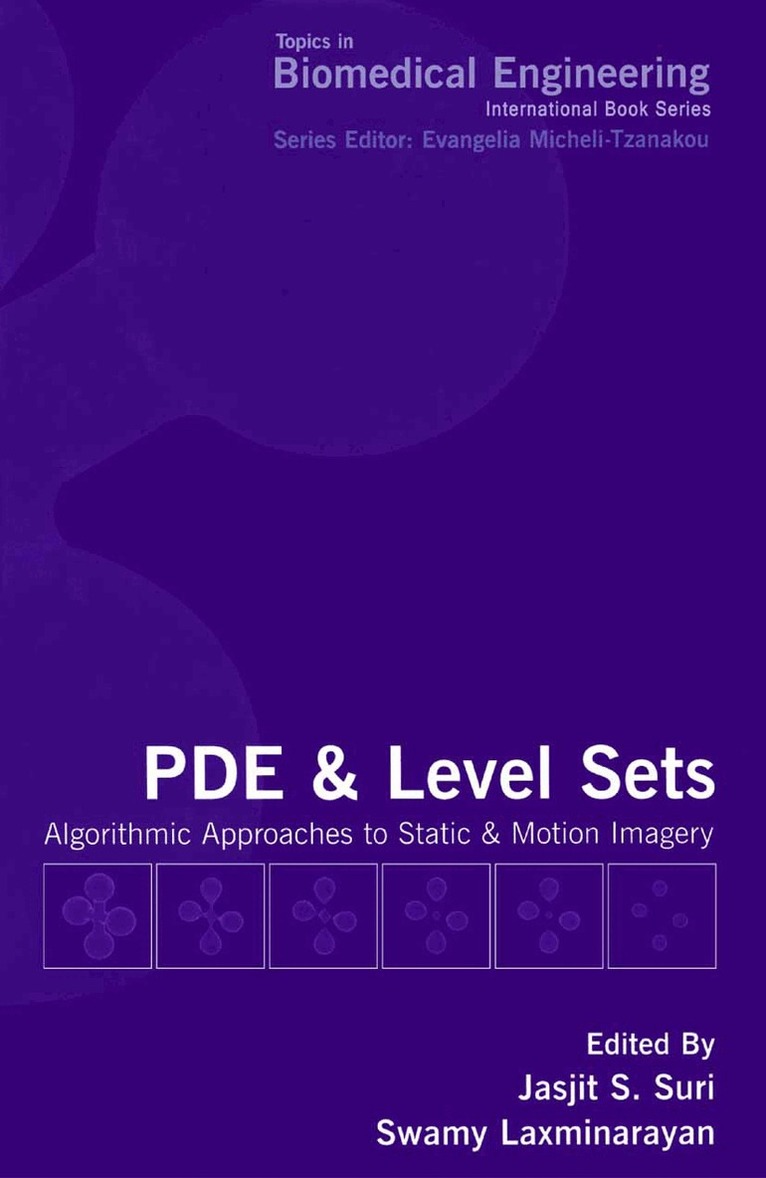
PDE & Level Sets: Algorithmic Approaches to Static & Motion Imagery is specially dedicated to the segmentation of complex shapes from the field of imaging sciences using level sets and PDEs. It covers the fundamentals of level sets, different kinds of concepts of both geodesic curvature flows and planar flows, as well as the power of incorporation of regional-statistics in level set framework. In covering this material, this book presents segmentation of object-in-motion imagery based on level sets in eigen analysis framework, while also presenting classical problems of boundary completion in cognitive images, like the pop-up of subjective contours in the famous triangle of Kanizsa using surface evolution framework, or the mean curvature evolution of a graph with respect to the Riemannian metric induced by the image. All results are presented for modal completion of cognitive objects with missing boundaries.