Topics in Contemporary Semiotics - Böcker
Visar alla böcker i serien Topics in Contemporary Semiotics. Handla med fri frakt och snabb leverans.
12 produkter
12 produkter
1 031 kr
Skickas inom 10-15 vardagar
My writing career has been, at least in this one respect, idiosyncratic: it had to mark and chart, step by step, its own peculiar champaign. My earliest papers, beginning in 1942, were technical articles in this or that domain of Uralic linguistics, ethnography, and folklore, with a sprinkling of contributions to North and South American linguistics. In 1954, my name became fecklessly associated with psycholinguistics, then, successively, with explorations in my thology, religious studies, and stylistic problems. It now takes special effort for me to even revive the circumstances under which I came to publish, in 1955, a hefty tome on the supernatural, another, in 1958, on games, and yet another, in 1961, utilizing a computer for extensive sorting of literary information. By 1962, I had edged my way into animal communication studies. Two years after that, I first whiffled through what Gavin Ewart evocatively called "the tulgey wood of semiotics." In 1966, I published three books which tem porarily bluffed some of my friends into conjecturing that I was about to meta morphose into a historiographer of linguistics. The topmost layer in my scholarly stratification dates from 1976, when I started to compile what eventually became my "semiotic tetralogy," of which this volume may supposably be the last. In the language of "Jabberwocky," the word "tulgey" is said to connote variability and evasiveness. This notwithstanding, the allusion seems to me apt.
1 031 kr
Skickas inom 10-15 vardagar
This book is designed to usher the reader into the realm of semiotic studies. It analyzes the most important approaches to semiotics as they have developed over the last hundred years out of philosophy, linguistics, psychology, and biology. As a science of sign processes, semiotics investigates all types of com munication and information exchange among human beings, animals, plants, internal systems of organisms, and machines. Thus it encompasses most of the subject areas of the arts and the social sciences, as well as those of biology and medicine. Semiotic inquiry into the conditions, functions, and structures of sign processes is older than anyone scientific discipline. As a result, it is able to make the underlying unity of these disciplines apparent once again without impairing their function as specializations. Semiotics is, above all, research into the theoretical foundations of sign oriented disciplines: that is, it is General Semiotics. Under the name of Zei chenlehre, it has been pursued in the German-speaking countries since the age of the Enlightenment. During the nineteenth century, the systematic inquiry into the functioning of signs was superseded by historical investigations into the origins of signs. This opposition was overcome in the first half of the twentieth century by American Semiotic as well as by various directions of European structuralism working in the tradition of Semiology. Present-day General Semiot ics builds on all these developments.
1 031 kr
Skickas inom 10-15 vardagar
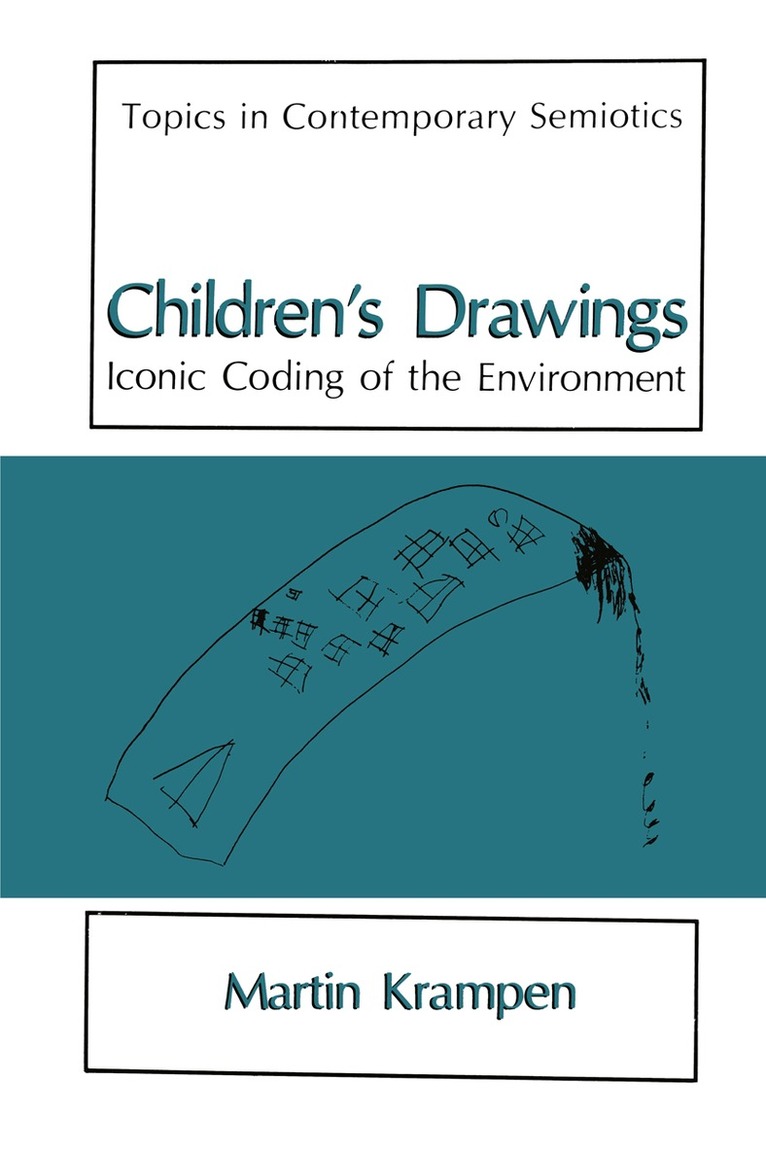
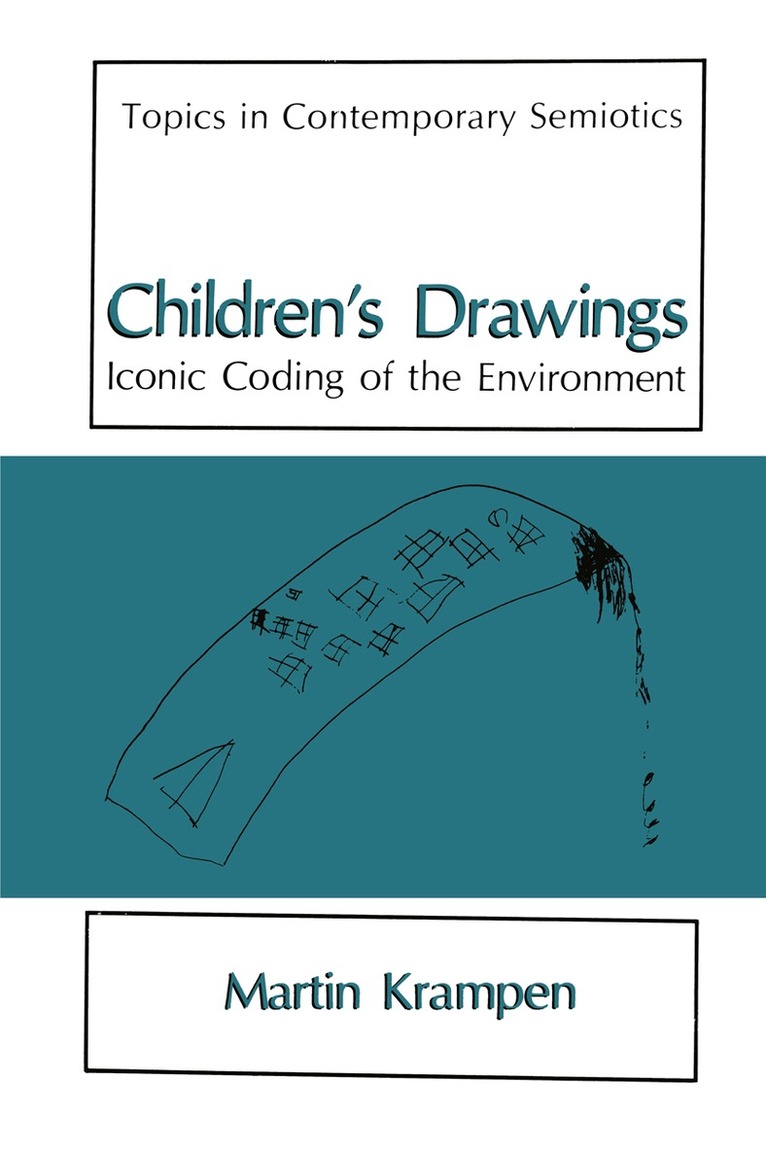
This book is dedicated to all those who love children and their wonderful, often surprising, drawings. This means it addresses all those interested in their devel oping capacity to produce "iconic" signs: parents, teachers, child psychologists, artists, architects (since building drawings are treated here), and semioticians at large-to name but a few potential readers. Because of the broad audience, I tried to keep scientific jargon to a minimum. Whenever this was unavoidable, I tried to explain the terms in such a way that even beginners in psychology could understand my arguments. I received the first impulse to think about a book like this from the Interna tional Year of the Child declared by the UN in 1979. In a first phase of the project, I obtained drawings of the six different building types treated in this book from more than 100 children aged 3-12 years in Turkey during a stay there as part of the faculty of Architecture of the Karadeniz Technical University in Trabzon under the auspices of the UN ESCO/UNDP program TUR/75/012. My special thanks go to Dr. Erdem Aksoy, then president of the university, and Dr. Ozgontil Aksoy, then dean of the faculty of Architecture and Civil Engineering, for their encouragement to carry out the project. I would also like to thank Dr. Kutzal Oztlirk, Sevinc Erttirk, Ali Ozbilen, Hasan Saltik, together with all the teachers in nursery and elementary schools in and around Trabzon who helped to collect the drawings.
3 168 kr
Skickas inom 10-15 vardagar
Bananas and plantains are crops of great importance, both as cash-yielding export crops and as staple food crops in many countries. This work covers all major aspects of the crops: cultivation, nutrition and the response of crops to their environment; molecular and genetic aspects, including in vitro culture; pests, diseases, harvesting and fruit care; and the nutritional value of the banana in the world economy. Chapters have been written by experts from many countries. The text should be useful to plant and agricultural scientists, nutritionists, food scientists and technologists, and all those involved with the processing and trade of the crops.
534 kr
Skickas inom 10-15 vardagar
Even if Peirce were well understood and there existed· general agreement among Peirce scholars on what he meant by his semiotics, or philosophy of signs, the undertaking of this book-wliich intends to establish a theoretical foundation for a new approach to understanding the interrelations of law, economics, and politics against referent systems of value-would be a risky venture. But since such general agreement on Peirce's work is lacking, one's sense of adventure in ideas requires further qualification. Indeed, the proverbial nerve for failure must in any case be attendant. If one succeeds, one has introduced for further inquiry the strong possibility that should our social systems of law, economics, and politics---our means of interpersonal transaction as a whole-be understood against the theoretical back ground of a dynamic, "motion-picture" universe that is continually becoming, that is infinitely developing and changing in response to genuinely novel elements that emerge as existents, then the basic concepts of rights, resources, and reality take on new dimensions of meaning in correspondence with n-dimensional, infinite value judgments or truth-like beliefs which one holds. If such a view, as Peirce maintained, were possible and tenable not only for philosophy but as the basis for action and interaction in the world of human experience and practical affairs, one would readily say that risk taking is a small price for the realization of such possibility.
1 046 kr
Skickas inom 10-15 vardagar
Del 158 - Topics in Contemporary Semiotics
Semiotic Praxis
Studies in Pertinence and in the Means of Expression and Communication
Häftad, Engelska, 2012
550 kr
Skickas inom 10-15 vardagar
Catherine Tihanyi Georges Mounin, an important figure in contemporary French intellec tual life, has made significant and original contributions in semiotics, I semantics, poetics, the linguistic theory and practice of translation, and the study of the history of linguistics. He is noted as well for several dec ades of literary criticism in support of poets who were often unknown at the time. Though some of his work has been translated into German, Ital ian, and Spanish, only a few articles have been available so far in English (Mounin 1974, 1976, 1980, 1981); thus the present collection is the first full-length volume of Mounin's works to be translated into English. The contents of Semiotic Praxis reflect Mounin's life-long concern to apply semiotic theory to concrete objects. In so doing, he has attempted to demonstrate the usefulness of semiotics, to test and clarify its theoretical constructs and modify them accordingly, and to help lay down its scientific foundations and map its boundaries as a discipline.
1 031 kr
Skickas inom 10-15 vardagar
Although semiotics has, in one guise or another, ftourished uninterruptedly since pre Socratic times in the West, and important semiotic themes have emerged and devel oped independently in both the Brahmanie and Buddhistic traditions, semiotics as an organized undertaking began to 100m only in the 1960s. Workshops materialized, with a perhaps surprising spontaneity, over much ofEurope-Eastern and Western and in North America. Thereafter, others quickly surfaced almost everywhere over the litera te globe. Different places strategically allied themselves with different lega eies, but all had a common thrust: to aim at a general theory of signs, by way of a description of different sign systems, their comparative analysis, and their classifi cation. More or less permanent confederations were forged with the most diverse academic disciplines, and amazingly varied frameworks were devised-suited to the needs of the times and the sites-to carry the work of consolidation forward. Bit by bit, mutually supportive international networks were put together. Today, it can truly be asserted that semiotics has become a global enterprise. This, of course, is far from saying that the map is uniform or even that world-wide homogeneity is in the least desirable. While our conjoint ultimate goal remains steadily in focus, the multiplicity of avenues available for its realization is inherent in the advent ure of the search itself.
Del 4 - Topics in Contemporary Semiotics
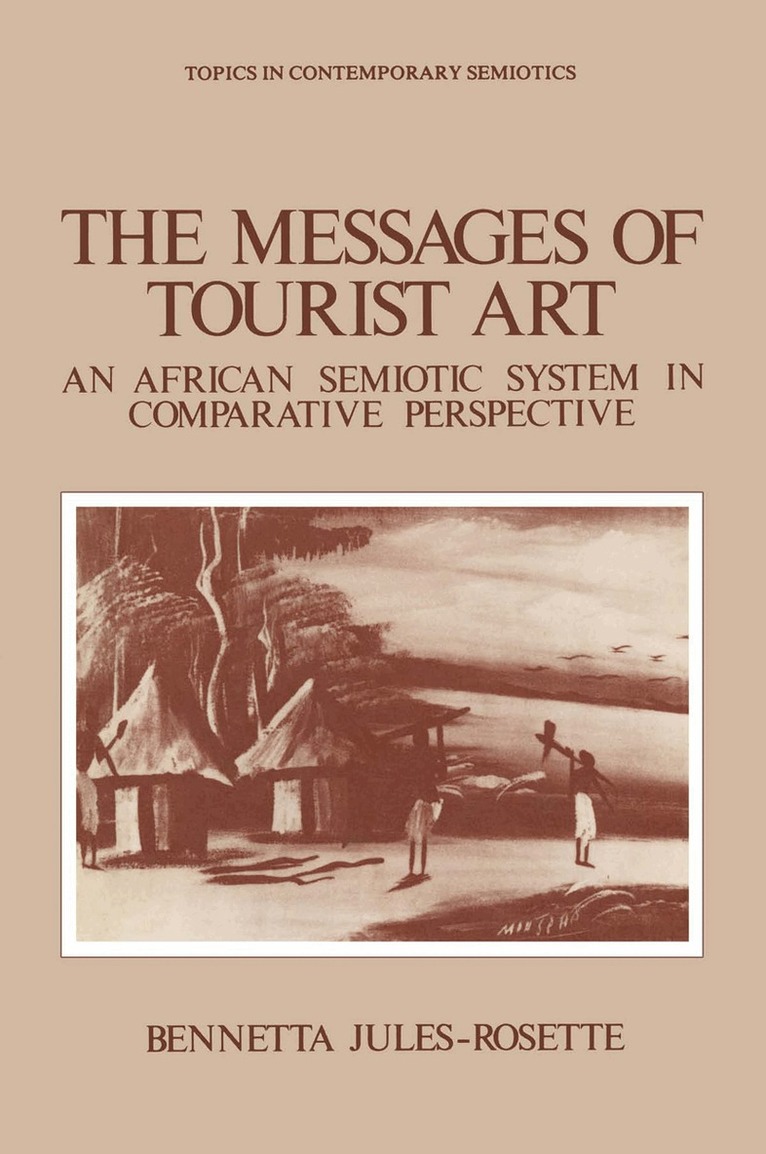
Messages of Tourist Art
An African Semiotic System in Comparative Perspective
Häftad, Engelska, 2013
550 kr
Skickas inom 10-15 vardagar
Tourist art may be a billion dollar business. Nevertheless, such art is despised. What is worse, the "bad" culture is seen as driving out the "good. " Commer cialization is assumed to destroy traditional arts and crafts, replacing them with junk. The process is seen as demeaning to artists in the traditional societies, who are seduced into a type of whoredom: unfeeling production of false beauty for money. The arts remain problematic for the social sciences. Sociology textbooks treat the arts as subordinate reflections of social forces, norms, or groups. An thropology textbooks conventionally isolate the arts in a separate chapter, failing to integrate them with analyses of kinship, economics, politics, language, or biology. Textbooks reflect the guiding theories, which emphasize such factors as modes of production, patterns of thought, or biological and normative con straints, but their authors have not adequately formulated the aesthetic dimen sion. One may compare the theoretical status of the arts to that of religion. After the contributions by Emile Durkheim and Max Weber, the sociology of religion is well established, but where is a Durkheim or Weber for the sociology of art? What is true of the social sciences in general holds for understanding of modernization in the Third World. These processes and those places are analyzed economically, politically, and socially, but the aesthetic dimension is treated in isolation, if at all, and is poorly grasped in relation to the other forces.
1 133 kr
Skickas inom 10-15 vardagar
In a first phase of the project, I obtained drawings of the six different building types treated in this book from more than 100 children aged 3-12 years in Turkey during a stay there as part of the faculty of Architecture of the Karadeniz Technical University in Trabzon under the auspices of the UN ESCO/UNDP program TUR/75/012.
1 031 kr
Skickas inom 10-15 vardagar
This book is designed to usher the reader into the realm of semiotic studies. It analyzes the most important approaches to semiotics as they have developed over the last hundred years out of philosophy, linguistics, psychology, and biology. As a science of sign processes, semiotics investigates all types of com munication and information exchange among human beings, animals, plants, internal systems of organisms, and machines. Thus it encompasses most of the subject areas of the arts and the social sciences, as well as those of biology and medicine. Semiotic inquiry into the conditions, functions, and structures of sign processes is older than anyone scientific discipline. As a result, it is able to make the underlying unity of these disciplines apparent once again without impairing their function as specializations. Semiotics is, above all, research into the theoretical foundations of sign oriented disciplines: that is, it is General Semiotics. Under the name of Zei chenlehre, it has been pursued in the German-speaking countries since the age of the Enlightenment. During the nineteenth century, the systematic inquiry into the functioning of signs was superseded by historical investigations into the origins of signs. This opposition was overcome in the first half of the twentieth century by American Semiotic as well as by various directions of European structuralism working in the tradition of Semiology. Present-day General Semiot ics builds on all these developments.
1 031 kr
Skickas inom 10-15 vardagar
My writing career has been, at least in this one respect, idiosyncratic: it had to mark and chart, step by step, its own peculiar champaign. My earliest papers, beginning in 1942, were technical articles in this or that domain of Uralic linguistics, ethnography, and folklore, with a sprinkling of contributions to North and South American linguistics. In 1954, my name became fecklessly associated with psycholinguistics, then, successively, with explorations in my thology, religious studies, and stylistic problems. It now takes special effort for me to even revive the circumstances under which I came to publish, in 1955, a hefty tome on the supernatural, another, in 1958, on games, and yet another, in 1961, utilizing a computer for extensive sorting of literary information. By 1962, I had edged my way into animal communication studies. Two years after that, I first whiffled through what Gavin Ewart evocatively called "the tulgey wood of semiotics." In 1966, I published three books which tem porarily bluffed some of my friends into conjecturing that I was about to meta morphose into a historiographer of linguistics. The topmost layer in my scholarly stratification dates from 1976, when I started to compile what eventually became my "semiotic tetralogy," of which this volume may supposably be the last. In the language of "Jabberwocky," the word "tulgey" is said to connote variability and evasiveness. This notwithstanding, the allusion seems to me apt.