Understanding Ibero-American Spaces and Dynamics – serie
Visar alla böcker i serien Understanding Ibero-American Spaces and Dynamics. Handla med fri frakt och snabb leverans.
3 produkter
3 produkter
1 345 kr
Skickas inom 7-10 vardagar
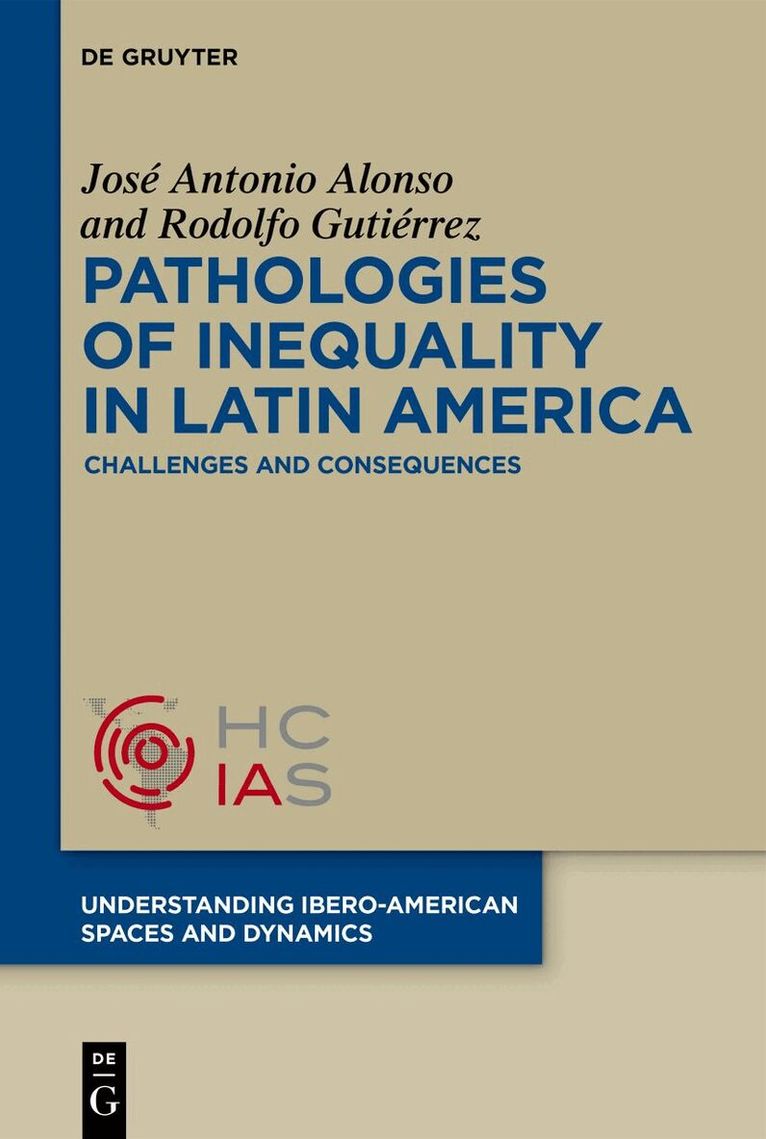
In the last two decades, increasing inequalities in a broad range of countries have prompted many scholars to consider inequality as the main cause for social unrest, weakened institutions or people's disaffection toward democracy. However, this interpretation often relies on fragile theoretical foundations and conceptual ambiguity. To clarify these possible correlations, the present volume focuses on Latin America as a region characterized by persistently high level of inequality. It aims to: Disentangle the different meanings of inequality, taking into account that it is a complex phenomenon whose measure depends on the variables adopted to measure distributive asymmetries; Consider the complex of internal and external factors that impact distributive patterns, including those related to institutional arrangements and bargain power among different social actors;Examine the main effects of inequality, particularly on social services and subjective wellbeing, violence and insecurity, as well as institutional weakening; Finally, evaluate the effectiveness of different policies against inequality, the design of welfare systems, the pre-distributive and redistributive impacts of fiscal measures, and the creation of a culture of tolerance about inequality.
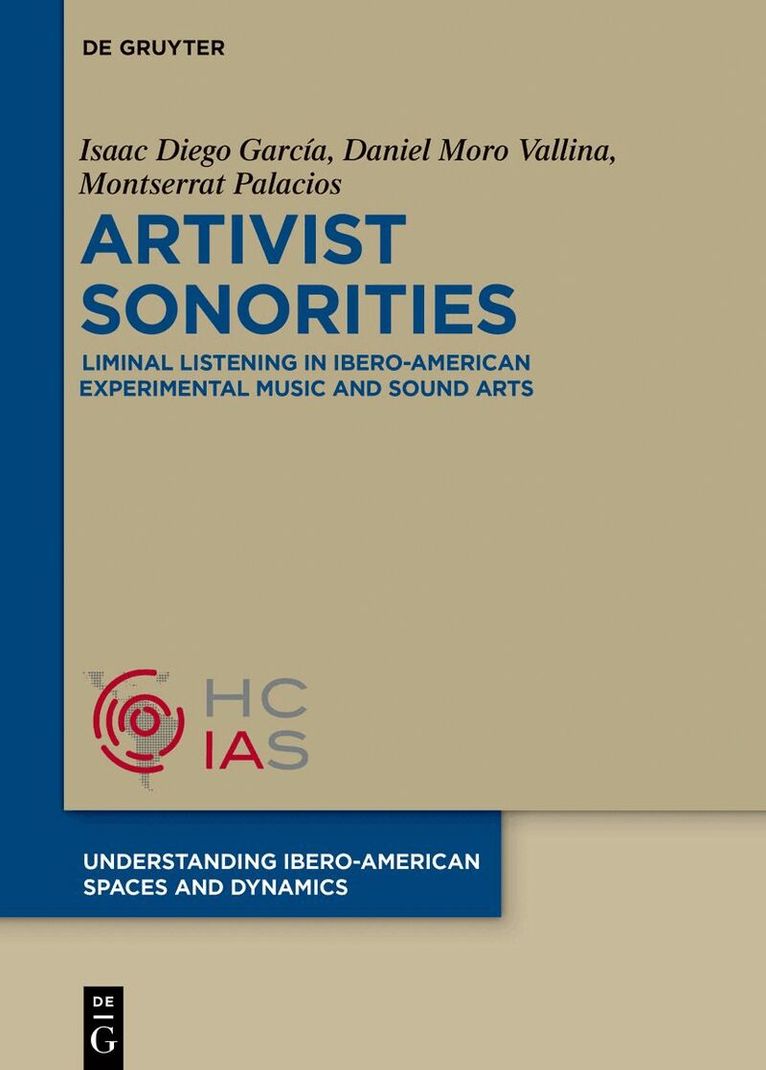
Artivist Sonorities
Liminal Listening in Ibero-American Experimental Music and Sound Arts
Inbunden, Engelska, 2026
1 771 kr
Kommande
This book explores the multifaceted and heterogeneous field of experimental music and sound arts in the contemporary Ibero-American context. To this end, the study is structured around the notion of sound artivism as a plural space of creative—critical and situated—practices that bind the aesthetic dimension closely to the social, the political, and the epistemic. Throughout these pages, the artistic work of numerous creators and collectives from Spain and Latin America is explored, in which sound and listening function as forms of knowledge, resistance, and protest.The artistic practices analyzed in this volume allow us to think of sound experimentation a form of exploration—an open and unfinished practice that rejects the normative models of academic music, institutional art, and the standardized listening habits of mass-produced music. From this perspective, the idea of liminal listening is proposed, in which what matters is not so much sound as an object but rather listening as an aesthetic and political act in its own right. Listening, after all, is always an enactive phenomenon, not a passive event. Liminal listening, then, entails a situated attentiveness to what usually goes unnoticed—to what lies on the margins, in the echoes and edges of perception.
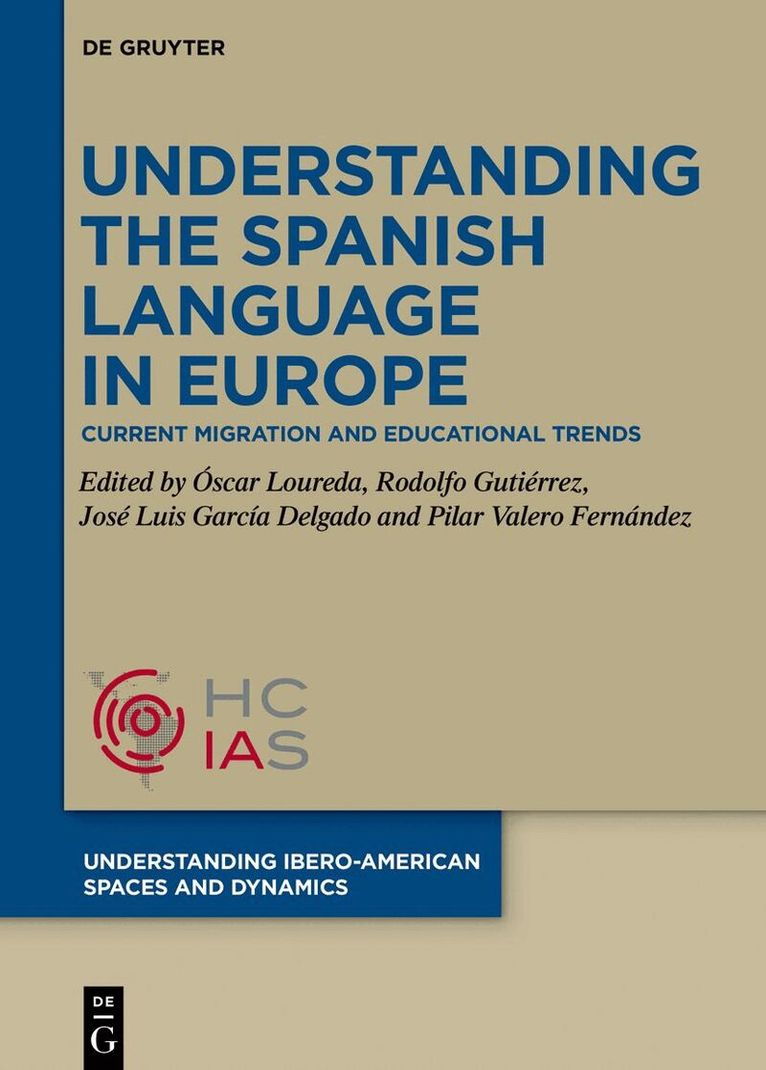
Understanding the Spanish Language in Europe
Current Migration and Educational Trends
Inbunden, Engelska, 2026
1 342 kr
Kommande
The Spanish language is not restricted to Spanish-speaking countries, for its knowledge and use have long spread beyond national borders. The current internationalization process of Spanish draws on various factors, such as cultural prestige, language teaching, the intensification of supranational contacts, migratory flows and virtual and digital communication – all of which are the result of a highly interconnected society. Europe is a major player in this process, with almost 100 million people communicating in Spanish. While the social and cultural dynamics associated to the Spanish language in the United States have been extensively studied, those observed in Europe are still largely unknown.One way of describing the internationalization of Spanish is language demography – an interdisciplinary approach aimed at quantifying potential users of the Spanish language and explaining how this community has been formed. This book analyzes Spanish-speaking populations in Europe, describing their main trends and explaining their most significant dynamics, migration and education. Main aspects include migratory contacts, the intergenerational transmission of the Spanish language, the position of Spanish in European educational systems and the role of translation and communication technologies.