Union Internationale des Sciences Préhistoriques et Protohistoriques – serie
Visar alla böcker i serien Union Internationale des Sciences Préhistoriques et Protohistoriques. Handla med fri frakt och snabb leverans.
6 produkter
6 produkter
Häftad, Engelska, 2023
1 153 kr
Skickas
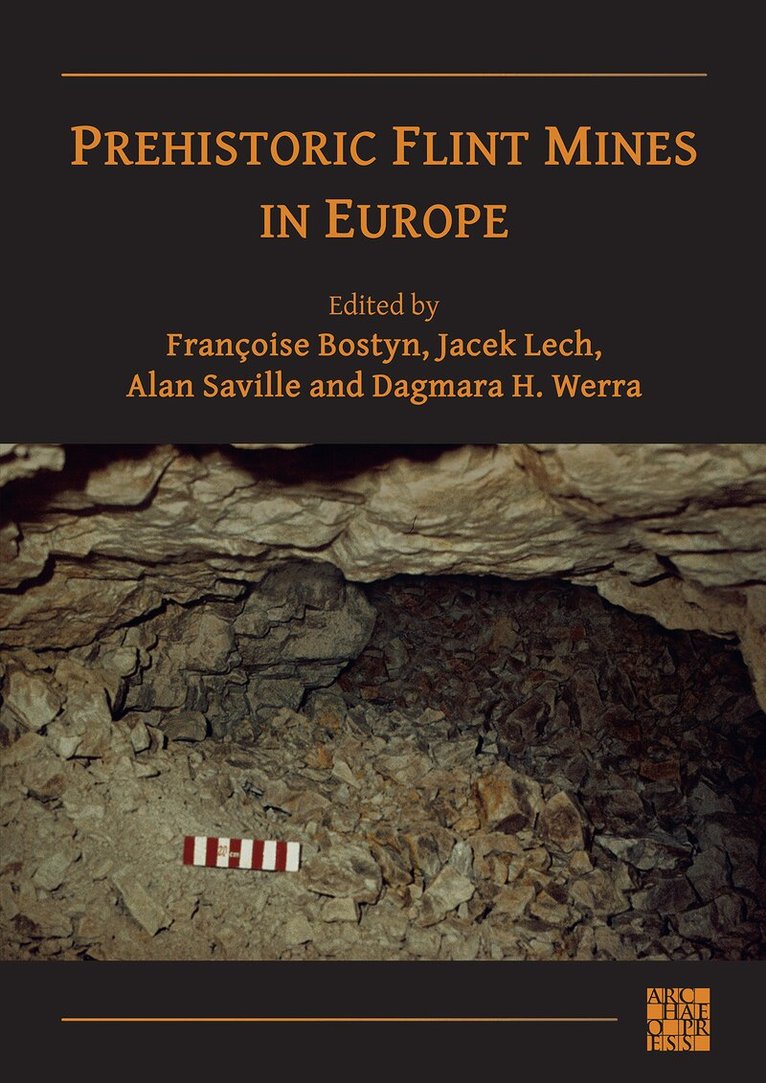
Prehistoric Flint Mines in Europe presents the results of the UISPP Commission, Flint Mining in Pre- and Protohistoric Europe. It offers a review of major flint mines dating from the Neolithic to the Bronze Age. The eighteen articles were contributed by archaeologists from ten countries – Belgium, France, Germany, Great Britain, Hungary, Italy, the Netherlands, Poland, Spain and Sweden – using the same framework in order to propose a uniform view of the mining phenomenon. At the same time the book reflects various research methods and traditions. Each article deals successively with the geographical and geological context, mining zone topography, research history, methods of exploitation of raw material, dating of archaeological features and structures, characteristics of lithic production, organization of labour, miners' settlements, distribution of products and symbolic aspects of mining activity. Part I includes the well-known flint mines at Spiennes in Belgium, Grime’s Graves in England and Rijckholt-Sint Geertruid in the Netherlands, as well as the equally fascinating Defensola mine from Italy. Part II contains presentations of other European flint mines. The book is abundantly illustrated with large, colour photographs and drawings, and is aimed not only at archaeologists, who will find valuable data and further literature, but also at any reader seeking up-to-date information on prehistoric flint mining communities in Europe.
Häftad, Franska, 2022
343 kr
Skickas
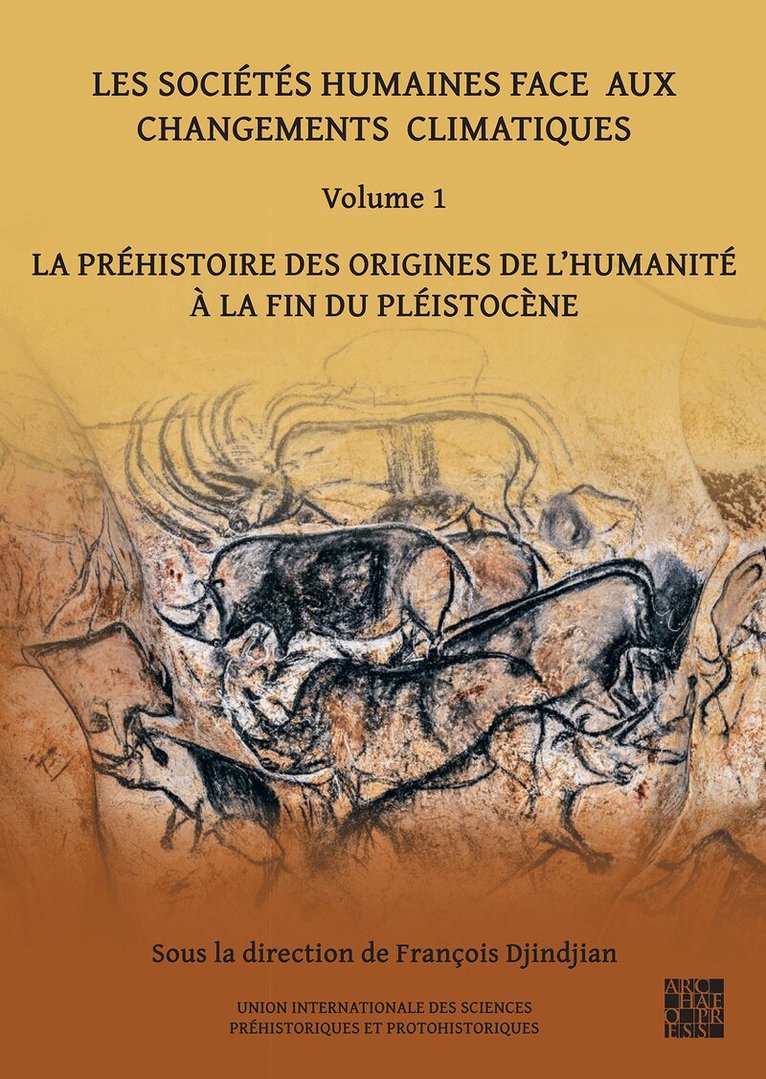
Is climate change a factor whose impact on human societies can be witnessed through time, forcing them to adapt and find sustainable solutions? This book is the first of two volumes exploring human societies facing climate change in pre and protohistory. Volume 1 concerns prehistory from the earliest humans to the end of the Pleistocene.
Häftad, Franska, 2022
332 kr
Skickas
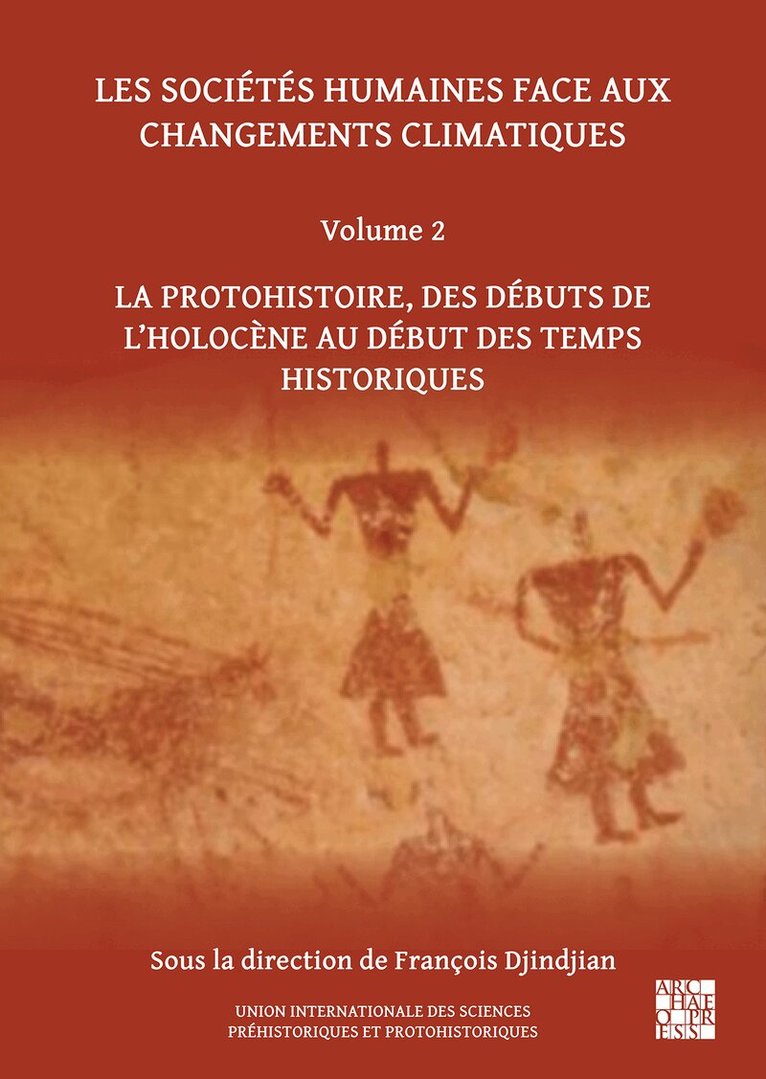
Is climate change a factor whose impact on human societies can be witnessed through time, forcing them to adapt and find sustainable solutions? This book is the second of two volumes exploring human societies facing climate change in pre and protohistory. Volume 2 concerns protohistory, from the beginning of the Holocene to historical times.
Del 3 - Union Internationale Des Sciences Préhistoriques Et Protohistoriques
Human Societies Facing Climate Change
Volume 3: Determinisms in Prehistoric Societies: Climate Changes, Environments, Functional Constraints and Cultural Tradition
Häftad, Engelska, 2024
695 kr
Skickas
Collected papers from a symposium organized by the International Academy of Prehistory and Protohistory (AIPP) in Paris, 2023. The chosen theme “Determinisms in prehistoric societies: climate change, environments, functional constraints and cultural traditions” is part of the project “Human societies in the face of climate change”.
Inbunden, Engelska, 2024
771 kr
Skickas
Proceedings from the 2022 Metal Ages colloquium in Ankara. Topics include water supply and management, copper metallurgy, pottery, and combat techniques, spanning the Chalcolithic to Late Iron Age across Iran to Iberia, with a focus on artefact archaeometry.
Del 15 - Union Internationale Des Sciences Préhistoriques Et Protohistoriques
Contact, Circulation, Exchange
Proceedings of the Modified Bone & Shell Uispp Commission Conference (2-3 March 2017, University of Trnava)
Häftad, Engelska, 2023
576 kr
Tillfälligt slut
Contact, Circulation, Exchange collects ten articles focusing on worked hard materials of animal origin (shell, tusk, bone, antler) ranging chronologically from the Upper Palaeolithic to the Middle Ages. The authors have varied academic backgrounds that enhance the archaeological analyses carried out, often at first hand, on numerous collections from the Old and New Worlds. Evidence of contact between past populations with distinct technical traditions is found in the dynamic imposed by using certain craft methods, such as stone pressure flaking (7,000 BC). Another kind of stimulus may have given rise to a tool with a specific use in the migration period, the sumak (300 BC-600 AD). Apart from the attraction of a novel technique or a new piece of equipment, it was the attraction of the raw material and the hunting sites that formed the guiding principle behind the mobility of groups within a territory, in early (35,000-12,000 BC) as in recent prehistory (up to 1500 AD). Weaponry, adornments and/or the animal species used are then powerful markers of the extent of trade routes and networks, and even of craftsmanship when related to village settlements (4,500-2,500 BC). In antiquity, the exotic rather than exogenous origin of materials was used to develop unique skills in the service of cults. In the diffusion of figurines, representation took precedence over the unique or sought-after nature of the material, whose origin remained nonetheless animal.