Usability – serie
494 kr
Skickas inom 7-10 vardagar
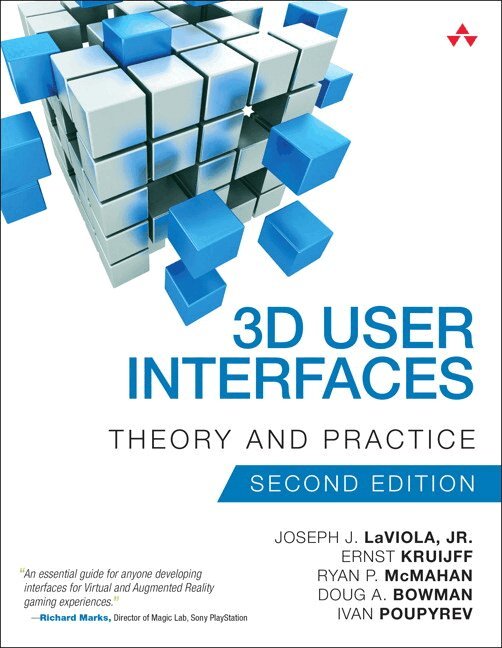
From video games to mobile augmented reality, 3D interaction is everywhere. But simply choosing to use 3D input or 3D displays isn't enough: 3D user interfaces (3D UIs) must be carefully designed for optimal user experience. 3D User Interfaces: Theory and Practice, Second Edition is today's most comprehensive primary reference to building outstanding 3D UIs. Four pioneers in 3D user interface research and practice have extensively expanded and updated this book, making it today's definitive source for all things related to state-of-the-art 3D interaction.
This edition goes far beyond VR, covering the full spectrum of emerging applications for 3D UIs, and presenting an extraordinary array of pioneering techniques and technologies. The authors combine theoretical foundations, analysis of devices and techniques, empirically validated design guidelines, and much more. Throughout each chapter, they illustrate key concepts with running case studies on gaming, mobile AR, and robot teleoperation.
You'll find authoritative, accessible coverage of all this, and much more:
Essentials of HCI and human factors (for thousands of students and practitioners now entering the field) How 3D UIs have evolved, and the "hard problems" that remain 3D UIs in console gaming, VR, augmented reality (AR), robot teleoperation, mobile/wearable computers, and remote collaboration How 3D input/output enables users to perceive and act much as they do in the physical world 3D output devices, including visual, auditory, haptic, and tactile displays 3D input devices, including traditional, special purpose, and direct human input via biosignals (e.g., brain input) 3D interaction techniques for common tasks such as selection, manipulation, navigation, and system control Strategies for designing and developing 3D UIs, including the use of 2D interaction; "magic" vs. "natural" interaction techniques; multimodal interaction, and two-handed interaction Evaluating existing 3D UIs, and previewing their future692 kr
Skickas
401 kr
Skickas inom 7-10 vardagar
Today’s Comprehensive and Authoritative Guide to Augmented Reality
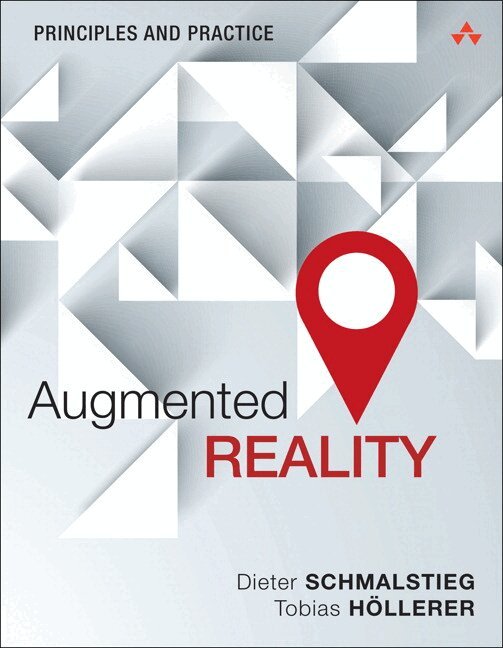
By overlaying computer-generated information on the real world, augmented reality (AR) amplifies human perception and cognition in remarkable ways. Working in this fast-growing field requires knowledge of multiple disciplines, including computer vision, computer graphics, and human-computer interaction. Augmented Reality: Principles and Practice integrates all this knowledge into a single-source reference, presenting today’s most significant work with scrupulous accuracy. Pioneering researchers Dieter Schmalstieg and Tobias Höllerer carefully balance principles and practice, illuminating AR from technical, methodological, and user perspectives.
Coverage includes
Displays: head-mounted, handheld, projective, auditory, and haptic Tracking/sensing, including physical principles, sensor fusion, and real-time computer vision Calibration/registration, ensuring repeatable, accurate, coherent behavior Seamless blending of real and virtual objects Visualization to enhance intuitive understanding Interaction–from situated browsing to full 3D interaction Modeling new geometric content Authoring AR presentations and databases Architecting AR systems with real-time, multimedia, and distributed elementsThis guide is indispensable for anyone interested in AR, including developers, engineers, students, instructors, researchers, and serious hobbyists.