What Do We Believe - Böcker
Visar alla böcker i serien What Do We Believe. Handla med fri frakt och snabb leverans.
5 produkter
5 produkter
100 kr
Skickas inom 5-8 vardagar
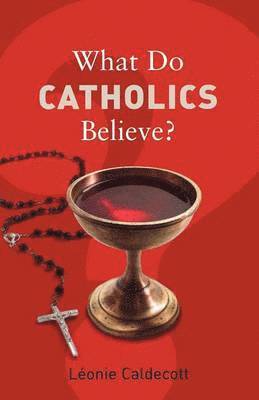
The Catholic Church is by far the largest Christian denomination and the largest organized body of any world religion. Well over a billion people - or over one-sixth of the world's population - belong to the Roman Catholic Church. But what do Catholics actually believe? While not neglecting those aspects of the faith which all Christians share, Léonie Caldecott's volume in the What Do We Believe? series pays particular attention to those aspects of the faith which make Catholicism distinctive. She emphasizes the importance to Catholics of a sense of the history of their Church (in both its positive and negative aspects) traceable back to St Peter, the first Pope, and the central role of the Papacy ever since.But more important still is the sacrament of Mass: the sharing in the humanity of God incarnate, the participation - through an act as simple as eating - in his divinity. The book also explains such aspects of the faith as the Holy Spirit, the importance of Mary and other saints, the doctrine of Papal Infallibility, and looks at the challenges the faith has to confront in the twenty-first century.
85 kr
Tillfälligt slut
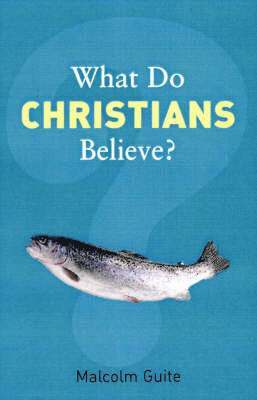
'I give you a new commandment, that you love one another. Just as I have loved you, you also should love one another' Jesus ChristChristianity began as a minor sect within Judaism and has become one of the major world religions. What started as a small group of people who shared the same language, lifestyle and background is now a movement which embraces many different languages and cultures, giving rise to an astonishing variety of practices and interpretations - yet all with a common basis of shared faith inspired by the teaching, life, death and new life of a carpenter from Nazareth. How did this happen? In this book, written for the reader looking for quick practical insights into the beliefs and practices of Christianity, Malcolm Guite offers a lucid summary and interpretation of the Christian faith. Jesus himself identified love as the essential element in both worship and daily life. Using this teaching, and the core Christian belief that Jesus was God's way of opening himself to humanity, Guite explains the inner meaning of such key Christian teachings as atonement, redemption and the concept of God as Trinity.
154 kr
Skickas inom 5-8 vardagar
Paganism is among the fastest-growing religions in the world. It is most commonly expressed in the celebration of seasonal festivals, such as the solstices, through the use of 'magic' and in attempts to make changes in the world or in individual consciousness. Among the number of different paths to paganism are Druidry, Wicca, Heathenry and Goddess Spirituality, all of which celebrate nature. Paganism engages with some of the chief concerns of this age: ecology and feminism, for example. It draws on ancient sources but allows individuals to explore their current relevance. At its heart, Paganism encourages people to live respectfully alongside all life and not to raise humanity above any other species. Graham Harvey explores Paganism's appeal and gives a clear insight into its key beliefs.
83 kr
Skickas
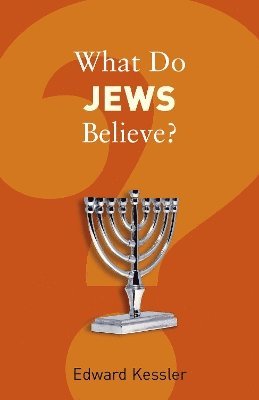
There is a story about a Jew who travels from Israel to the United States. When he returns, he tells his friend some of the amazing things he has seen. 'I met a Jew who had grown up in a yeshiva and knew large sections of the Talmud by heart. I met a Jew who was an atheist. I met a Jew who owned a large business and I met a Jew who was an ardent communist.' 'So what's so strange?' the friend asks. 'America is a big country and millions of Jews live there.' 'You don't understand,' the man answers. 'It was the same Jew.'Judaism is not simply a series of beliefs. It is a practice and a way of life. What Do Jews Believe? explores the variety of ways Jews live their lives: religious and secular, Ashkenazi and Sephardi, Jews in Israel and Jews who live in the Diaspora. It asks what Judaism means and what it means to be a Jew. It also asks how and why such a small number of people, totalling no more than 20 million worldwide, have played such a significant role in our history.
108 kr
Skickas
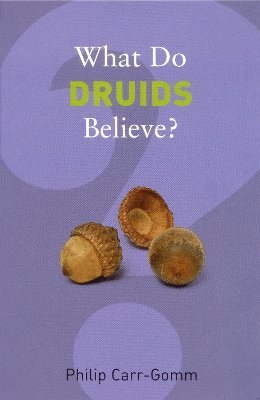
Druidism evolved out of the tribal cultures of Britain, Ireland and western France over two thousand years ago. In the seventeenth century it experienced a revival, which has continued to this day. Contemporary Druids can now be found all over the world, and Druidry's appeal lies in its focus on a reverence for the natural world, a belief in the value of personal creativity and of developing a sense of communion with the powers of nature and the spirit. Druidry's startling recent growth lies in its broad appeal: some treat it as a philosophy, others as a religion, still others as a path of self-development. Druids can be Pagan, or can be followers of other faiths, and a Druid ceremony might include Christian and Buddhist Druids alongside Pagan and Wiccan Druids. Philip Carr-Gomm explains the practical value of following Druidism today, and examines its core beliefs and relevance to the contemporary issues that face us all.