What is Sociology? - Böcker
Visar alla böcker i serien What is Sociology?. Handla med fri frakt och snabb leverans.
12 produkter
12 produkter
234 kr
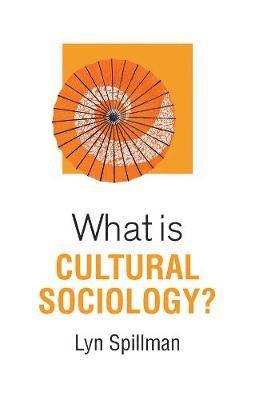
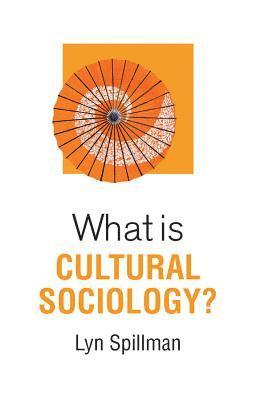
Culture, cultural difference, and cultural conflict always surround us. Cultural sociologists aim to understand their role across all aspects of social life by examining processes of meaning-making.In this crisp and accessible book, Lyn Spillman demonstrates many of the conceptual tools cultural sociologists use to explore how people make meaning. Drawing on vivid examples, she offers a compelling analytical framework within which to view the entire field of cultural sociology. In each chapter, she introduces a different angle of vision, with distinct but compatible approaches for explaining culture and its role in social life: analyzing symbolic forms, meaning-making in interaction, and organized production.This book both offers a concise answer to the question of what cultural sociology is and provides an overview of the fundamental approaches in the field.
548 kr
Skickas inom 7-10 vardagar
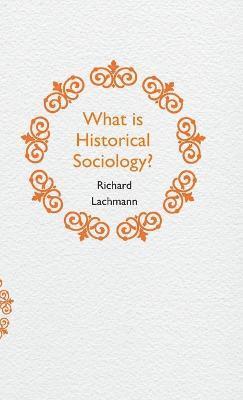
Sociology began as a historical discipline, created by Marx, Weber and others, to explain the emergence and consequences of rational, capitalist society. Today, the best historical sociology combines precision in theory-construction with the careful selection of appropriate methodologies to address ongoing debates across a range of subfields. This innovative book explores what sociologists gain by treating temporality seriously, what we learn from placing social relations and events in historical context. In a series of chapters, readers will see how historical sociologists have addressed the origins of capitalism, revolutions and social movements, empires and states, inequality, gender and culture. The goal is not to present a comprehensive history of historical sociology; rather, readers will encounter analyses of exemplary works and see how authors engaged past debates and their contemporaries in sociology, history and other disciplines to advance our understanding of how societies are created and remade across time. This illuminating book is designed for use in graduate and advanced undergraduate courses as an introduction to historical sociology and as a guide to employing historical analysis across the discipline.
230 kr
Skickas inom 7-10 vardagar
Sociology began as a historical discipline, created by Marx, Weber and others, to explain the emergence and consequences of rational, capitalist society. Today, the best historical sociology combines precision in theory-construction with the careful selection of appropriate methodologies to address ongoing debates across a range of subfields. This innovative book explores what sociologists gain by treating temporality seriously, what we learn from placing social relations and events in historical context. In a series of chapters, readers will see how historical sociologists have addressed the origins of capitalism, revolutions and social movements, empires and states, inequality, gender and culture. The goal is not to present a comprehensive history of historical sociology; rather, readers will encounter analyses of exemplary works and see how authors engaged past debates and their contemporaries in sociology, history and other disciplines to advance our understanding of how societies are created and remade across time. This illuminating book is designed for use in graduate and advanced undergraduate courses as an introduction to historical sociology and as a guide to employing historical analysis across the discipline.
230 kr
Skickas inom 7-10 vardagar
Social movements play a central role in the scope and direction of social change. They were instrumental in the creation of the modern state and, today, are major forces in politics and culture. Environmentalism, gay rights, alterglobalization, and Islamic fundamentalism are all movements with far-reaching impacts on contemporary society.What is a Social Movement? traces how the study of movements such as these - of their structures, their ideas, and their repertoires of protest - have grown in recent years to become a major focus in the social sciences. It deftly navigates the organizational, ideational, and cultural complexity of political and social movements, and offers a succinct but comprehensive overview of the hows, whys, and wheretofores of studying them. The book analyzes how politics and culture frequently intersect as people participate in movements that call for change and pursue group interests. By focusing on movement organizations and networks, on what they do, and how they articulate their ideas of justice and collective interests, What is a Social Movement? lays the essential groundwork for understanding this significant and exciting field of research, where it came from, and where it is headed.
187 kr
Tillfälligt slut
597 kr
Skickas inom 7-10 vardagar
Culture, cultural difference, and cultural conflict always surround us. Cultural sociologists aim to understand their role across all aspects of social life by examining processes of meaning-making.In this crisp and accessible book, Lyn Spillman demonstrates many of the conceptual tools cultural sociologists use to explore how people make meaning. Drawing on vivid examples, she offers a compelling analytical framework within which to view the entire field of cultural sociology. In each chapter, she introduces a different angle of vision, with distinct but compatible approaches for explaining culture and its role in social life: analyzing symbolic forms, meaning-making in interaction, and organized production.This book both offers a concise answer to the question of what cultural sociology is and provides an overview of the fundamental approaches in the field.
652 kr
Skickas inom 7-10 vardagar
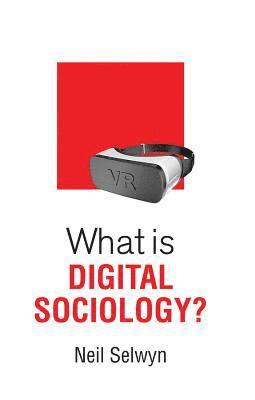
The rise of digital technology is transforming the world in which we live. Our digitalized societies demand new ways of thinking about the social, and this short book introduces readers to an approach that can deliver this: digital sociology.Neil Selwyn examines the concepts, tools and practices that sociologists are developing to analyze the intersections of the social and the digital. Blending theory and empirical examples, the five chapters highlight areas of inquiry where digital approaches are taking hold and shaping the discipline of sociology today. The book explores key topics such as digital race and digital labor, as well as the fast-changing nature of digital research methods and diversifying forms of digital scholarship.Designed for use in advanced undergraduate and graduate courses, this timely introduction will be an invaluable resource for all sociologists seeking to focus their craft and thinking toward the social complexities of the digital age.
234 kr
The rise of digital technology is transforming the world in which we live. Our digitalized societies demand new ways of thinking about the social, and this short book introduces readers to an approach that can deliver this: digital sociology.Neil Selwyn examines the concepts, tools and practices that sociologists are developing to analyze the intersections of the social and the digital. Blending theory and empirical examples, the five chapters highlight areas of inquiry where digital approaches are taking hold and shaping the discipline of sociology today. The book explores key topics such as digital race and digital labor, as well as the fast-changing nature of digital research methods and diversifying forms of digital scholarship.Designed for use in advanced undergraduate and graduate courses, this timely introduction will be an invaluable resource for all sociologists seeking to focus their craft and thinking toward the social complexities of the digital age.
597 kr
Skickas inom 7-10 vardagar
Given the escalating and existential nature of our current environmental crises, environmental sociology has never mattered more. We now face global environmental threats, such as climate change and biodiversity loss, as well as local threats, such as pollution and household toxins. The complex interactions of such pervasive problems demand an understanding of the social nature of environmental impacts, the underlying drivers of these impacts, and the range of possible solutions. Environmental sociologists continue to make indispensable contributions to this crucial task.This compact book introduces environmental sociology and emphasizes how environmental sociologists do “public sociology,” that is, work with broad public application. Using a diversity of theoretical approaches and research methods, environmental sociologists continue to give marginalized people a voice, identify the systemic drivers of our environmental crises, and evaluate solutions. Diana Stuart shines a light on this work and gives readers insight into applying the tools of environmental sociology to minimize impacts and create a more sustainable and just world.
217 kr
Skickas inom 7-10 vardagar
Given the escalating and existential nature of our current environmental crises, environmental sociology has never mattered more. We now face global environmental threats, such as climate change and biodiversity loss, as well as local threats, such as pollution and household toxins. The complex interactions of such pervasive problems demand an understanding of the social nature of environmental impacts, the underlying drivers of these impacts, and the range of possible solutions. Environmental sociologists continue to make indispensable contributions to this crucial task.This compact book introduces environmental sociology and emphasizes how environmental sociologists do “public sociology,” that is, work with broad public application. Using a diversity of theoretical approaches and research methods, environmental sociologists continue to give marginalized people a voice, identify the systemic drivers of our environmental crises, and evaluate solutions. Diana Stuart shines a light on this work and gives readers insight into applying the tools of environmental sociology to minimize impacts and create a more sustainable and just world.
663 kr
Skickas inom 7-10 vardagar
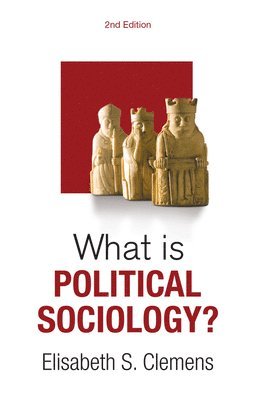
With an entire discipline devoted to political science, what is distinctive about political sociology? This concise book explains what a sociological perspective brings to our understanding of the emergence, reproduction, and transformation of different forms of political order. Crucially, political sociology expands the field of view to the politics that happen in other social settings – in the family, at work, in civic associations – as well as the ways in which social attributes such as class, religion, age, race, and gender shape patterns of political participation and the distribution of political power.Political sociology grapples with these issues across an enormous range of historical and geographic settings, from intimate to geo-political scales. It requires an analytic toolkit that includes concepts of power, identities and inequalities, social closure, civil society, and modes of political action. Using these central concepts, this updated edition of What is Political Sociology? discusses the major forms of political order, processes of regime formation and revolution, the social bases for political participation, policy formation as well as feedbacks, social movements and social change, and the possibilities for new forms of digital and transnational politics. In sum, the book offers an insightful introduction to this core perspective on social life.
217 kr
Skickas inom 7-10 vardagar
With an entire discipline devoted to political science, what is distinctive about political sociology? This concise book explains what a sociological perspective brings to our understanding of the emergence, reproduction, and transformation of different forms of political order. Crucially, political sociology expands the field of view to the politics that happen in other social settings – in the family, at work, in civic associations – as well as the ways in which social attributes such as class, religion, age, race, and gender shape patterns of political participation and the distribution of political power.Political sociology grapples with these issues across an enormous range of historical and geographic settings, from intimate to geo-political scales. It requires an analytic toolkit that includes concepts of power, identities and inequalities, social closure, civil society, and modes of political action. Using these central concepts, this updated edition of What is Political Sociology? discusses the major forms of political order, processes of regime formation and revolution, the social bases for political participation, policy formation as well as feedbacks, social movements and social change, and the possibilities for new forms of digital and transnational politics. In sum, the book offers an insightful introduction to this core perspective on social life.