Wiley Series on Processing of Engineering Materials - Böcker
Visar alla böcker i serien Wiley Series on Processing of Engineering Materials. Handla med fri frakt och snabb leverans.
4 produkter
4 produkter
Del 3 - Wiley Series on Processing of Engineering Materials
Handbook of Mathematical Relations in Particulate Materials Processing
Ceramics, Powder Metals, Cermets, Carbides, Hard Materials, and Minerals
Inbunden, Engelska, 2008
1 757 kr
Skickas inom 7-10 vardagar
The only handbook of mathematical relations with a focus on particulate materials processing The National Science Foundation estimates that over 35% of materials-related funding is now directed toward modeling. In part, this reflects the increased knowledge and the high cost of experimental work. However, currently there is no organized reference book to help the particulate materials community with sorting out various relations. This book fills that important need, providing readers with a quick-reference handbook for easy consultation.This one-of-a-kind handbook gives readers the relevant mathematical relations needed to model behavior, generate computer simulations, analyze experiment data, and quantify physical and chemical phenomena commonly found in particulate materials processing. It goes beyond the traditional barriers of only one material class by covering the major areas in ceramics, cemented carbides, powder metallurgy, and particulate materials. In many cases, the governing equations are the same but the terms are material-specific. To rise above these differences, the authors have assembled the basic mathematics around the following topical structure: Powder technology relations, such as those encountered in atomization, milling, powder production, powder characterization, mixing, particle packing, and powder testing Powder processing, such as uniaxial compaction, injection molding, slurry and paste shaping techniques, polymer pyrolysis, sintering, hot isostatic pressing, and forging, with accompanying relations associated with microstructure development and microstructure coarsening Finishing operations, such as surface treatments, heat treatments, microstructure analysis, material testing, data analysis, and structure-property relations Handbook of Mathematical Relations in Particulate Materials Processing is suited for quick reference with stand-alone definitions, making it the perfect complement to existing resources used by academic researchers, corporate product and process developers, and various scientists, engineers, and technicians working in materials processing.
Del 5 - Wiley Series on Processing of Engineering Materials
Chemistry and Physics of Mechanical Hardness
Inbunden, Engelska, 2009
1 511 kr
Skickas inom 11-20 vardagar
A comprehensive treatment of the chemistry and physics of mechanical hardnessChemistry and Physics of Mechanical Hardness presents a general introduction to hardness measurement and the connections between hardness and fundamental materials properties.Beginning with an introduction on the importance of hardness in the development of technology, the book systematically covers: IndentationChemical bondingPlastic deformationCovalent semiconductorsSimple metals and alloysTransition metalsIntermetallic compoundsIonic crystalsMetal-metalloidsOxidesMolecular crystalsPolymersGlassesHot hardnessChemical hardnessSuper-hard materialsChemistry and Physics of Mechanical Hardness is essential reading for materials scientists, mechanical engineers, metallurgists, ceramists, chemists, and physicists who are interested in learning how hardness is related to other properties and to the building blocks of everyday matter.
Del 7 - Wiley Series on Processing of Engineering Materials
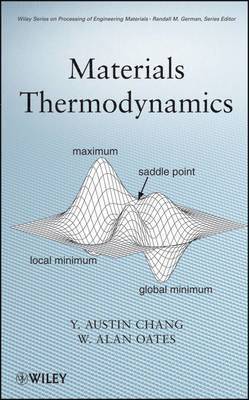
Materials Thermodynamics
Inbunden, Engelska, 2010
1 300 kr
Skickas inom 7-10 vardagar
A timely, applications-driven text in thermodynamics Materials Thermodynamics provides both students and professionals with the in-depth explanation they need to prepare for the real-world application of thermodynamic tools. Based upon an actual graduate course taught by the authors, this class-tested text covers the subject with a broader, more industry-oriented lens than can be found in any other resource available. This modern approach: Reflects changes rapidly occurring in society at large—from the impact of computers on the teaching of thermodynamics in materials science and engineering university programs to the use of approximations of higher order than the usual Bragg-Williams in solution-phase modeling Makes students aware of the practical problems in using thermodynamics Emphasizes that the calculation of the position of phase and chemical equilibrium in complex systems, even when properly defined, is not easy Relegates concepts like equilibrium constants, activity coefficients, free energy functions, and Gibbs-Duhem integrations to a relatively minor role Includes problems and exercises, as well as a solutions manual This authoritative text is designed for students and professionals in materials science and engineering, particularly those in physical metallurgy, metallic materials, alloy design and processing, corrosion, oxidation, coatings, and high-temperature alloys.
1 427 kr
Skickas inom 7-10 vardagar
Discusses the growth mechanisms of tin whiskers and the effective mitigation strategies necessary to reduce whisker growth risksThis book covers key tin whisker topics, ranging from fundamental science to practical mitigation strategies. The text begins with a review of the characteristic properties of local microstructures around whisker and hillock grains to identify why these particular grains and locations become predisposed to forming whiskers and hillocks. The book discusses the basic properties of tin-based alloy finishes and the effects of various alloying elements on whisker formation, with a focus on potential mechanisms for whisker suppression or enhancement for each element. Tin whisker risk mitigation strategies for each tier of the supply chain for high reliability electronic systems are also described. Discusses whisker formation factors including surface grain geometry, crystallographic orientation-dependent surface grain boundary structure, and the localization of elastic strain/strain energy density distributionExamines how whiskers and hillocks evolve in time through real-time studies of whisker growth with the scanning electron microscope/focused ion beaming milling (SEM/FIB)Covers characterization methods of tin and tin-based alloy finishes such as transmission electron microscopy (TEM), scanning electron microscopy (SEM), and electron backscatter diffraction (EBSD)Reviews theories of mechanically-induced tin whiskers with case studies using pure tin and other lead-free finishes shown to evaluate the pressure-induced tin whiskersMitigating Tin Whisker Risks: Theory and Practice is intended for the broader electronic packaging and manufacturing community including: manufacturing engineers, packaging development engineers, as well as engineers and researchers in high reliability industries.