• Fri frakt över 249 kr
  • •
  • Snabba leveranser
  • •
  • Billiga böcker
Kundservice

Du är på sajten för privatpersoner.

Företag, bibliotek eller offentlig verksamhet?

Du handlar på classic.bokus.com, där alla dina funktioner finns intakta.
Till classic.bokus.com
Bokus logotyp. Gå till startsidan.
  • Erbjudanden
  • Nyheter
  • Student
  • Topplistor
  • Barn & ungdom
  • Bokus Play
  • E-böcker
  • Pocketböcker
  • Spel & pussel

10% rabatt på allt med kod: NYSTART10 →

Sidfot

Mina sidor

    Hjälp

    • Kundservice
    • Vanliga frågor och svar
    • Frakt och leverans
    • Retur vid ångerrätt
    • Reklamera vara
    • Betalning
    • Köpvillkor
    • Allmänna villkor
    • Information om webbplatsens tillgänglighet

    Om Bokus

    • Om oss
    • Pressrum
    • För studenter
    • För företag
    • För bibliotek och offentlig verksamhet
    • För leverantörer
    • Hållbarhet

    Populärt

    • Aktuella erbjudanden
    • Presentkort
    • Studentlitteratur
    • Nya böcker
    • Topplistor
    • Signerade böcker
    • Engelska böcker

    Inspiration

    • Boktips
    • BookTok
    • Populära bokserier
    • Barnbokskaraktärer
    • Populära författare
    Logotyp för Bokus
    Följ oss på Facebook (extern länk)Följ oss på Instagram (extern länk)Följ oss på YouTube (extern länk)Följ oss på TikTok (extern länk)
    bokus @ CookiesAnpassa cookiesIntegritetspolicyKöpvillkor
    Till Citymail hemsida (extern länk)Till Budbee hemsida (extern länk)Till Postnord hemsida (extern länk)Till Schenker hemsida (extern länk)Till Early Bird hemsida (extern länk)Till Walleys hemsida (extern länk)
    1. Naturvetenskap och teknik
    2. Teknik och industri
    3. Maskinteknik och material

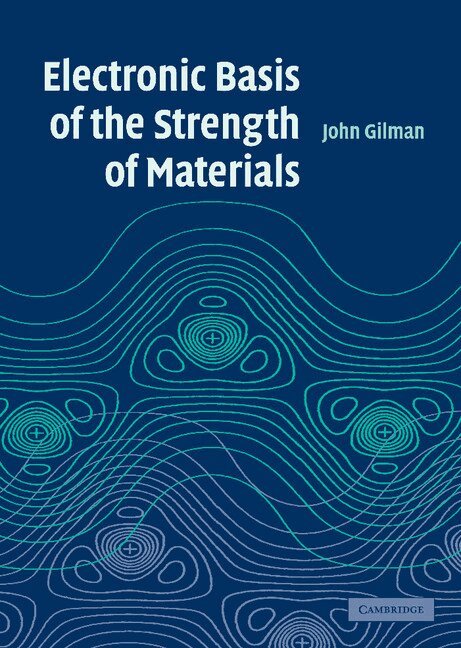
    Chemistry and Physics of Mechanical Hardness

    AvJohn J. Gilman

    Inbunden, Engelska, 2009

    Del 5 i serien Wiley Series on Processing of Engineering Materials

    1 543 kr

    Beställningsvara. Skickas inom 11-20 vardagar. Fri frakt över 249 kr.

    Fler format och utgåvor

    E-bok

    1 735 kr

    Beskrivning

    A comprehensive treatment of the chemistry and physics of mechanical hardnessChemistry and Physics of Mechanical Hardness presents a general introduction to hardness measurement and the connections between hardness and fundamental materials properties.Beginning with an introduction on the importance of hardness in the development of technology, the book systematically covers: IndentationChemical bondingPlastic deformationCovalent semiconductorsSimple metals and alloysTransition metalsIntermetallic compoundsIonic crystalsMetal-metalloidsOxidesMolecular crystalsPolymersGlassesHot hardnessChemical hardnessSuper-hard materialsChemistry and Physics of Mechanical Hardness is essential reading for materials scientists, mechanical engineers, metallurgists, ceramists, chemists, and physicists who are interested in learning how hardness is related to other properties and to the building blocks of everyday matter.

    Produktinformation

    • Utgivningsdatum:2009-07-03
    • Mått:160 x 241 x 19 mm
    • Vikt:526 g
    • Format:Inbunden
    • Språk:Engelska
    • Serie:Wiley Series on Processing of Engineering Materials
    • Antal sidor:232
    • Förlag:John Wiley & Sons Inc
    • ISBN:9780470226520

    Utforska kategorier

    • Maskinteknik och material inom Naturvetenskap och teknik

    Mer om författaren

    John J. Gilman, PhD, is Research Professor in the Department of Materials Science and Engineering at UCLA. He has been contributing to the scientific literature of mechanical hardness for almost fifty years. Dr. Gilman is the author of three other books and 325 technical papers, and the owner of six patents. He has been an editor for various books and magazines.

    Innehållsförteckning

    • Preface xi1 Introduction 11.1 Why Hardness Matters (A Short History) 11.2 Purpose of This Book 51.3 The Nature of Hardness 72 Indentation 112.1 Introduction 112.2 The Chin-Gilman Parameter 142.3 What Does Indentation Hardness Measure? 142.4 Indentation Size Effect 202.5 Indentation Size (From Macro to Nano) 222.6 Indentation vs. Scratch Hardness 232.7 Blunt or Soft Indenters 242.8 Anisotropy 242.9 Indenter and Specimen Surfaces 253 Chemical Bonding 273.1 Forms of Bonding 273.2 Atoms 283.3 State Symmetries 293.4 Molecular Bonding (Hydrogen) 313.5 Covalent Bonds 363.6 Bonding in Solids 413.7 Electrodynamic Bonding 453.8 Polarizability 474 Plastic Deformation 514.1 Introduction 514.2 Dislocation Movement 524.3 Importance of Symmetry 554.4 Local Inelastic Shearing of Atoms 564.5 Dislocation Multiplication 574.6 Individual Dislocation Velocities (Microscopic Distances) 594.7 Viscous Drag 604.8 Deformation-Softening and Elastic Relaxation 624.9 Macroscopic Plastic Deformation 635 Covalent Semiconductors 675.1 Introduction 675.2 Octahedral Shear Stiffness 695.3 Chemical Bonds and Dislocation Mobility 715.4 Behavior of Kinks 755.5 Effect of Polarity 775.6 Photoplasticity 795.7 Surface Environments 805.8 Effect of Temperature 805.9 Doping Effects 806 Simple Metals and Alloys 836.1 Intrinsic Behavior 836.2 Extrinsic Sources of Plastic Resistance 857 Transition Metals 997.1 Introduction 997.2 Rare Earth Metals 1018 Intermetallic Compounds 1038.1 Introduction 1038.2 Crystal Structures 1048.3 Calculated Hardness of NiAl 1128.4 Superconducting Intermetallic Compounds 1138.5 Transition Metal Compounds 1159 Ionic Crystals 1199.1 Alkali Halides 1199.2 Glide in the NaCl Structure 1209.3 Alkali Halide Alloys 1239.4 Glide in CsCl Structure 1249.5 Effect of Imputities 1249.6 Alkaline Earth Fluorides 1269.7 Alkaline Earth Sulfi des 1289.8 Photomechanical Effects 1289.9 Effects of Applied Electric Fields 1299.10 Magneto-Plasticity 12910 Metal-Metalloids (Hard Metals) 13110.1 Introduction 13110.2 Carbides 13210.3 Tungsten Carbide 13410.4 Borides 13610.5 Titanium Diboride 13710.6 Rare Metal Diborides 13810.7 Hexaborides 13810.8 Boron Carbide (Carbon Quasi-Hexaboride) 14010.9 Nitrides 14111 Oxides 14311.1 Introduction 14311.2 Silicates 14311.3 Cubic Oxides 14711.4 Hexagonal (Rhombohedral) Oxides 15211.5 Comparison of Transition Metal Oxides with "Hard Metals" 15512 Molecular Crystals 15712.1 Introduction 15712.2 Anthracene 15812.3 Sucrose 15912.4 Amino Acids 15912.5 Protein Crystals 16012.6 Energetic Crystals (Explosives) 16112.7 Commentary 16113 Polymers 16313.1 Introduction 16313.2 Thermosetting Resins (Phenolic and Epoxide) 16413.3 Thermoplastic Polymers 16513.4 Mechanisms of Inelastic Plasticity 16613.5 "Natural" Polymers (Plants) 16613.6 "Natural" Polymers (Animals) 16814 Glasses 17114.1 Introduction 17114.2 Inorganic Glasses 17214.3 Metallic Glasses 17614.3.1 Hardness—Shear Modulus Relationship 17714.3.2 Stable Compositions 18015 Hot Hardness 18315.1 Introduction 18315.2 Nickel Aluminide versus Oxides 18415.3 Other Hard Compounds 18415.4 Metals 18515.5 Intermetallic Compounds 18716 Chemical Hardness 18916.1 Introduction 18916.2 Defi nition of Chemical Hardness 19016.3 Physical (Mechanical) Hardness 19216.4 Hardness and Electronic Stability 19316.5 Chemical and Elastic Hardness (Stiffness) 19416.6 Band Gap Density and Polarizability 19416.7 Compression Induced Structure Changes 19516.8 Summary 19617 "Superhard" Materials 19717.1 Introduction 19717.2 Principles for High Hardness 19717.3 Friction at High Loads 19817.4 Superhard Materials 199References 200Index 203