• Fri frakt över 249 kr
  • •
  • Snabba leveranser
  • •
  • Billiga böcker
Kundservice

Du är på sajten för privatpersoner.

Företag, bibliotek eller offentlig verksamhet?

Du handlar på classic.bokus.com, där alla dina funktioner finns intakta.
Till classic.bokus.com
Bokus logotyp. Gå till startsidan.
  • Erbjudanden
  • Nyheter
  • Student
  • Topplistor
  • Barn & ungdom
  • Bokus Play
  • E-böcker
  • Pocketböcker
  • Spel & pussel

10% rabatt på allt med kod: NYSTART10 →

Sidfot

Mina sidor

    Hjälp

    • Kundservice
    • Vanliga frågor och svar
    • Frakt och leverans
    • Retur vid ångerrätt
    • Reklamera vara
    • Betalning
    • Köpvillkor
    • Allmänna villkor
    • Information om webbplatsens tillgänglighet

    Om Bokus

    • Om oss
    • Pressrum
    • För studenter
    • För företag
    • För bibliotek och offentlig verksamhet
    • För leverantörer
    • Hållbarhet

    Populärt

    • Aktuella erbjudanden
    • Presentkort
    • Studentlitteratur
    • Nya böcker
    • Topplistor
    • Signerade böcker
    • Engelska böcker

    Inspiration

    • Boktips
    • BookTok
    • Populära bokserier
    • Barnbokskaraktärer
    • Populära författare
    Logotyp för Bokus
    Följ oss på Facebook (extern länk)Följ oss på Instagram (extern länk)Följ oss på YouTube (extern länk)Följ oss på TikTok (extern länk)
    bokus @ CookiesAnpassa cookiesIntegritetspolicyKöpvillkor
    Till Citymail hemsida (extern länk)Till Budbee hemsida (extern länk)Till Postnord hemsida (extern länk)Till Schenker hemsida (extern länk)Till Early Bird hemsida (extern länk)Till Walleys hemsida (extern länk)
    1. Naturvetenskap och teknik
    2. Teknik och industri
    3. Maskinteknik och material

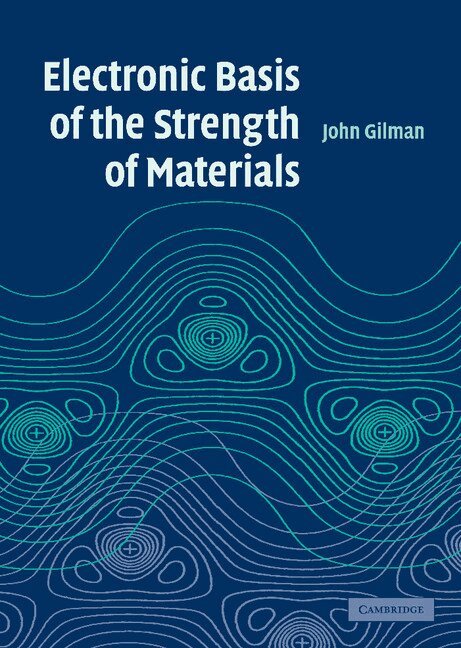
    Electronic Basis of the Strength of Materials

    AvJohn J. Gilman

    Häftad, Engelska, 2008

    798 kr

    Beställningsvara. Skickas inom 10-15 vardagar. Fri frakt över 249 kr.

    Fler format och utgåvor

    Inbunden

    1 764 kr

    Beskrivning

    This 2003 book relates the complete set of strength characteristics of constituent atoms to their electronic structures. These relationships require knowledge of both the chemistry and physics of materials. The book uses both classical and quantum mechanics, since both are needed to describe these properties, and begins with short reviews of each. Following these reviews, the three major branches of the strength of materials are given their own sections. They are: the elastic stiffnesses; the plastic responses; and the nature of fracture. This work will be of great value to academic and industrial research workers in the sciences of metallurgy, ceramics, microelectronics and polymers. It will also serve well as a supplementary text for the teaching of solid mechanics.

    Produktinformation

    • Utgivningsdatum:2008-09-11
    • Mått:170 x 244 x 15 mm
    • Vikt:470 g
    • Format:Häftad
    • Språk:Engelska
    • Antal sidor:292
    • Förlag:Cambridge University Press
    • ISBN:9780521078948

    Utforska kategorier

    • Maskinteknik och material inom Naturvetenskap och teknik

    Recensioner i media

    Review of the hardback: 'An invaluable read for academic and industrial research workers in the sciences of metallurgy, ceramics and microelectronics.' Materials World Including International Mining and Materials

    Innehållsförteckning

    • Part I. Introduction: Part II. Elements of Solid Mechanics: 1. Nature of elastic stiffness; 2. Generalized stress; 3. Generalized strain; 4. Elastic coefficients; Part III. Elements of Electron Mechanics: 5. Properties of electrons; 6. Quantum states; 7. Periodic patterns of electrons; 8. Heisenberg's Principle; Part IV. Elastic Stiffness: 9. Cohesion of atoms; 10. Intramolecular cohesion; 11. Intermolecular cohesion; 12. Bulk modulus; 13. Shear moduli; 14. Entropic elasticity (polymers); 15. Universality and unification; Part V. Plastic Strength: 16. Macroscopic plastic deformation; 17. Microscopic plastic deformation; 18. Dislocation mobility; Part VI. Fracture Resistance: 19. Mechanics of cracks; 20. Surface and interfacial energies; 21. Fracturing rates.