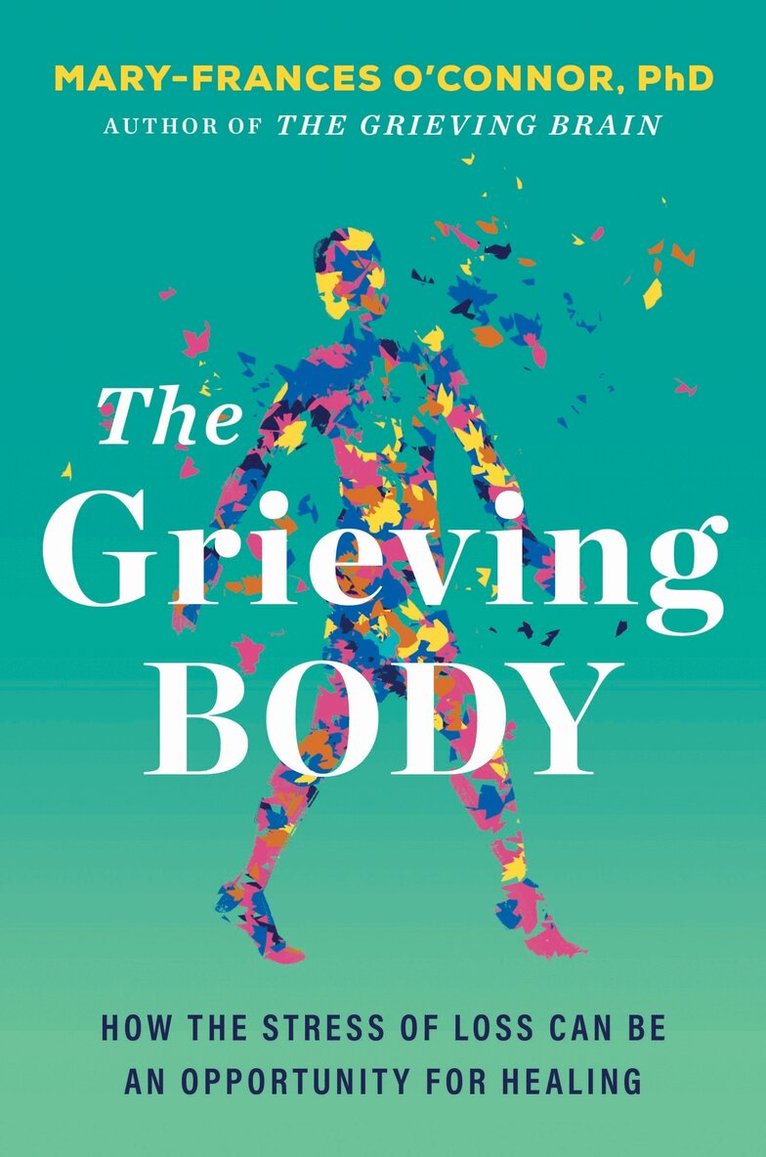
Inbunden, Engelska, 2025
Grieving Body
292 kr
Skickas torsdag 22/10. Fri frakt över 249 kr.
Beskrivning
Produktinformation
- Utgivningsdatum: 2025-02-27
- Mått: 161 x 229 x 25 mm
- Vikt: 431 g
- Format: Inbunden
- Språk: Engelska
- Serie: Grieving Brain Series
- Antal sidor: 304
- Förlag: HarperCollins Publishers Inc
- ISBN: 9780063338906
Utforska kategorier
Betyg & recensioner
1 recensioner, genomsnitt 5/5
- 5/5 Barry K
It took me longer than expected to finish The Grieving Body. Lingering post-Covid symptoms and a recent knee operation slowed me down. I read the book while simultaneously listening to the author's narration on Audible-pedalling the training bike at the gym. That combination-eyes and ears in motion-became more than reading. It became an embodied act of accompaniment. A gift.
Mary-Frances O'Connor's way of weaving science, research, and personal experience struck a deep chord. Her writing doesn't just inform-it connects. And it reminded me why I, too, work in the blurred space between clinical science and lived experience.
For me, grief is no longer just an object of inquiry-it's an environment I inhabit. And it drives me to ask new questions. Could despair-particularly the cognitive and emotional shutdown of acute grief-serve neurobiological functions?
From an attachment perspective, grief is deeply human. John Bowlby showed that early emotional bonds are not only vital for survival but shape our internal models of safety and connection. These systems remain active throughout life. When we lose someone central, the mind doesn't merely register "absence"-it initiates a process of protest, yearning, despair, and-eventually-reorganisation.
This reorganisation isn't abstract. It reaches every neural layer of association. All our future memories-plans, expectations, longings-must be revised. Each time we encounter something that evokes the lost person, the brain must reorient. Grief is recursive: a sustained effort to metabolise absence in the circuits shaped by presence.
In Bowlby's terms, grief is not a pathology but a signalling system gone searching. What we call despair may be part of this reprogramming-a temporary collapse of orientation while the brain updates its predictive map of closeness.
What if despair suspends executive function not just from suffering, but to allow reconfiguration of the attachment system, memory reconsolidation, and relational clearing?
O'Connor's work, together with Lisa Feldman Barrett's theory of constructed emotion and Bud Craig's findings on interoception and psychic pain, points in this direction. Joseph LeDoux's research adds that emotional memories are not just recalled but actively rewritten-labile and open to change before being restored.
Perhaps despair is a kind of cognitive hibernation-a retreat into an awake, slow-wave terrain, where the mind redraws its models of meaning and belonging.
I don't know. Perhaps it is metaphor more than mechanism. But this is the terrain I now live in-between memory and theory, trauma and integration. And it is work like O'Connor's that helps give form, if not resolution, to the aching complexities of loss.
Barry Karlsson
Specialist in Neuropsychology
Department of Medical Sciences, Uppsala University