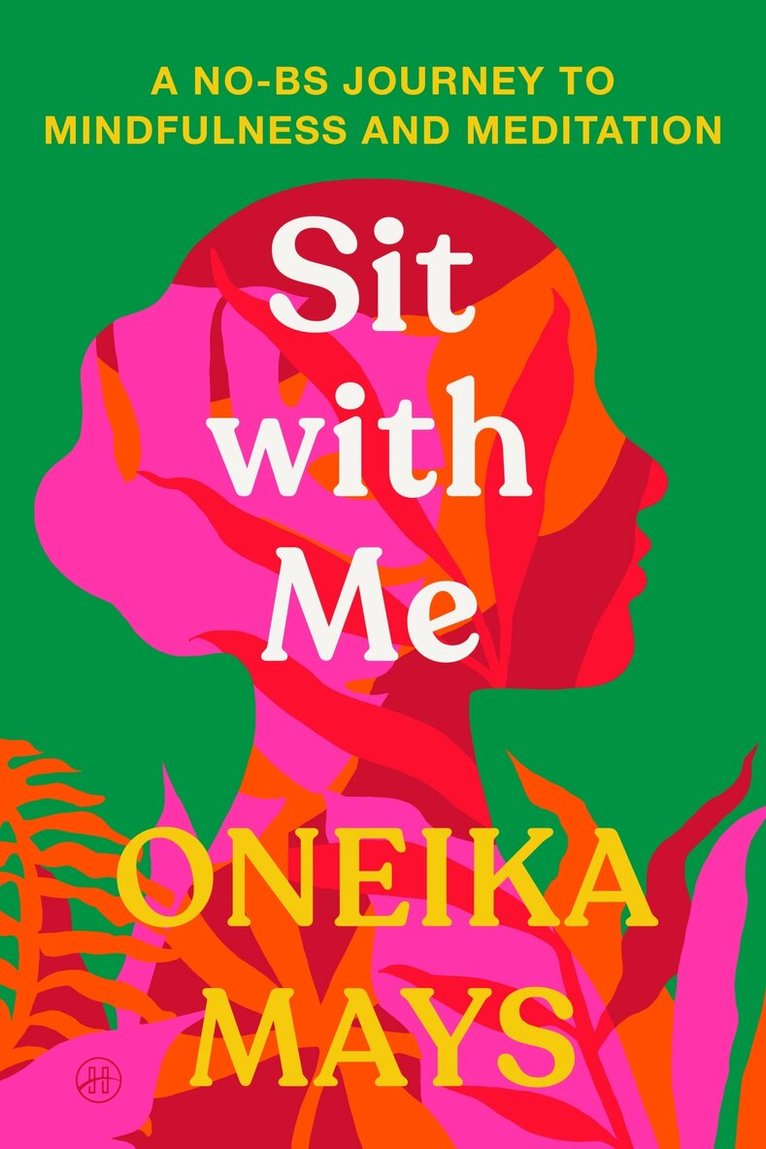
Sit with Me is one of those rare books that doesn’t just ask you to read. It asks you to reckon with yourself. Oneika Mays has given us something real, something necessary, something that reminds us that healing isn’t lofty or distant. It’s gritty, tender, and within reach. This book, this meditation, this prayer is for the ones carrying shame, the ones searching for wholeness, the ones who have been told to give to everyone but themselves. It’s for those of us who know we can’t be free until we learn to sit with all of who we are. — Darnell Lamont Walker, Death Doula and author of Never Can Say GoodbyeBefore she was a mindfulness teacher, yoga instructor, and author, Oneika Mays was a bookseller, spending nearly two decades in the industry. Mindfulness was something she practiced but not yet something she relied on. When a personal tragedy struck, something shifted for Mays. She became a certi?ed yoga and mindfulness teacher and became interested in ways to o?er those practices to marginalized communities that lacked access or felt unwelcome in traditional wellness spaces. After volunteering at Rikers Island Correctional Facility, she became the ?rst full- time mindfulness coach employed there. She moved on from that position in 2023 but continues to be a no-nonsense champion of making practice accessible to all…Tricycle contributor Alex Tzelnic spoke with Mays about accessibility, metta, and what it really means to practice amidst the day-to-day richness of our lives. The subtitle of your book promises a “no-BS journey to mindfulness.” What’s the biggest piece of BS around mindfulness culture that you wanted to push back against? There’s a lot of dogma that can make people feel like they need years of experience before they’re “allowed” to practice mindfulness. Or that they need a fully established routine before they can even begin. We tend to overintellectualize mindfulness, especially when it’s tied to Buddhism. There’s often so much theory before people even start practicing. That can be really intimidating for people. When I was studying meditation, I noticed there was a lot of discussion before we even got to actually doing the practice. As a teacher, I want to take those concepts and make them tangible and practical. That’s what I mean by “no BS.” So how do you actually make mindfulness feel real and accessible for people? It starts small. There’s this idea that practice has to be grand or structured—like sitting for forty-?ve minutes a day. I don’t think that’s necessary for most people. If you’re a busy parent and the only mindful moment you get is while washing your hands with your kids banging on the door, that’s enough. We also have to be realistic about where people are. Sometimes I don’t even feel like sitting because there’s just so much happening in the world. So how do we meet people where they are? And there’s accessibility too. Not everyone can sit upright or be still. I was diagnosed with ADHD as an adult. I’m ?dgety. So how do I work with my body and access stillness internally? That’s the question I’m always trying to answer when I teach…. Meditation is training the mind. So we have to acknowledge what we’re doing. When people start to feel empowered—like, “I practiced mindfulness for twenty seconds while washing my hands”—that builds over time. I saw this a lot when I was teaching at Rikers Island. Finding a quiet place to sit isn’t going to happen there. So how do you work with the circumstances you have and recognize that you are practicing in that moment? That’s where the shift starts. Did working at Rikers Island act as an ampli?er for ideas like su?ering, metta, and liberation? It put a spotlight on my own stu? immediately. I volunteered there for about six years, and then I worked there full-time for almost ?ve. Those were two very di?erent experiences. As a volunteer, I learned a lot about su?ering, and a lot about myself. And this is a little embarrassing to admit, but I had a savior mindset. I had found yoga and meditation, and they changed my life, and I became one of those people who thought everyone should do it. I was insu?erable. You can ask my friends and family. But then I went inside and realized it wasn’t about that. I read an essay called “Helping, Fixing or Serving?” by Rachel Naomi Remen, and it completely changed how I sa — TRICYCLE: THE BUDDHIST REVIEW'When we can look past our need to like one another and get down to the business of loving one another,' writes Oneika Mays, 'that's when the real work of building a better world can begin.' In her new book, Sit with Me: A No-BS Journey to Mindfulness and Meditation (HarperOne), Mays discusses her path as a practitioner of metta, or loving-kindness. She tells the story of her time as a meditation and yoga coach at New York City's notorious Riker's Island jail complex, where prisoners are often treated as if they don't deserve peace, comfort, quiet, or love. Part memoir, part meditation guide, Mays uses her experience at Rikers as a reference point to explore the benefits of a loving-kindness approach. Whether you're a practiced meditator or a novice, whether you've been incarcerated or not, this book will speak to you as a human being who's worthy of love. — LION'S ROAR