• Fri frakt över 249 kr
  • •
  • Snabba leveranser
  • •
  • Billiga böcker
Kundservice

Du är på sajten för privatpersoner.

Företag, bibliotek eller offentlig verksamhet?

Du handlar på classic.bokus.com, där alla dina funktioner finns intakta.
Till classic.bokus.com
Bokus logotyp. Gå till startsidan.
  • Erbjudanden
  • Nyheter
  • Student
  • Topplistor
  • Barn & ungdom
  • Bokus Play
  • E-böcker
  • Pocketböcker
  • Spel & pussel

10% rabatt på allt med kod: NYSTART10 →

Sidfot

Mina sidor

    Hjälp

    • Kundservice
    • Vanliga frågor och svar
    • Frakt och leverans
    • Retur vid ångerrätt
    • Reklamera vara
    • Betalning
    • Köpvillkor
    • Allmänna villkor
    • Information om webbplatsens tillgänglighet

    Om Bokus

    • Om oss
    • Pressrum
    • För studenter
    • För företag
    • För bibliotek och offentlig verksamhet
    • För leverantörer
    • Hållbarhet

    Populärt

    • Aktuella erbjudanden
    • Presentkort
    • Studentlitteratur
    • Nya böcker
    • Topplistor
    • Signerade böcker
    • Engelska böcker

    Inspiration

    • Boktips
    • BookTok
    • Populära bokserier
    • Barnbokskaraktärer
    • Populära författare
    Logotyp för Bokus
    Följ oss på Facebook (extern länk)Följ oss på Instagram (extern länk)Följ oss på YouTube (extern länk)Följ oss på TikTok (extern länk)
    bokus @ CookiesAnpassa cookiesIntegritetspolicyKöpvillkor
    Till Citymail hemsida (extern länk)Till Budbee hemsida (extern länk)Till Postnord hemsida (extern länk)Till Schenker hemsida (extern länk)Till Early Bird hemsida (extern länk)Till Walleys hemsida (extern länk)
    1. Ekonomi och Ledarskap
    2. Företagsekonomi
    3. Redovisning och finansiering
    4. Redovisning

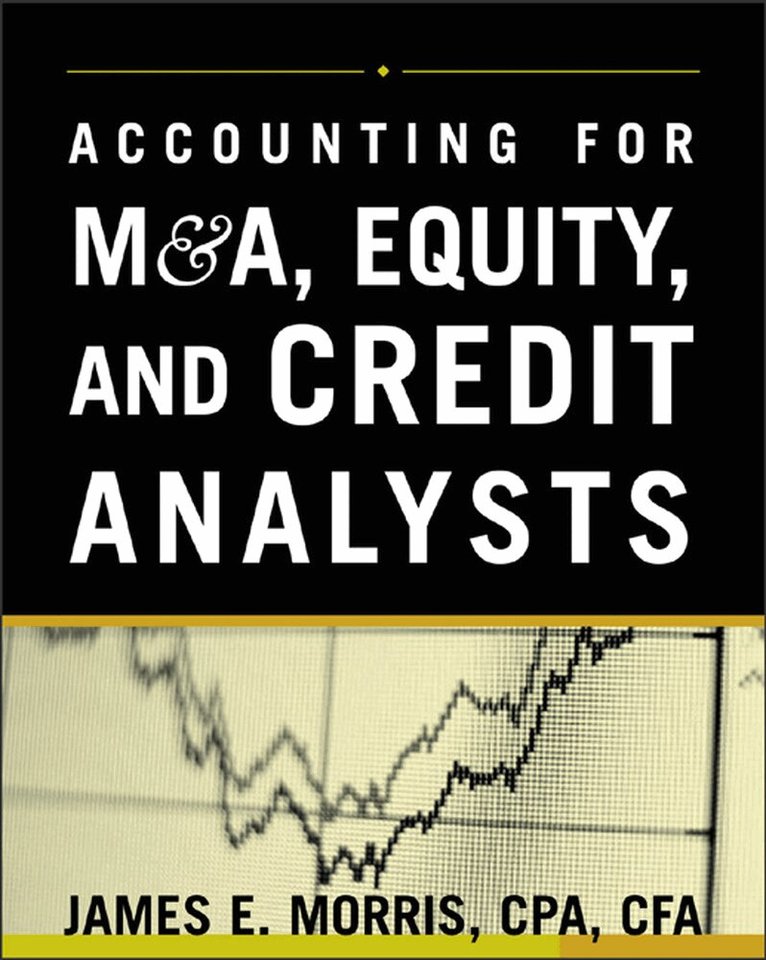
    Accounting for M&A, Credit, & Equity Analysts

    AvJames Morris

    Inbunden, Engelska, 2004

    841 kr

    Beställningsvara. Skickas inom 3-6 vardagar. Fri frakt över 249 kr.

    Fler format och utgåvor

    E-bok

    1 057 kr

    Beskrivning

    This book offers everything investment professionals need to know about accounting - in a practical desk reference format. In today's world of constantly changing accounting rules, models, and practices, investment professionals need an authoritative, all-in-one, fast-access reference for the latest knowledge and information. "Accounting for M&A, Equity, and Credit Analysts" provides comprehensive and easy-to-understand answers to the everyday accounting questions that come up time and again in the investing arena. Noted M&A accounting authority James E. Morris has spent years dispensing accounting advice on Wall Street, and he knows which questions consistently baffle even the most experienced investment pros.He answers those questions and hundreds more as he provides clear and concise explanations of areas including: subtle, less understood aspects of common accounting areas and procedures; purchase accounting for business combinations - essential not only for M&A analysts but for credit and equity analysts as well; and, accounting for employee stock options, and its effect on both earnings and cash flow.Today's investment accounting landscape is undergoing tumultuous and unprecedented change. Professionals who fail to keep up with that change risk being left behind. "Accounting for M&A, Equity, and Credit Analysts" updates you on virtually every important facet of investment accounting, and provides the handy reference you need to instantly know what the numbers are really saying to you--and, just as important, what they are not.'This is not, by any means, another financial accounting textbook. Instead, I intend it as a sort of spotlight, illuminating what I have found in my investment experience to be the 'black holes' of accounting. It is merely the collected answers to the questions that analysts (associates, vice presidents, managing directors and clients as well) have asked me during the time I spent giving accounting advice on Wall Street' - From the Preface. Investment professionals too often regard the acquisition of accounting knowledge as a necessary evil - and, therefore, too often know less than they should.This lack of knowledge often leads to simple misunderstandings or even out and out errors that, at best, serve as minor speed bumps in a high-stakes transaction and, at worst, lead to the delay or even derailing of the deals in question."Accounting for M&A, Equity, and Credit Analysts" helps investment professionals as well as undergraduate and graduate students of and investment banking ensure that they will always be able to quickly and confidently get their hands on the right answers to virtually every accounting question. Providing easy-access accounting information without needless detail and CPA doublespeak, this invaluable reference distinguishes itself from other texts of its type in four major areas as it: bypasses common-knowledge accounting basics to concentrate only on information vital to investment analysts; takes an investment banking perspective as opposed to one solely focused on Generally Accepted Accounting Principles (GAAP) and reporting; integrates financial modelling and spreadsheet approaches that are essential to forecasting and analysis; and, provides in-depth coverage of items in enterprise valuation and business combination transactions.In the investment profession, few factors are as valuable or overlooked as solid knowledge in accounting.Unfortunately, when professionals seek to increase their accounting expertise, they are too often faced with either cartoonish workbooks or incomprehensible, 600-page textbooks. "Accounting for M&A, Equity, and Credit Analysts" provides investment professionals, analysts, and bankers with only the information they need to understand how accounting impacts their everyday environment. The first investment accounting desk reference to bridge the gap between what is taught in business school and what is actually needed in the real world, it allows investment pros to focus on and truly understand the vital accounting details they encounter every day - and helps them ensure that minor accounting misunderstandings or mistakes won't mushroom into major deal-killers.

    Produktinformation

    • Utgivningsdatum:2004-07-16
    • Mått:193 x 236 x 26 mm
    • Vikt:705 g
    • Format:Inbunden
    • Språk:Engelska
    • Antal sidor:272
    • Förlag:McGraw-Hill Education
    • ISBN:9780071429696

    Utforska kategorier

    • Redovisning inom Ekonomi och Ledarskap

    Mer om författaren

    McGraw-Hill authors represent the leading experts in their fields and are dedicated to improving the lives, careers, and interests of readers worldwide

    Innehållsförteckning

    • IntroductionList of AbbreviationsChapter 1 Equity Method of ConsolidationIntroductionDescription of the Equity MethodTax Considerations When Using the Equity MethodAccounting under the Equity Method—Excess of Cost over Equity PurchasedAccounting under the Equity Method—Intercompany TransactionsGuidance for Applying the Equity MethodSEC Staff Views Concerning the Equity MethodWhen to Use the Equity Method—SummaryAccounting for Cash Flows from Equity Method InvestmentsModeling the Equity Method of Accounting in Projection ModelsChapter SummaryChapter 2 Minority InterestsIntroductionMinority InterestsOverview of Accounting for Minority InterestsTreatment of Minority Interests for Enterprise ValuationForecasting Minority InterestsTreatment of Minority Interests in M&A TransactionsModeling Minority InterestsChapter SummaryChapter 3 Deferred Income Taxes and Income Tax ReportingIntroductionBasic Principles of Tax ReportingThe First PrincipleThe Second PrincipleThe Third PrincipleThe Fourth PrincipleTreatment of Deferred Income Tax Items in M&A TransactionsModeling Income Taxes in Projection ModelsCalculating the Provision for Taxes—Detailed CalculationChapter SummaryChapter 4 Deciphering the Deferred Tax FootnoteIntroductionFinancial Statement Disclosure for Income TaxesReconstructing Deferred Taxes on the Financial StatementsProblems with Ratio AnalysisValuation of Deferred Tax ItemsChapter SummaryChapter 5 Estimating the Tax Basis of a Firm’s AssetsIntroductionFactors Affecting Differences Between Asset’s Book and Tax BasesDepreciation (or Amortization) Using Different SchedulesRecognizing Asset ImpairmentsTransaction Fair Value AdjustmentsAsset Sales or Deemed Asset SalesEstimating the Tax Bases of Target Company’s Assets—Known Balance SheetEstimating the Tax Bases of Target Company’s Assets—Unknown Balance SheetChapter SummaryChapter 6 Pension and Other Postretirement BenefitsIntroductionPension versus Other Postretirement Benefit PlansTypes of Pension PlansEconomic Objectives of Pension PlansHow Pension Plans WorkNet Periodic Pension CostMinimum Pension LiabilityPension Benefits SummaryOther Postretirement Benefit PlansNet Periodic Postretirement Benefit CostEffects of Business CombinationsChapter SummaryChapter 7 Deciphering the Pension FootnoteIntroductionPension Benefit Disclosure RequirementsBenefit Obligation ReconciliationPlan Fair Value ReconciliationEmployer Securities Included in Plan AssetsNet Periodic Benefit Cost DisclosureFunded Status and Unrecognized ItemsRate DisclosuresHealth Care DisclosuresChapter SummaryChapter 8 Analyzing the Firm’s Pension Cash FlowsIntroductionEstimating Future Funding Cash FlowsEmployer Company’s Plan Assets and Liabilities in an AcquisitionPlan Liquidation ValuesChapter SummaryChapter 9 Employee Stock OptionsIntroductionThe Intrinsic Valuation MethodThe Fair Value MethodEvaluating the Firm’s Inputs to the Option-Pricing ModelTax Effects of Employee Stock OptionsCalculation of Diluted Earnings per Share for Companies Expensing Stock OptionsAccounting for Target Stock Options Rolled Over in a Purchase AcquisitionProjecting Earnings Per Share (EPS) for Option-Intensive FirmsChapter SummaryChapter 10 Restructuring ChargesIntroductionFASB’s New Changes to Financial Accounting for Restructuring ChargesRestructuring Charges—U.S. GAAPRestructuring Charges—International Accounting StandardsDisclosure of Restructuring ChargesRestructuring Liabilities in Business CombinationsChapter SummaryChapter 11 Discontinued OperationsIntroductionHow Results of Discontinued Operations Impact Earnings from Continuing OperationsSources of Classification BiasCriteria for Classifying Items as Discontinued OperationsThe Operations Being Discontinued—Component of a BusinessDisposal CriteriaInternational Accounting Treatment of Discontinued OperationsChapter SummaryChapter 12 Net Operating Loss DeductionsIntroductionNet Operating Loss DeductionsOther Tax Considerations Relating to NOLsM&A Considerations Relating to NOLsNOL Effects on Financial (GAAP) ReportingValuation ConsiderationsModeling NOL Carrybacks and CarryforwardsChapter SummaryChapter 13 Purchase Accounting for Business CombinationsIntroductionPurchase Accounting BasicsCalculating Target Company’s Net Identifiable AssetsThe Net Identifiable Assets CalculationCalculating the Purchase PriceTransaction FeesFair Value of the Consideration GivenCalculating GoodwillNegative GoodwillAmortization of GoodwillAccretion and Dilution of EarningsPro Forma Presentation (as If Combined)Statements of Cash Flows Following Business CombinationsLimitations on the Use of Target Company’s Net Operating Loss (NOL) CarryforwardsEffects on Minority Interests in Business Combination TransactionsChapter SummaryChapter 14 Deemed Asset Sales under IRC Sections 338(h)(10) or 338(g)IntroductionOverview of the Section 338(h)(10) ElectionBenefits of Section 338(h)(10) SalesDetermining the Sale Price for a Section 338(h)(10) ElectionModeling Section 338(h)(10) TransactionsChapter SummaryGlossaryEndnotesIndex