• Fri frakt över 249 kr
  • •
  • Snabba leveranser
  • •
  • Billiga böcker
Kundservice

Du är på sajten för privatpersoner.

Företag, bibliotek eller offentlig verksamhet?

Du handlar på classic.bokus.com, där alla dina funktioner finns intakta.
Till classic.bokus.com
Bokus logotyp. Gå till startsidan.
  • Erbjudanden
  • Nyheter
  • Student
  • Topplistor
  • Barn & ungdom
  • Bokus Play
  • E-böcker
  • Pocketböcker
  • Spel & pussel

10% rabatt på allt med kod NYSTART10 →

Sidfot

Mina sidor

    Hjälp

    • Kundservice
    • Vanliga frågor och svar
    • Frakt och leverans
    • Retur vid ångerrätt
    • Reklamera vara
    • Betalning
    • Köpvillkor
    • Allmänna villkor
    • Information om webbplatsens tillgänglighet

    Om Bokus

    • Om oss
    • Pressrum
    • För studenter
    • För företag
    • För bibliotek och offentlig verksamhet
    • För leverantörer
    • Hållbarhet

    Populärt

    • Aktuella erbjudanden
    • Presentkort
    • Studentlitteratur
    • Nya böcker
    • Topplistor
    • Signerade böcker
    • Engelska böcker

    Inspiration

    • Boktips
    • BookTok
    • Populära bokserier
    • Barnbokskaraktärer
    • Populära författare
    Logotyp för Bokus
    Följ oss på Facebook (extern länk)Följ oss på Instagram (extern länk)Följ oss på YouTube (extern länk)Följ oss på TikTok (extern länk)
    bokus @ CookiesAnpassa cookiesIntegritetspolicyKöpvillkor
    Till Citymail hemsida (extern länk)Till Budbee hemsida (extern länk)Till Postnord hemsida (extern länk)Till Schenker hemsida (extern länk)Till Early Bird hemsida (extern länk)Till Walleys hemsida (extern länk)
    1. Naturvetenskap och teknik
    2. Teknik och industri
    3. Byggnadsteknik

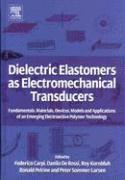
    Dielectric Elastomers as Electromechanical Transducers

    Fundamentals, Materials, Devices, Models and Applications of an Emerging Electroactive Polymer Technology

    AvFederico Carpi,Danilo De Rossi

    Inbunden, Engelska, 2008

    2 250 kr

    Beställningsvara. Skickas inom 10-15 vardagar. Fri frakt över 249 kr.

    Beskrivning

    Dielectric Elastomers as Electromechanical Transducers provides a comprehensive and updated insight into dielectric elastomers; one of the most promising classes of polymer-based smart materials and technologies. This technology can be used in a very broad range of applications, from robotics and automation to the biomedical field.

    The need for improved transducer performance has resulted in considerable efforts towards the development of devices relying on materials with intrinsic transduction properties. These materials, often termed as "smart� or "intelligent�, include improved piezoelectrics and magnetostrictive or shape-memory materials. Emerging electromechanical transduction technologies, based on so-called ElectroActive Polymers (EAP), have gained considerable attention. EAP offer the potential for performance exceeding other smart materials, while retaining the cost and versatility inherent to polymer materials. Within the EAP family, "dielectric elastomers�, are of particular interest as they show good overall performance, simplicity of structure and robustness. Dielectric elastomer transducers are rapidly emerging as high-performance "pseudo-muscular� actuators, useful for different kinds of tasks. Further, in addition to actuation, dielectric elastomers have also been shown to offer unique possibilities for improved generator and sensing devices.

    Dielectric elastomer transduction is enabling an enormous range of new applications that were precluded to any other EAP or smart-material technology until recently.

    This book provides a comprehensive and updated insight into dielectric elastomer transduction, covering all its fundamental aspects. The book deals with transduction principles, basic materials properties, design of efficient device architectures, material and device modelling, along with applications.


    • Concise and comprehensive treatment for practitioners and academics
    • Guides the reader through the latest developments in electroactive-polymer-based technology
    • Designed for ease of use with sections on fundamentals, materials, devices, models and applications

    Produktinformation

    • Utgivningsdatum:2008-01-22
    • Mått:166 x 245 x 22 mm
    • Vikt:790 g
    • Format:Inbunden
    • Språk:Engelska
    • Antal sidor:344
    • Förlag:Elsevier Science
    • ISBN:9780080474885

    Utforska kategorier

    • Byggnadsteknik inom Naturvetenskap och teknik
    • Tillverkningsteknik inom Naturvetenskap och teknik

    Mer om författaren

    Federico Carpi received the Laurea degree in Electronic Engineering in 2001 and the Ph.D degree in Bioengineering in 2005 from the University of Pisa, Italy. He currently has a post-doctoral position at the Interdepartmental Research Centre “E. Piaggio” of the University of Pisa. His main research activities are focused on polymer materials and devices for biomedical engineering and robotics. Danilo Emilio De Rossi received the Laurea degree in Chemical Engineering from the University of Genoa in 1976. He was researcher of the Institute of Clinical Physiology of C.N.R., Italy until 1981. Since 1982 he has been working in the School of Engineering of the University of Pisa, where he is presently Full Professor of Bioengineering. His scientific activities are related to the physics of organic and polymeric materials, and to the design of sensors and actuators for bioengineering and robotics. Roy Kornbluh is a Senior Research Engineer at SRI International, where he has worked for the past 20 years. Recognizing the need for a new generation of robotic actuators, Mr. Kornbluh helped conceive dielectric elastomer artificial muscle. He has authored more than 40 papers on dielectric elastomers and is active in the electroactive polymer research community. Ron Pelrine is a principal inventor of dielectric elastomer transducers and has been active in the field since 1992. Along with other researchers at SRI International, Dr. Pelrine laid the foundations of dielectric elastomer transduction, and was the first to discover both silicone and acrylic as dielectric elastomer materials.

    Innehållsförteckning

    • Introduction - History of dielectric elastomer actuators; Electromechanical transduction effects in dielectric elastomers; Dielectric elastomers as high-performance electroactive polymers; Physical and chemical properties of dielectric elastomers; High-performance acrylic and silicone elastomers; Interpenetrating polymer networks as high performance dielectric elastomers; Enhancing the dielectric permittivity of elastomers; Compliant electrodes; Fundamental configurations for dielectric elastomer actuators; Multiple-degrees-of-freedom roll actuators; Actuators and sensors from dielectric elastomer with smart compliant electrodes; Multilayer stack contractile actuators; Contractile monolithic linear actuators; Buckling actuators with integrated displacement sensor; Variable stiffness mode; Generator mode: devices and applications; Finite-elasticity models of actuation; Modeling of prestrained circular actuators; Modeling dielectric elastomer membranes; Biomedical, haptic and micro-scale applications; A new frontier for orthotics and prosthetics; Portable force feedback device based on miniature rolled dielectric elastomer actuators; Programmable surface deformation; Application to very small devices; A new Braille display system design using a polymer based soft actuator tactile display; Robotic and biorobotic applications; Biomimetic robots; Micro-annelid-like robot actuated by artificial muscles based on dielectric elastomers; Binary actuation; Robotic arm; Stiffness control of biomimetic systems through recruitment of bundle elastomeric actuators; Commercial applications; Commercial actuators and issues; Dielectric elastomer loudspeakers.