E-bok, Engelska, 2001
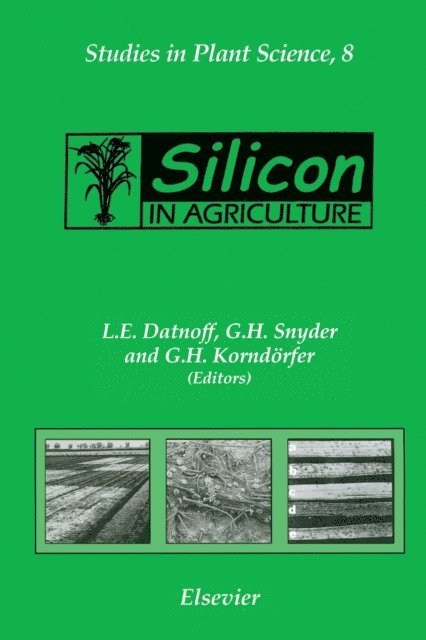
Silicon in Agriculture
Av G.H. Korndorfer, G.H. Snyder, L.E. Datnoff
1711 kr
Läs direkt i Bokus Reader – eller ladda ned till din enhet (PDF kräver ofta zoom och scroll på små skärmar).
Beskrivning
Presenting the first book to focus on the importance of silicon for plant health and soil productivity and on our current understanding of this element as it relates to agriculture.Long considered by plant physiologists as a non-essential element, or plant nutrient, silicon was the center of attention at the first international conference on Silicon in Agriculture, held in Florida in 1999.Ninety scientists, growers, and producers of silicon fertilizer from 19 countries pondered a paradox in plant biology and crop science. They considered the element Si, second only to oxygen in quantity in soils, and absorbed by many plants in amounts roughly equivalent to those of such nutrients as sulfur or magnesium. Some species, including such staples as rice, may contain this element in amounts as great as or even greater than any other inorganic constituent. Compilations of the mineral composition of plants, however, and much of the plant physiological literature largely ignore this element. The participants in Silicon in Agriculture explored that extraordinary discrepancy between the silicon content of plants and that of the plant research enterprise.The participants, all of whom are active in agricultural science, with an emphasis on crop production, presented, and were presented with, a wealth of evidence that silicon plays a multitude of functions in the real world of plant life. Many soils in the humid tropics are low in plant available silicon, and the same condition holds in warm to hot humid areas elsewhere. Field experience, and experimentation even with nutrient solutions, reveals a multitude of functions of silicon in plant life. Resistance to disease is one, toleration of toxic metals such as aluminum, another. Silicon applications often minimize lodging of cereals (leaning over or even becoming prostrate), and often cause leaves to assume orientations more favorable for light interception. For some crops, rice and sugarcane in particular, spectacular yield responses to silicon application have been obtained. More recently, other crop species including orchids, daisies and yucca were reported to respond to silicon accumulation and plant growth/disease control. The culture solutions used for the hydroponic production of high-priced crops such as cucumbers and roses in many areas (The Netherlands for example) routinely included silicon, mainly for disease control. The biochemistry of silicon in plant cell walls, where most of it is located, is coming increasingly under scrutiny; the element may act as a crosslinking element between carbohydrate polymers.There is an increased conviction among scientists that the time is at hand to stop treating silicon as a plant biological nonentity. The element exists, and it matters.
Produktinformation
- Utgivningsdatum: 2001-04-11
- Språk: Engelska
- Filformat: PDF
- Kopieringsskydd: LCP
- ISBN: 9780080541228
- Förlag: Elsevier Science
Betyg & recensioner
0 recensioner
Inga recensioner tillgängliga.