• Fri frakt över 249 kr
  • •
  • Snabba leveranser
  • •
  • Billiga böcker
Kundservice

Du är på sajten för privatpersoner.

Företag, bibliotek eller offentlig verksamhet?

Du handlar på classic.bokus.com, där alla dina funktioner finns intakta.
Till classic.bokus.com
Bokus logotyp. Gå till startsidan.
  • Erbjudanden
  • Nyheter
  • Student
  • Topplistor
  • Barn & ungdom
  • Bokus Play
  • E-böcker
  • Pocketböcker
  • Spel & pussel

Må bättre, för mindre! Upp till 50% rabatt på hälsoböcker

Sidfot

Mina sidor

    Hjälp

    • Kundservice
    • Vanliga frågor och svar
    • Frakt och leverans
    • Retur vid ångerrätt
    • Reklamera vara
    • Betalning
    • Köpvillkor
    • Allmänna villkor
    • Information om webbplatsens tillgänglighet

    Om Bokus

    • Om oss
    • Pressrum
    • För studenter
    • För företag
    • För bibliotek och offentlig verksamhet
    • För leverantörer
    • Hållbarhet

    Populärt

    • Aktuella erbjudanden
    • Presentkort
    • Studentlitteratur
    • Nya böcker
    • Topplistor
    • Signerade böcker
    • Engelska böcker

    Inspiration

    • Boktips
    • BookTok
    • Populära bokserier
    • Barnbokskaraktärer
    • Populära författare
    Logotyp för Bokus
    Följ oss på Facebook (extern länk)Följ oss på Instagram (extern länk)Följ oss på YouTube (extern länk)Följ oss på TikTok (extern länk)
    bokus @ CookiesAnpassa cookiesIntegritetspolicyKöpvillkor
    Till Citymail hemsida (extern länk)Till Budbee hemsida (extern länk)Till Postnord hemsida (extern länk)Till Schenker hemsida (extern länk)Till Early Bird hemsida (extern länk)Till Walleys hemsida (extern länk)
    1. Data och IT
    2. Systemvetenskap och AI

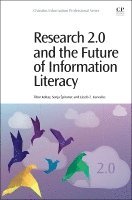
    Research 2.0 and the Future of Information Literacy

    AvTibor Koltay,Sonja Spiranec

    Häftad, Engelska, 2015

    Del i serien Chandos Publishing

    713 kr

    Beställningsvara. Skickas inom 10-15 vardagar. Fri frakt över 249 kr.

    Beskrivning

    Research 2.0 and the Future of Information Literacy examines possible congruencies between information literacy and Research 2.0, because the work of today's researcher mobilizes a number of literacies. From among the various types of relevant literacies, at least three types of literacies can be mentioned in this relation: information literacy, scientific literacy and academic literacy. This book addresses these literacies in the light of the changing research landscape. Broad contexts of the researcher's abilities, as adaptive and innovative thinking, problem solving skills, self-management and design mindset are also examined. Computational thinking and the computational paradigm in a number of fields of research are taken into consideration, as well. Researchers differ to non-researchers when populating social media, which means that these two different groups require different literacies. The relationship between information literacy and information is approached in a new way. Among the multitude of issues, we introduce a new interface between information literacy and Research 2.0. It encompasses the issues of research data management and data literacy, which represent also a challenge both for the academic library and for the communities of researchers. Similarly, the questions of new metrics of scientific output are addressed in the book.


    • Summarizes the most important and up-to date approaches towards Research 2.0, including researchers' skills and abilities, the data-intensive paradigm of scientific research, open science, not forgetting about factors that inhibit a wider uptake of Research 2.0
    • Discusses the nature of information literacy in the light of its definitions, declarations and related frameworks and by outlining the new literacies context, reading and writing, the cultural context, and the turns of library and information science
    • Numerous literacies, other than information literacy, its relationship to information overload and personal information management are also subject of the book
    • Theoretical and practical perspectives are given to enable the understanding of the transformations of information literacy and its relationship to Research 2.0

    Produktinformation

    • Utgivningsdatum:2015-11-25
    • Mått:152 x 229 x 13 mm
    • Vikt:230 g
    • Format:Häftad
    • Språk:Engelska
    • Serie:Chandos Publishing
    • Antal sidor:190
    • Förlag:Elsevier Science
    • ISBN:9780081000755

    Utforska kategorier

    • Systemvetenskap och AI inom Data och IT
    • Referensverk och tvärvetenskap inom Samhälle och politik

    Mer om författaren

    Tibor Koltay, PhD, is Professor at the Department of Information and Library Studies of Szent István University, Hungary. In 2010, he published Abstracts and Abstracting. A Genre and Set of Skills for the Twenty-first Century with Chandos Publishing. Sonja Spiranec, PhD, is an Associate Professor at the Department of Information and Communication Sciences, University of Zagreb, Croatia. She is the co-founder of the European Conference on Information Literacy and served as the editor of the book Worldwide Commonalities and Challenges in Information Literacy Research and Practice. Laszlo Z. Karvalics is an Associate Professor at the Department of Cultural Heritage and Human Information Science of the University of Szeged, Hungary. He was the founding director of BME-UNESCO Information Society Research Institute and founding editor of Informacios Tarsadalom, a Hungarian language quarterly that addresses the issues of information in society.

    Innehållsförteckning

    • 1. Shifting Research Paradigms Toward Research 2.0Researchers’ Skills and AbilitiesOpen ScienceThe Data-Intensive Paradigm of Scientific ResearchFactors Inhibiting a Wider Uptake of Research 2.0 2. The Nature of Information LiteracyDefinitions, Declarations, and FrameworksThe New Literacies ContextThe Reading and Writing ContextAdditional Contexts and Turns: Culture, LIS, and OthersLiteracies Beyond Information LiteracyThe Relationship of Information Literacy to Information Overload and PersonalInformation Management3. Transformations of Information Literacy: From Bookshelvesto the Web 2.0 The Practical Level: From Bibliographic Instruction to IL Theoretical Perspectives Influencing Shifts in IL The Information Environment as a Principal Driver of IL Transformations 4. Conclusion: Shaping Forces, Future Challenges