• Fri frakt över 249 kr
  • •
  • Snabba leveranser
  • •
  • Billiga böcker
Kundservice

Du är på sajten för privatpersoner.

Företag, bibliotek eller offentlig verksamhet?

Du handlar på classic.bokus.com, där alla dina funktioner finns intakta.
Till classic.bokus.com
Bokus logotyp. Gå till startsidan.
  • Erbjudanden
  • Nyheter
  • Student
  • Topplistor
  • Barn & ungdom
  • Bokus Play
  • E-böcker
  • Pocketböcker
  • Spel & pussel

10% rabatt på allt med kod: NYSTART10 →

Sidfot

Mina sidor

    Hjälp

    • Kundservice
    • Vanliga frågor och svar
    • Frakt och leverans
    • Retur vid ångerrätt
    • Reklamera vara
    • Betalning
    • Köpvillkor
    • Allmänna villkor
    • Information om webbplatsens tillgänglighet

    Om Bokus

    • Om oss
    • Pressrum
    • För studenter
    • För företag
    • För bibliotek och offentlig verksamhet
    • För leverantörer
    • Hållbarhet

    Populärt

    • Aktuella erbjudanden
    • Presentkort
    • Studentlitteratur
    • Nya böcker
    • Topplistor
    • Signerade böcker
    • Engelska böcker

    Inspiration

    • Boktips
    • BookTok
    • Populära bokserier
    • Barnbokskaraktärer
    • Populära författare
    Logotyp för Bokus
    Följ oss på Facebook (extern länk)Följ oss på Instagram (extern länk)Följ oss på YouTube (extern länk)Följ oss på TikTok (extern länk)
    bokus @ CookiesAnpassa cookiesIntegritetspolicyKöpvillkor
    Till Citymail hemsida (extern länk)Till Budbee hemsida (extern länk)Till Postnord hemsida (extern länk)Till Schenker hemsida (extern länk)Till Early Bird hemsida (extern länk)Till Walleys hemsida (extern länk)
    1. Medicin
    2. Medicin: allmänt
    3. Medicinsk utrustning och medicinska tekniker

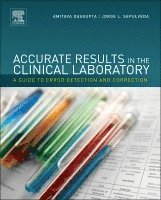
    Accurate Results in the Clinical Laboratory

    A Guide to Error Detection and Correction

    AvAmitava Dasgupta,Jorge L. Sepulveda

    Inbunden, Engelska, 2013

    957 kr

    Beställningsvara. Skickas inom 10-15 vardagar. Fri frakt över 249 kr.

    Beskrivning

    This practical, easy-to-use guide, named to Doody's Core Titles 2013, addresses interference issues in all laboratory tests, including patient epigenetics, process of specimen collection, enzymes, biomarkers. Clinicians and laboratory scientists can therefore rely on one reference which speaks to both their needs of accurate specimen analysis and optimal patient care.

    Erroneous hospital and pathology laboratory results can be confusing and problematic, especially in acute care situations. While some factors creating interference, can be identified in the laboratory, detecting many others is often dependent on clinical details unavailable to the laboratory scientists or pathologists. Therefore, clinicians must become proficient in identifying such erroneous reports, and working with pathologists and laboratory scientists so that they can understand the source of such interferences, correct the results, and then decide what course of action must be followed for proper patient management.


    • Named to Doody's Core Titles 2013, a collection development tool for health sciences libraries of all sizes, by Doody Enterprises
    • Practical information for both clinicians and laboratory scientists, presented in the form of tables and charts for easy reference
    • Focus on range and sources of interferences rather than details of toxicologic mechanisms which are well covered in toxicology textbooks
    • Covers interferences across endocrine, oncology, hematology, immunohistochemistry, immunology, serology, microbiology, and molecular testing

    Produktinformation

    • Utgivningsdatum:2013-04-18
    • Mått:216 x 276 x 25 mm
    • Vikt:1 280 g
    • Format:Inbunden
    • Språk:Engelska
    • Antal sidor:382
    • Förlag:Elsevier Science
    • ISBN:9780124157835

    Utforska kategorier

    • Medicinsk utrustning och medicinska tekniker inom Medicin

    Mer om författaren

    Amitava Dasgupta received his Ph. D in chemistry from Stanford University and completed his fellowship training in Clinical Chemistry from the Department of Laboratory Medicine at the University of Washington School of Medicine at Seattle. He is board certified in both Toxicology and Clinical Chemistry by the American Board of Clinical Chemistry. Currently, he is a tenured Full Professor of Pathology and Laboratory Medicine at the University of Kansas Medical Center and Director of Clinical Laboratories at the University of Kansas Hospital. Prior to this appointment he was a tenured Professor of Pathology and Laboratory Medicine at the University of Texas McGovern medical School from February 1998 to April 2022. He has 252 papers to his credit. He is in the editorial board of four journals including Therapeutic Drug Monitoring, Clinica Chimica Acta, Archives of Pathology and Laboratory Medicine, and Journal of Clinical Laboratory Analysis.Jorge Sepulveda received his M.D. from the University of Lisbon, Portugal, and his residency training in Laboratory Medicine and Ph.D. degree in Cell and Molecular Biology from Baylor College of Medicine, Houston, Texas. He is board certified by the American Board of Pathology in Clinical Pathology and Transfusion Medicine. He has published over 35 research articles, review papers and book chapters, and serves as Associate Editor for the Archives of Pathology and Laboratory Medicine. Dr. Sepulveda has broad experience in laboratory medicine as medical director of various clinical laboratories, including at the Houston and Philadelphia Veterans Affairs Medical Centers and at the University of Pittsburgh Presbyterian and Shadyside Hospitals, and currently serves as Associate Medical Director of the Clinical Laboratories at the Columbia University Medical Center Campus of New York-Presbyterian Hospital.

    Recensioner i media

    "Dasgupta and Sepulveda offer clinicians and laboratory scientists a guide to error detection and correction in the clinical laboratory that addresses sources of errors in analytical methods and sources of pre-analytical variation." --Reference and Research Book News, August 2013"This is a very helpful book correlating nonanalytical measurement errors or disease states with anticipated effects on laboratory test results. This would be a must for the laboratory medicine resident who has to explain why results don't correlate with clinical disease." --Doody.com, August 9, 2013

    Innehållsförteckning

    • Chapter 1. Variation, Errors, and Quality in the Clinical LaboratoryChapter 2. Effect of Age, Gender, Diet, Exercise and Ethnicity on Laboratory Test ResultsChapter 3. Effect of patient preparation, specimen collection, anticoagulants and preservatives on laboratory testsChapter 4. Sample processing and specimen misidentification issuesChapter 5. Hemolysis, lipemia and high bilirubin: effect on laboratory testsChapter 6. Immunoassay design and mechanism of interferencesChapter 7. Effect of herbal remedies on clinical laboratory testsChapter 8. Challenges in routine clinical chemistry: analysis of small moleculesChapter 9. Challenges in routine clinical chemistry: proteins and enzymesChapter 10. Sources of inaccuracy in biochemical genetics analysisChapter 11. Challenges in endocrinology testingChapter 12. Pitfalls in tumor marker testingChapter 13. Issues of interferences in therapeutic drug monitoringChapter 14. Limitations of drugs of abuse testingChapter 15. Challenges in confirmation testing for drugs of abuseChapter 16. Alcohol determination using automated analyzers: limitations and pitfallsChapter 17. Pre-analytical issues and interferences in transfusion medicine testsChapter 18. Critical issues in immunology and serology testingChapter 19. Sources of errors in hematology and coagulation testingChapter 20. Challenges in Clinical Microbiology TestingChapter 21. Sources of errors in molecular testingChapter 22. Problems in Pharmacogenomics Testing