• Fri frakt över 249 kr
  • •
  • Snabba leveranser
  • •
  • Billiga böcker
Kundservice

Du är på sajten för privatpersoner.

Företag, bibliotek eller offentlig verksamhet?

Du handlar på classic.bokus.com, där alla dina funktioner finns intakta.
Till classic.bokus.com
Bokus logotyp. Gå till startsidan.
  • Erbjudanden
  • Nyheter
  • Student
  • Topplistor
  • Barn & ungdom
  • Bokus Play
  • E-böcker
  • Pocketböcker
  • Spel & pussel

10% rabatt på allt med kod: NYSTART10 →

Sidfot

Mina sidor

    Hjälp

    • Kundservice
    • Vanliga frågor och svar
    • Frakt och leverans
    • Retur vid ångerrätt
    • Reklamera vara
    • Betalning
    • Köpvillkor
    • Allmänna villkor
    • Information om webbplatsens tillgänglighet

    Om Bokus

    • Om oss
    • Pressrum
    • För studenter
    • För företag
    • För bibliotek och offentlig verksamhet
    • För leverantörer
    • Hållbarhet

    Populärt

    • Aktuella erbjudanden
    • Presentkort
    • Studentlitteratur
    • Nya böcker
    • Topplistor
    • Signerade böcker
    • Engelska böcker

    Inspiration

    • Boktips
    • BookTok
    • Populära bokserier
    • Barnbokskaraktärer
    • Populära författare
    Logotyp för Bokus
    Följ oss på Facebook (extern länk)Följ oss på Instagram (extern länk)Följ oss på YouTube (extern länk)Följ oss på TikTok (extern länk)
    bokus @ CookiesAnpassa cookiesIntegritetspolicyKöpvillkor
    Till Citymail hemsida (extern länk)Till Budbee hemsida (extern länk)Till Postnord hemsida (extern länk)Till Schenker hemsida (extern länk)Till Early Bird hemsida (extern länk)Till Walleys hemsida (extern länk)
    1. Samhälle och politik
    2. Politik och statsskick
    3. Politisk aktivism

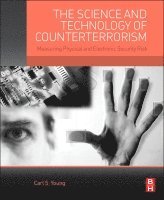
    The Science and Technology of Counterterrorism

    Measuring Physical and Electronic Security Risk

    AvCarl Young

    Häftad, Engelska, 2014

    605 kr

    Beställningsvara. Skickas inom 10-15 vardagar. Fri frakt över 249 kr.

    Beskrivning

    Scientists with little or no background in security and security professionals with little or no background in science and technology often have difficulty communicating in order to implement the best counterterrorism strategies. The Science and Technology of Counterterrorism offers the necessary theoretical foundation to address real-world terrorism scenarios, effectively bridging the gap. It provides a powerful security assessment methodology, coupled with counterterrorism strategies that are applicable to all terrorism attack vectors. These include biological, chemical, radiological, electromagnetic, explosive, and electronic or cyber attacks. In addition to rigorous estimates of threat vulnerabilities and the effectiveness of risk mitigation, it provides meaningful terrorism risk metrics.

    The Science and Technology of Counterterrorism teaches the reader how to think about terrorism risk, and evaluates terrorism scenarios and counterterrorism technologies with sophistication punctuated by humor. Both students and security professionals�will significantly benefit from the risk assessment methodologies and guidance on appropriate counterterrorism measures contained within this book.


    • Offers a simple but effective analytic framework to assess counterterrorism risk and realistic measures to address threats
    • Provides the essential scientific principles and tools required for this analysis
    • Explores the increasingly important relationship between physical and electronic risk in meaningful technical detail
    • Evaluates technical security systems to illustrate specific risks using concrete examples

    Produktinformation

    • Utgivningsdatum:2014-04-30
    • Mått:191 x 235 x 20 mm
    • Vikt:990 g
    • Format:Häftad
    • Språk:Engelska
    • Antal sidor:512
    • Förlag:Elsevier Science
    • ISBN:9780124200562

    Utforska kategorier

    • Politisk aktivism inom Samhälle och politik

    Mer om författaren

    Carl S. Young is a recognized subject matter expert in information and physical security risk management. He is currently a Managing Director and the Chief Security Officer at Stroz Friedberg, an international security risk consulting firm. He is the former Global Head of Physical Security Technology at Goldman Sachs as well as a former Senior Executive and Supervisory Special Agent at the FBI. He was also a consultant to the JASON Defense Advisory Group. Mr. Young is the author of Metrics and Methods for Security Risk Management (Syngress, 2010), and The Science and Technology of Counterterrorism (Butterworth-Heinemann, 2014) as well as numerous journal publications. In 1997 he was awarded the President’s Foreign Intelligence Advisory Board (PFIAB) James R. Killian Award by the White House for significant individual contributions to U.S. national security. Mr. Young received undergraduate and graduate degrees in mathematics and physics from the Massachusetts Institute of Technology.

    Recensioner i media

    "After completing the entire book and applying its lessons, the security professional may have the means to better justify security-related expenditures by using math and science to explain the effectiveness of the proposed technology."--ASIS Dynamics Newsletter, February 2015

    Innehållsförteckning

    • Section I-Modeling Terrorism Risk1: Terrorism Threats, Risk and Counterterrorism Strategies2: Terrorism Scenario Analysis3: Terrorism and Uncertainty4: Physical Models of Terrorism Threats5: Measuring Terrorism RiskSection II-Analyzing Terrorism Threats 6: Conventional Explosive Threats7: Radiological, Biological, Chemical, and Electromagnetic Weapons 8: Electronic Terrorism Threats9: Electronic Security MeetsPhysical SecuritySection III-Counterterrorism Controls10: Affiliation, Authentication and Authorization11: Closed Circuit Television (CCTV)12: Physical Access Restriction and Security Incident Monitoring/DetectionAppendices:1-Linearity, Non-linearity, and Scaling2-Exponents, Logarithms and Measuring Sensitivity to Change;3- The Exponential Function, ex4-Parameters for Anti-Explosive Window Treatments5-Half-Life6-High-Level Counterterrorism Technical Strategies7-RFID Effects on Credit Cards in Close Proximity