• Fri frakt över 249 kr
  • •
  • Snabba leveranser
  • •
  • Billiga böcker
Kundservice

Du är på sajten för privatpersoner.

Företag, bibliotek eller offentlig verksamhet?

Du handlar på classic.bokus.com, där alla dina funktioner finns intakta.
Till classic.bokus.com
Bokus logotyp. Gå till startsidan.
  • Erbjudanden
  • Nyheter
  • Student
  • Topplistor
  • Barn & ungdom
  • Bokus Play
  • E-böcker
  • Pocketböcker
  • Spel & pussel

10% rabatt på allt med kod: NYSTART10 →

Sidfot

Mina sidor

    Hjälp

    • Kundservice
    • Vanliga frågor och svar
    • Frakt och leverans
    • Retur vid ångerrätt
    • Reklamera vara
    • Betalning
    • Köpvillkor
    • Allmänna villkor
    • Information om webbplatsens tillgänglighet

    Om Bokus

    • Om oss
    • Pressrum
    • För studenter
    • För företag
    • För bibliotek och offentlig verksamhet
    • För leverantörer
    • Hållbarhet

    Populärt

    • Aktuella erbjudanden
    • Presentkort
    • Studentlitteratur
    • Nya böcker
    • Topplistor
    • Signerade böcker
    • Engelska böcker

    Inspiration

    • Boktips
    • BookTok
    • Populära bokserier
    • Barnbokskaraktärer
    • Populära författare
    Logotyp för Bokus
    Följ oss på Facebook (extern länk)Följ oss på Instagram (extern länk)Följ oss på YouTube (extern länk)Följ oss på TikTok (extern länk)
    bokus @ CookiesAnpassa cookiesIntegritetspolicyKöpvillkor
    Till Citymail hemsida (extern länk)Till Budbee hemsida (extern länk)Till Postnord hemsida (extern länk)Till Schenker hemsida (extern länk)Till Early Bird hemsida (extern länk)Till Walleys hemsida (extern länk)
    1. Medicin
    2. Klinisk medicin och internmedicin
    3. Sjukdomar och rubbningar
    4. Onkologi

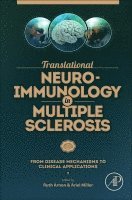
    Translational Neuroimmunology in Multiple Sclerosis

    From Disease Mechanisms to Clinical Applications

    AvRuth Arnon,Ariel Miller

    Inbunden, Engelska, 2016

    1 201 kr

    Beställningsvara. Skickas inom 10-15 vardagar. Fri frakt över 249 kr.

    Beskrivning

    Multiple sclerosis (MS) is the most common disabling neurological disease of young adults. More than 2.3 million people are affected by MS worldwide. Symptoms can vary widely, depending on the localization and amount of the damage induced by combined inflammatory, demyelinating, and neurodegenerative processes. Although a cure for MS does not currently exist, therapies can help treat MS attacks, attenuate disease activity, reduce progress of the disease, and manage symptoms.

    Translational Neuroimmunology in Multiple Sclerosis provides an overview of recent findings and knowledge of the neuroimmunology of multiple sclerosis, from experimental models and the human disease to the translation of this research to immunotherapeutic strategies. Chapters describe genetic and environmental factors underlying the disease pathogenesis of MS as a basis for development of immunotherapies, immunological markers of disease activity, pharmacogenetics, and responses to therapy. Immunomodulatory therapies currently in practice and future therapeutic strategies on the horizon-such as neuroprotective strategies, stem cells, and repair promotion-are discussed. Contributed by renowned leaders in the field, this cross-disciplinary volume is a great resource for basic scientists and clinical practitioners in neuroscience, neurology, immunology, pharmacology, and in-drug development.


    • Provides an overview of recent findings and knowledge of the neuroimmunology of multiple sclerosis and the translation of this research to immunotherapy treatment
    • Edited by renowned leaders in the field of neuroimmunology and multiple sclerosis
    • Contains the latest resource material for basic and clinical scientists and practitioners in neuroscience, neurology, immunology, and pharmacology
    • 2017 BMA Medical Book Awards Highly Commended in Neurology

    Produktinformation

    • Utgivningsdatum:2016-08-10
    • Mått:191 x 235 x 32 mm
    • Vikt:1 690 g
    • Format:Inbunden
    • Språk:Engelska
    • Antal sidor:502
    • Förlag:Elsevier Science
    • ISBN:9780128019146

    Utforska kategorier

    • Onkologi inom Medicin
    • Biovetenskap inom Naturvetenskap och teknik
    • Neurologi och klinisk neurofysiologi inom Medicin

    Mer om författaren

    PROF. RUTH ARNON, formerly Vice-President of the Weizmann Institute of Science (1988-1997), is a renowned immunologist. Prof. Arnon joined the Institute in 1960. Prior to her appointment as Vice-President, she served as Head of the Department of Chemical Immunology, and as Dean of the Faculty of Biology. From 1985 to 1994, she was the Director of the Institute's MacArthur Center for Molecular Biology of Tropical Diseases. Prof. Arnon has made significant contributions to the fields of vaccine development, cancer research and to the study of parasitic diseases. Along with Prof. Michael Sela, she developed Copaxone® a drug for the treatment of multiple sclerosis which was approved by the U.S. Food and Drug Administration, and is presently marketed in the USA, Canada the EU, Australia and many other countries worldwide. Prof. Arnon is a member of the Israel Academy of Sciences, and serves as its President since 2010. On the world scene, she is an elected member of the European Molecular Biology Organization (EMBO), and is a member of the American Philosophical Society (APS). She has served as President of the European Federation of Immunological Societies (EFIS), and as Secretary-General of the International Union of Immunological Societies (IUIS), and as a member of the European Union Research Advisory Board (EURAB). She served also as the President of the Association of Academies of Sciences in Asia (AASA). Her awards include the Robert Koch Prize in Medical Sciences, Spain's Jiminez Diaz Memorial Prize, France's Legion of Honor, the Hadassah World Organization's Women of Distinction Award, The AESKU Prize for Life Contribution to Autoimmunity, the Tovi Comet Award, the Wolf Prize for Medicine, the Rothschild Prize for Biology and the Israel Prize for Medicine. She is an Honorary Fellow of Tel-Hai College and the Holon Institute of Technology. She received Honorary Doctorates from Ben-Gurion University of the Negev, Tel-Aviv University, The Open University of Israel and Leuphana University of Luneburg, Germany. Prof. Ariel Miller holds a M.D. degree from the “Sackler” school of Medicine, Tel-Aviv, and a Ph.D. degree in Experimental Sciences (Neurobiology) from the Hebrew University of Jerusalem. He is a senior neurologist since 1989. From 1989 to 1992 he was a research fellow at the Center for Neurologic Diseases, Brigham and Women’s Hospital, Harvard Medical School, Boston, as a scholar of the Fogarty International Research Fellowship (N.I.H.). From 1992 to 1993: Scientist in the Department of Cell Biology, The Weizmann Institute of Science, Rehovot, Israel. He is currently the head of The Center for Multiple Sclerosis & Brain Research at Carmel Medical Center, and co-director of the Pharmacogenetics & Personalized Medicine Center, The Rappaport Faculty of Medicine & Research Institute at the Technion-Israel Institute of Technology, Haifa, Israel.Prof. Miller is the founder and first president of the Israel Society for Neuroimmunology (President 2000-2009), elected member of the American Neurological Association (ANA) (2005), and the recipient of the Hershel Rich Technion Innovation Award - 2006, for his contribution in the field of Pharmacogenetics and 'Personalized Medicine'. Prof. Miller's scientific and medical work is dedicated to elucidation of the mechanisms underlying Brain diseases, with special focus on implementation of therapeutic strategies for Multiple Sclerosis as well as Pharmacogenetics towards development of 'Personalized Medicine'.

    Recensioner i media

    2017 BMA Medical Book Awards Highly Commended in Neurology

    Innehållsförteckning

    • Section I:  MS Pathology and Mechanisms1. MS Pathology: Inflammation versus Neurodegeneration2. Immune Dysregulation in Multiple Sclerosis3. CNS immune regulation4. Genetics of Multiple Sclerosis5. MS Subtypes: How the Natural History of MS was Challenged Due to Treatment6. Pediatric-Onset MS as a Window into Early Disease Targets and Mechanisms7. Sex-related factors in multiple sclerosisSection II:  Other Patho-Mechanisms8. Environmental Factors and their regulation of immunity in MS9. Gut Microbiota in Multiple Sclerosis: A Bioreactor driving Brain Autoimmunity10. Neuroendocrine Checkpoints of Innate Immune Responses in Multiple Sclerosis: Reciprocal Interactions Between Body and Brain11. Fighting chronic neuroinflammation by boosting autoimmunity: the distinction between neurodegenerative diseases and multiple sclerosis12. Neuroactive steroids and NeuroinflammationSection III:  Surrogate Markers in Multiple Sclerosis13. Surrogate Markers in Multiple Sclerosis: The Role of MRISection IV:  Currently Approved Therapies – Injectable14. Interferon β in Multiple Sclerosis: A Review15. Glatiramer Acetate - From Bench to Bed and Back16. Natalizumab17. Alemtuzumab (Campath-1H)18. Currently approved DMDs-injectable: cytotoxic immunosuppressive drugsSection V:  Currently Approved DMDs – Oral 19. Fingolimod (Gilenya)20. Oral Dimethyl Fumarate (BG-12; Tecfidera®) for Multiple Sclerosis21. Emerging Therapies for Multiple SclerosisSection VI:  Symptomatic and Complementary Treatments22. Treatment of acute relapses in Multiple sclerosis23. Shedding light on Vitamin D and MS24. Symptomatic and Complementary Treatments 25. Cognitive Impairment in Multiple SclerosisSection VII:  Novel and Emerging Strategies26. Personalized Medicine and Theranostics: Applications to Multiple Sclerosis27. Stem cell based-therapies, remyelination and repair promotion, in the treatment of multiple sclerosis28. Stem cells in Multiple Sclerosis29. T cell vaccination: An insight into T cell regulation30. Reversal of Misfortune: Therapeutic Strategies on the Horizon