• Fri frakt över 249 kr
  • •
  • Snabba leveranser
  • •
  • Billiga böcker
Kundservice

Du är på sajten för privatpersoner.

Företag, bibliotek eller offentlig verksamhet?

Du handlar på classic.bokus.com, där alla dina funktioner finns intakta.
Till classic.bokus.com
Bokus logotyp. Gå till startsidan.
  • Erbjudanden
  • Nyheter
  • Student
  • Topplistor
  • Barn & ungdom
  • Bokus Play
  • E-böcker
  • Pocketböcker
  • Spel & pussel

10% rabatt på allt med kod: NYSTART10 →

Sidfot

Mina sidor

    Hjälp

    • Kundservice
    • Vanliga frågor och svar
    • Frakt och leverans
    • Retur vid ångerrätt
    • Reklamera vara
    • Betalning
    • Köpvillkor
    • Allmänna villkor
    • Information om webbplatsens tillgänglighet

    Om Bokus

    • Om oss
    • Pressrum
    • För studenter
    • För företag
    • För bibliotek och offentlig verksamhet
    • För leverantörer
    • Hållbarhet

    Populärt

    • Aktuella erbjudanden
    • Presentkort
    • Studentlitteratur
    • Nya böcker
    • Topplistor
    • Signerade böcker
    • Engelska böcker

    Inspiration

    • Boktips
    • BookTok
    • Populära bokserier
    • Barnbokskaraktärer
    • Populära författare
    Logotyp för Bokus
    Följ oss på Facebook (extern länk)Följ oss på Instagram (extern länk)Följ oss på YouTube (extern länk)Följ oss på TikTok (extern länk)
    bokus @ CookiesAnpassa cookiesIntegritetspolicyKöpvillkor
    Till Citymail hemsida (extern länk)Till Budbee hemsida (extern länk)Till Postnord hemsida (extern länk)Till Schenker hemsida (extern länk)Till Early Bird hemsida (extern länk)Till Walleys hemsida (extern länk)
    1. Naturvetenskap och teknik
    2. Teknik och industri
    3. Agronomi och lantbruk

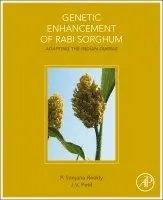
    Genetic Enhancement of Rabi Sorghum

    Adapting the Indian Durras

    AvSanjana Reddy,J.V. Patil

    Häftad, Engelska, 2015

    692 kr

    Beställningsvara. Skickas inom 10-15 vardagar. Fri frakt över 249 kr.

    Beskrivning

    Genetic Enhancement of Rabi Sorghum - Adapting the Indian Durras presents both the historical background and the recent research done in breeding this important world crop for more global production. Its chapters cover topics in origin and taxonomy, morphology and breeding behavior, genetics, and cytogenetics, also looking at production, nutrition, and alternate uses.

    The durra race is Ethiopian in origin and its introgression with wild forms permitted adaptation to drier conditions. These have migrated and adapted to the currently known crop that is cultivated in the winter season and commonly called rabi sorghums.

    Grown under receding soil moisture conditions, rabi sorghums have tolerance to abiotic stresses apart from biotic stresses, unlike the rainy sorghums that are grown widely in the world. However, they must be more resilient to rapid changes in climate, for example. The variability from winter sorghums is being introgressed into rainy sorghums.

    With the yield plateaus reached and sorghum gaining importance as a food crop, this book will be of importance to those studying durras and their breeding.


    • Presents both the historical background and most recent research done in breeding rabi sorghum for more global production
    • Provides information on the adaptation of the crop and the ways it has migrated to the currently known crop, which is cultivated in winter season and commonly called as rabi sorghum
    • Explores strategies for resilience as the crop must be prepared to withstand rapid and varying changes in climate

    Produktinformation

    • Utgivningsdatum:2015-05-28
    • Mått:191 x 235 x 14 mm
    • Vikt:540 g
    • Format:Häftad
    • Språk:Engelska
    • Antal sidor:248
    • Förlag:Elsevier Science
    • ISBN:9780128019269

    Utforska kategorier

    • Agronomi och lantbruk inom Naturvetenskap och teknik
    • Agronomi inom Naturvetenskap och teknik

    Mer om författaren

    Dr. Patil joined as the Director, Directorate of Sorghum Research, Hyderabad in 2010. He is also instrumental in creating Centre of Excellence (DAC, Ministry of Agriculture, GOI) which is a state of the art facility for providing advanced training in the field of value added food products. Apart from functioning as Director, he is actively engaged in research with field evaluation of thousands of sorghum germplasm accessions for useful traits.Dr.J.V. Patil has developed 19 varieties of safflower, chickpea, green gram, rajma bean, pigeon pea and sorghum. He has executed several research projects including international collaborative ones such as DFID, ICRISAT-IFAD, Bill & Melinda Gates Foundation - Hope Project and Mc Knight Foundation, USA funded projects. Apart from varietal development he also developed and popularized several crop production technologies such as sowing methods, seed treatment, foliar nutrient application and IPM in chickpea and in situ moisture conservation, soil type-based cultivars, protective irrigation, nutrient supply and intercultural time schedule in sorghum. He is receipient of many reputed awards and recognitions such as ICRISAT’s Doreen Mashler Award 2002, CGIAR’s King Baudouin Chickpea team Award 2002, Baliraja Late Annasaheb Shinde Smruti Krishi Sanshodhan Gaurav Purskar 2004, Vasantrao Naik krishi Puraskar 2005 and Maharashtra State Government’s Agricultural literature Award 2010He has to his credit 107 peer reviewed foreign and national journal papers, 16 books and 53 other technical publications. He delivered 27 Radio Talks and 11 TV shows for the benefit of farmers cultivating sorghum and pulses.

    Innehållsförteckning

    • 1. Introduction1.1 Importance1.2 Production statistics1.3 Environmental factors limiting rabi sorghum productivity1.4 Uses1.5 Nutritional status1.6 Challenges for genetic enhancement1.7 Characteristics and cultivars 2. Origin and Taxonomy2.1 Taxonomy2.2 Origin3. Morphology and Breeding behaviour3.1 Morphology3.2 Breeding behaviour and pollination control4. Genetic variability5. Genetics and Cytogenetics6. History of winter sorghum improvement in India7. Breeding for rabi sorghum improvement7.1 Yield and adaptation breeding for grain and fodder yield7.2 Heterosis breeding7.3 Breeding for tolerance to abiotic stresses7.4 Breeding for tolerance to biotic stresses7.5 Breeding for quality traits7.6 Participatory varietal selection8. Industrial/ alternate uses