• Fri frakt över 249 kr
  • •
  • Snabba leveranser
  • •
  • Billiga böcker
Kundservice

Du är på sajten för privatpersoner.

Företag, bibliotek eller offentlig verksamhet?

Du handlar på classic.bokus.com, där alla dina funktioner finns intakta.
Till classic.bokus.com
Bokus logotyp. Gå till startsidan.
  • Erbjudanden
  • Nyheter
  • Student
  • Topplistor
  • Barn & ungdom
  • Bokus Play
  • E-böcker
  • Pocketböcker
  • Spel & pussel

10% rabatt på allt med kod: NYSTART10 →

Sidfot

Mina sidor

    Hjälp

    • Kundservice
    • Vanliga frågor och svar
    • Frakt och leverans
    • Retur vid ångerrätt
    • Reklamera vara
    • Betalning
    • Köpvillkor
    • Allmänna villkor
    • Information om webbplatsens tillgänglighet

    Om Bokus

    • Om oss
    • Pressrum
    • För studenter
    • För företag
    • För bibliotek och offentlig verksamhet
    • För leverantörer
    • Hållbarhet

    Populärt

    • Aktuella erbjudanden
    • Presentkort
    • Studentlitteratur
    • Nya böcker
    • Topplistor
    • Signerade böcker
    • Engelska böcker

    Inspiration

    • Boktips
    • BookTok
    • Populära bokserier
    • Barnbokskaraktärer
    • Populära författare
    Logotyp för Bokus
    Följ oss på Facebook (extern länk)Följ oss på Instagram (extern länk)Följ oss på YouTube (extern länk)Följ oss på TikTok (extern länk)
    bokus @ CookiesAnpassa cookiesIntegritetspolicyKöpvillkor
    Till Citymail hemsida (extern länk)Till Budbee hemsida (extern länk)Till Postnord hemsida (extern länk)Till Schenker hemsida (extern länk)Till Early Bird hemsida (extern länk)Till Walleys hemsida (extern länk)
    1. Ekonomi och Ledarskap
    2. Industrier och branscher
    3. Servicesektorn

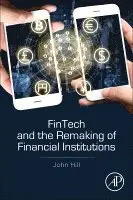
    Fintech and the Remaking of Financial Institutions

    AvJohn Hill

    Häftad, Engelska, 2018

    916 kr

    Beställningsvara. Skickas inom 10-15 vardagar. Fri frakt över 249 kr.

    Fler format och utgåvor

    E-bok

    1 316 kr

    Häftad

    1 021 kr

    E-bok

    1 284 kr

    Beskrivning

    FinTech and the Remaking of Financial Institutions explores the transformative potential of new entrants and innovations on business models. In its survey and analysis of FinTech, the book addresses current and future states of money and banking. It provides broad contexts for understanding financial services, products, technology, regulations and social considerations. The book shows how FinTech has evolved and will drive the future of financial services, while other FinTech books concentrate on particular solutions and adopt perspectives of individual users, companies and investors. It sheds new light on disruption, innovation and opportunity by placing the financial technology revolution in larger contexts.


    • Presents case studies that depict the problems, solutions and opportunities associated with FinTech
    • Provides global coverage of FinTech ventures and regulatory guidelines
    • Analyzes FinTech's social aspects and its potential for spreading to new areas in banking
    • Sheds new light on disruption, innovation and opportunity by placing the financial technology revolution in larger contexts

    Produktinformation

    • Utgivningsdatum:2018-05-19
    • Mått:152 x 229 x 19 mm
    • Vikt:610 g
    • Format:Häftad
    • Språk:Engelska
    • Antal sidor:386
    • Förlag:Elsevier Science
    • ISBN:9780128134979

    Utforska kategorier

    • Servicesektorn inom Ekonomi och Ledarskap
    • Finansiering inom Ekonomi och Ledarskap
    • Affärsapplikationer inom Data och IT

    Mer om författaren

    John Hill is a consultant, investor, author, and educator who teaches economics and finance at the Dolan School of Business, Fairfield University. He earned his degrees from Cornell University and the University of Pennsylvania, where he pursued a PhD in econometrics under Nobel Laureate Lawrence Klein. John has authored notable books, including Environmental, Social, and Governance (ESG) Investing and Fintech and the Remaking of Financial Institutions, both published by Academic Press. His career spans senior executive roles at leading financial institutions such as Merrill Lynch, ABN AMRO, Intercontinental Exchange, and ICAP.

    Recensioner i media

    "John Hill sets out the landscape of the emerging world of disruptive financial services, drawing from recent examples to present a practical approach to learning about fintech in the first textbook on this topic. He connects a diverse set of topics in easy-to-digest chapters, setting these in the context of our existing financial ecology. The book is ideally suitable for advanced level undergraduate or masters students - for computer scientists in learning about financial services, and readers from economics and finance on how new computer platforms will transform their own industries." --Mark Perry, University of Michigan "Fintech and the Remaking of Financial Institutions is a quality piece of work full of important information for those of us who want to explore Fintech and its future. This is a must-read primer for anyone considering Fintech." --Donghee Shin, Chung-Ang University"There is no doubt that FinTech is one the key issues in the modern financial industry and FinTech and the Remaking of Financial Institutions by John Hill is an excellent book for anyone interested in the most recent technology developments in both banking sector and financial markets. This book covers not only the presentation of FinTech adoption in various types of financial services or institutions but also provides the analysis of its impact on the financial system and entire economy." --Adam Marszk, Politechnika Gdanska

    Innehållsförteckning

    • 1. Introduction2. Disruption and Disintermediation in Financial Services and Products: Why Now?3. Money: A Medium of Exchange, Unit of Account and Store of Wealth4. Financial Institutions5. Bubbles, Panics, Crashes, and Crises6. Bank Lending7. Time Value of Money: Interest, Bonds, Money Market Funds8. Equities, Efficient Markets, Exchanges9. Foreign Exchange10. Forwards, Futures, and Swaps11. Commodities12. Options13. Startup Financing14. Fintech in a Global Setting15. Fintech and Government Regulation16. Social issues: Income Distribution, Diversity, and Inclusiveness17. The Future Millennial Bank—Your Parents’ Bank Integrates With the Disrupters