• Fri frakt över 249 kr
  • •
  • Snabba leveranser
  • •
  • Billiga böcker
Kundservice

Du är på sajten för privatpersoner.

Företag, bibliotek eller offentlig verksamhet?

Du handlar på classic.bokus.com, där alla dina funktioner finns intakta.
Till classic.bokus.com
Bokus logotyp. Gå till startsidan.
  • Erbjudanden
  • Nyheter
  • Student
  • Topplistor
  • Barn & ungdom
  • Bokus Play
  • E-böcker
  • Pocketböcker
  • Spel & pussel

10% rabatt på allt med kod NYSTART10 →

Sidfot

Mina sidor

    Hjälp

    • Kundservice
    • Vanliga frågor och svar
    • Frakt och leverans
    • Retur vid ångerrätt
    • Reklamera vara
    • Betalning
    • Köpvillkor
    • Allmänna villkor
    • Information om webbplatsens tillgänglighet

    Om Bokus

    • Om oss
    • Pressrum
    • För studenter
    • För företag
    • För bibliotek och offentlig verksamhet
    • För leverantörer
    • Hållbarhet

    Populärt

    • Aktuella erbjudanden
    • Presentkort
    • Studentlitteratur
    • Nya böcker
    • Topplistor
    • Signerade böcker
    • Engelska böcker

    Inspiration

    • Boktips
    • BookTok
    • Populära bokserier
    • Barnbokskaraktärer
    • Populära författare
    Logotyp för Bokus
    Följ oss på Facebook (extern länk)Följ oss på Instagram (extern länk)Följ oss på YouTube (extern länk)Följ oss på TikTok (extern länk)
    bokus @ CookiesAnpassa cookiesIntegritetspolicyKöpvillkor
    Till Citymail hemsida (extern länk)Till Budbee hemsida (extern länk)Till Postnord hemsida (extern länk)Till Schenker hemsida (extern länk)Till Early Bird hemsida (extern länk)Till Walleys hemsida (extern länk)
    1. Medicin
    2. Klinisk medicin och internmedicin
    3. Gastroenterologi

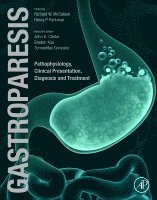
    Gastroparesis

    Pathophysiology, Clinical Presentation, Diagnosis and Treatment

    AvRichard Mccallum,Henry Parkman

    Häftad, Engelska, 2020

    1 765 kr

    Beställningsvara. Skickas inom 10-15 vardagar. Fri frakt över 249 kr.

    Beskrivning

    Gastroparesis: Pathophysiology, Clinical Presentation, Diagnosis and Treatment is a reference book providing a centralized source of data on gastroparesis collected over the last decade. Contents include the pathophysiology, clinical presentation, diagnostic recommendations and treatment options for gastroparesis. The reference is split into broad subsections, with the strategy of first focusing on the key features of the disease and then turning to controversies, recent developments, patient support resources, the spectrum of treatment - including medical and surgical - and future directions.

    Chapters will include coverage of important topics like autonomic neuropathy, the brain-gut axis, potential pathophysiological advances at the cellular level, diagnostic and therapeutic options specifically targeted at the pylorus, and the evaluation of the female predominance in gastroparesis. This is a must-have resource for scientists looking to find the next step in their research as well as healthcare professionals ranging from Gastroenterologists to Internists, Surgeons, Nutritionists, Psychiatrists, and Psychologists, Residents and Medical Students who struggle with how to optimally take care of their gastroparetic patients.


    • Provides a comprehensive overview of what is known regarding the pathophysiology, clinical presentation, diagnostic considerations and treatment options for gastroparesis
    • Includes key updates made in the last decade, including the progress made by the NIH Gastroparesis Consortium
    • Presents both sides of key controversies in the field, including the debate between classification of gastroparesis versus functional dyspepsia
    • Fully reviews the major advances in pharmacologic agents for therapy, both anti-emetics and prokinetics
    • Extensive update on the "Pyloric Revolution" and our understanding of the pathophysiology of gastroparesis and how the focus on the pylorus has literally transformed our treatment strategy with an emphasis on both surgical and endoscopic advances in addressing pyloric dysfunction

    Produktinformation

    • Utgivningsdatum:2020-09-30
    • Mått:216 x 276 x 31 mm
    • Vikt:1 540 g
    • Format:Häftad
    • Språk:Engelska
    • Antal sidor:584
    • Förlag:Elsevier Science
    • ISBN:9780128185865

    Utforska kategorier

    • Gastroenterologi inom Medicin

    Mer om författaren

    Richard W. McCallum is recognized internationally as a premier thought leader in the field of neurogastroenterology and gastrointestinal motility. He is professor and founding chair of the Department of Internal Medicine at Texas Tech University Health Sciences Center and chief of its Division of Gastroenterology, Hepatology and Nutrition. He is also director of the Center for Neurogastroenterology and GI Motility.McCallum pioneered the use of gastric electrical stimulation to treat gastroparesis, instigating a new direction of treatment for patients with nausea and vomiting. He is also a central figure in clinical research trials studying all the major prokinetics—drugs that enhance gastrointestinal motility—as well as antiemetics— agents working in the brain to block nausea. His scientific publications in peer-reviewed journals exceed 450, and he has edited more than a dozen scientific textbooks. He holds five patents.McCallum has held several important leadership roles at the American College of Gastroenterology, the American Gastroenterological Association, the American Neurogastroenterology and Motility Society, and the Southern Society for Clinical Investigation. He has held editorial responsibilities with several major journals. He has been honored by Texas Tech University, the American Gastroenterological Association, the American Diabetes Association, the Texas Medical Association, and the Southern Society for Clinical Research. His research on the pathophysiology and treatments for gastroparesis has been funded by the National Institutes of Health (NIH), and he recently received another five-year renewal of this grant for $2 million. Henry Parkman is the Vice Chair of Research, Department of Medicine Professor and Medicine Director at the GI Motility Laboratory at the Lewis Katz School of Medicine. His main areas of research include the use of multichannel electrogastrography to assess gastric myoelectrical activity to detect gastric motor function in patients with dyspeptic symptoms. He has developed a noninvasive test to measure simultaneously both gastric emptying and gastric volume after ingestion of a solid meal under physiologic conditions which is useful in defining the pathophysiologic factors which cause symptoms in patients with functional dyspepsia and be useful to test the effects of new pharmaceutical agents. He is also investigating gastric motility, breath tests for gastric emptying, electrogastrography (EGG), new pharmaceutical treatments for gastroparesis and functional dyspepsia, small bowel motility recordings, esophageal pH and motility recordings. John Clarke is part of the Gastroenterology & Hepatology Division at Stanford University as Director of the Esophageal Program. He previously spent 17 years in Baltimore, including 9 years on the faculty at Johns Hopkins University where he was an Associate Professor and at various times Director of Esophageal Motility, Director of Gastrointestinal Motility, Clinical Director of the Johns Hopkins Center for Neurogastroenterology, and Clinical Director of the Gastroenterology & Hepatology Division at Johns Hopkins Bayview Medical Center. His career has combined research, education and clinical care. His clinical areas of expertise include achalasia, dysphagia, eosinophilic esophagitis, esophageal dysmotility, gastroesophageal reflux disease, gastroparesis, GI-manifestations of scleroderma and GI dysmotility. While at Johns Hopkins University, he was inducted into The Miller-Coulson Academy for Clinical Excellence, an institutional honor society for master clinicians at the time limited to 50 members across the entire university. From an education standpoint, he has lectured in over a dozen countries, authored over 25 textbook chapters and serves on the educational affairs committee of the American College of Gastroenterology. He has also won several major teaching awards, including The Johns Hopkins University Alumni Association Award for Excellence in Teaching, given to one faculty member per year in the entire School of Medicine.His research has focused on optimization and characterization of diagnostic studies to evaluate motility disorders, as well the relationship between therapeutic endoscopic techniques and treatment of motility disorders. He was an investigator on the NIH Gastroparesis Consortium and is also a former recipient of the AGA Don Castell Award. Dr. Kuo is Assistant Professor of Medicine at Massachusettes General Hospital. His laboratory is focused on clinical and translational research in GI Motility and Visceral Pain Syndromes such as GERD, gastroparesis, constipation and irritable bowel syndrome. The research has several components including research into gut motility physiology in health and disease, understanding the brain circuitry of gut sensations, and clinical trials.

    Innehållsförteckning

    • I. Introduction & clinical presentation1. Historical perspectives on gastric motility and gastroparesis2. Epidemiology of gastroparesis3. Clinical presentations of gastroparesis4. Natural history of patients with gastroparesisII. Pathophysiology5. Gastric dysmotility at the organ level in gastroparesis6. Cellular pathogenesis of gastroparesis7. Sensory dysfunction in gastroparesis8. Pathology of gastroparesis: ICC, enteric neurons and fibrosis9. Gastroparesis and the brain-gut axis10. Autonomic neuropathies and gastroparesisIII. Diagnostic considerations11. Gastric emptying scintigraphy12. The use of wireless motility capsule in the diagnosis and monitoring of gastroparesis13. Breath tests for the assessment of gastroparesis14. Magnetic resonance imaging for gastric motility and function15. Electrogastrography for suspected gastroparesis16. Antroduodenal manometry for the evaluation of patients with suspected gastroparesis17. Ancillary testing including barostat, SPECT, and satiety testingIV. Clinical subsets18. Diabetic gastroparesis19. Postsurgical gastroparesis20. Idiopathic gastroparesis21. Gastroparesis from other causes22. Pediatric gastroparesisV. Therapeutic considerations23. Dietary therapy for gastroparesis24. Prokinetic agents for gastroparesis25. Antiemetic therapy for gastroparesis26. Abdominal pain in gastroparesis: Prevalence, potential causes and management27. Psychiatric aspects of gastroparesis28. Alternative, complementary medicine and cannabinoids for gastroparesis29. Enteric tube placement for gastroparesis: Gastrostomy, gastrojejunostomy and jejunostomy30. Gastric electrical stimulation for gastroparesis31. Surgical management of gastroparesisVI. Controversies & new developments32. Studies from the NIH Gastroparesis Clinical Research Consortium: Towards improving our understanding and treatment of gastroparesis33. Evaluating response in gastroparesis: Patient reported outcome measures and survey34. The pyloric revolution: Patient selection35. Endoscopic full-thickness gastric biopsy: Ready for prime time?36. Distinguishing between functional dyspepsia and gastroparesis: Does it matter?37. Female predominance in gastroparesis38. A brief history and future directions of permanent, temporary, and endoscopic GES39. Cell transplantation for gastroparesis40. A vision of the future for gastroparesis41. Resources for the gastroparesis patient