• Fri frakt över 249 kr
  • •
  • Snabba leveranser
  • •
  • Billiga böcker
Kundservice

Du är på sajten för privatpersoner.

Företag, bibliotek eller offentlig verksamhet?

Du handlar på classic.bokus.com, där alla dina funktioner finns intakta.
Till classic.bokus.com
Bokus logotyp. Gå till startsidan.
  • Erbjudanden
  • Nyheter
  • Student
  • Topplistor
  • Barn & ungdom
  • Bokus Play
  • E-böcker
  • Pocketböcker
  • Spel & pussel

10% rabatt på allt med kod: NYSTART10 →

Sidfot

Mina sidor

    Hjälp

    • Kundservice
    • Vanliga frågor och svar
    • Frakt och leverans
    • Retur vid ångerrätt
    • Reklamera vara
    • Betalning
    • Köpvillkor
    • Allmänna villkor
    • Information om webbplatsens tillgänglighet

    Om Bokus

    • Om oss
    • Pressrum
    • För studenter
    • För företag
    • För bibliotek och offentlig verksamhet
    • För leverantörer
    • Hållbarhet

    Populärt

    • Aktuella erbjudanden
    • Presentkort
    • Studentlitteratur
    • Nya böcker
    • Topplistor
    • Signerade böcker
    • Engelska böcker

    Inspiration

    • Boktips
    • BookTok
    • Populära bokserier
    • Barnbokskaraktärer
    • Populära författare
    Logotyp för Bokus
    Följ oss på Facebook (extern länk)Följ oss på Instagram (extern länk)Följ oss på YouTube (extern länk)Följ oss på TikTok (extern länk)
    bokus @ CookiesAnpassa cookiesIntegritetspolicyKöpvillkor
    Till Citymail hemsida (extern länk)Till Budbee hemsida (extern länk)Till Postnord hemsida (extern länk)Till Schenker hemsida (extern länk)Till Early Bird hemsida (extern länk)Till Walleys hemsida (extern länk)
    1. Naturvetenskap och teknik
    2. Teknik och industri
    3. Tillverkningsteknik

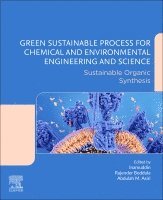
    Green Sustainable Process for Chemical and Environmental Engineering and Science

    Sustainable Organic Synthesis

    AvRajender Boddula,Abdullah M. Asiri

    Häftad, Engelska, 2020

    2 250 kr

    Beställningsvara. Skickas inom 10-15 vardagar. Fri frakt över 249 kr.

    Beskrivning

    Green Sustainable Process for Chemical and Environmental Engineering and Science: Sustainable Organic Synthesis provides an in-depth overview in the area of organic, pharmaceutical, engineering and environmental sciences, with a focus on the purification and extraction of fine chemicals, alternative green solvents, medicinal, analytical drugs, and bioactive compounds utilizing green chemistry protocols. It also focuses on the nanocatalysis, biocatalysis, solvent-free, recyclable organocatalysis, solid-supported reagents, heterogeneous polymer reusable catalysis, and CO2 conversion to commercial chemicals, utilizing industrial strategies such as flow-reactor, microwave, ultrasonics, ball-mill, photochemical and electrochemical methods.


    • Covers a broad overview of sustainable organic synthesis
    • Outlines eco-friendly organic synthesis using novel techniques and chemical processes, i.e., photochemical, electrochemical, microwave, bio-strategies, etc.
    • Gives a detailed account of green, large-scale techniques in organic synthesis and their applications in pharmaceutical production
    • Presents cutting-edge, recent advances in industrial pharmaceuticals and the technologies involved in medicinal and organic chemistry
    • Provides a systematic discussion of each technology in organic synthesis, including main parameters and challenges

    Produktinformation

    • Utgivningsdatum:2020-08-26
    • Mått:191 x 235 x 26 mm
    • Vikt:1 000 g
    • Format:Häftad
    • Språk:Engelska
    • Antal sidor:506
    • Förlag:Elsevier Science
    • ISBN:9780128195390

    Utforska kategorier

    • Tillverkningsteknik inom Naturvetenskap och teknik
    • Miljöteknik inom Naturvetenskap och teknik

    Mer om författaren

    Prof. Dr. Rajender Boddula currently serves as an Associate Professor, in the School of Sciences, at Woxsen University, Hyderabad, Telangana, India. He is also an Adjunct Professor, at Graphic Era Hill University, in India. He attained his MSc in Organic Chemistry, (Kakatiya University, 2008) and PhD from Kakatiya University and CSIR–Indian Institute of Chemical Technology, Hyderabad, India (2014). His doctoral work focused on polyaniline-based materials for supercapacitor and catalytic applications, which laid a strong interdisciplinary foundation for his research career. Following his doctorate, Dr. Boddula pursued a distinguished postdoctoral trajectory across several major global research centers. He was awarded the Chinese Academy of Sciences President’s International Fellowship (CAS-PIFI) and conducted research at the National Center for Nanoscience and Technology, in Beijing. He further refined his expertise as a postdoctoral researcher at the National Tsing-Hua University, in Taiwan, and at the Center for Advanced Materials, at Qatar University. His postdoctoral work encompassed advanced novel nanomaterials, drug delivery, catalysis, hydrogen energy, and CO₂ valorization, driving sustainable solutions for energy and environmental challenges. Professor Boddula’ s major research interests span next-gen materials, green catalysis, environmental remediation, sustainable energy conversion & storage technologies, and hydrogen energy.Prof. Abdullah M. Asiri is the Head of the Chemistry Department at King Abdulaziz University since October 2009 and he is the founder and the Director of the Center of Excellence for Advanced Materials Research (CEAMR) since 2010 till date. He is the Professor of Organic Photochemistry. His research interest covers color chemistry, synthesis of novel photochromic and thermochromic systems, synthesis of novel coloring matters and dyeing of textiles, materials chemistry, nanochemistry and nanotechnology, polymers and plastics. A major achievement of Prof. Asiri is the discovery of tribochromic compounds, a class of compounds which change from slightly or colorless to deep colored when subjected to small pressure or when grind. This discovery was introduced to the scientific community as a new terminology published by IUPAC in 2000. This discovery was awarded a patent from European Patent office and from UK patent. He is also a member of the Editorial Board of various journals of international repute. He is the Vice- President of Saudi Chemical Society (Western Province Branch). He holds four USA patents, more than 800 Publications in international journals, seven book chapters, and ten books Dr. Inamuddin, is an Assistant professor at Department of Applied Chemistry, Zakir Husain College of Engineering and Technology, Faculty of Engineering and Technology, Aligarh Muslim University, Aligarh, India. He has extensive research experience in multidisciplinary fields of analytical chemistry, materials chemistry, electrochemistry, renewable energy and environmental science. He has worked on different research projects funded by various government agencies and universities and is the recipient of awards, including the Fast-Track Young Scientist Award and young researcher of the year award-2020 of the university. His current research interests include ion exchange materials, a sensor for heavy metal ions, biofuel cells, supercapacitors and bending actuators.

    Innehållsförteckning

    • 1. Introduction, parameters and advantages of greener organic synthesis2. Atom-economy green organic synthesis3. Microwave-assisted organic synthesis4. Ultrasound-assisted organic synthesis5. Bioenzyme-assisted organic synthesis6. Micellar-assisted organic synthesis7. Solvent-free organic synthesis8. Green organic synthesis by carbon oxide conversion9. Ionic liquids-assisted organic synthesis10. Green organic synthesis in supercritical water11. Sustainable organic synthesis by electrochemical protocol12. Green organic synthesis by flow approach13. Recyclable organocatalysis in organic synthesis14. Organic synthesis by photochemical protocol15. Organic synthesis by eco-friendly solvents beyond water16. Sustainable organic synthesis by water vs supercritical water17. Nanocatalysis in Sustainable organic synthesis18. Biocatalysis in organic synthesis19. Recoverable polymer catalysis in organic synthesis20. Solid-state sustainable organic synthesis21. Employing sustainable pathways for organic synthesis