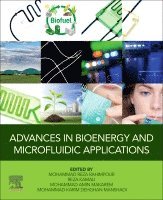
Häftad, Engelska, 2021
Advances in Bioenergy and Microfluidic Applications
Av Mohammad Reza Rahimpour, Mohammad Amin Makarem, Reza Kamali, Mohammad Karim Dehghan Manshadi
2317 kr
Beställningsvara. Skickas inom 10-15 vardagar. Fri frakt över 249 kr.
Beskrivning
Since fossil fuels suffer from dangerous side effects for the environment and their resources are limited, bioenergy attracted many attentions in various aspects as an alternative solution. Therefore, increasing number of researches are conducted every year and the processes updated frequently to make them more economic and industrially beneficial.�Advances in Bioenergy and Microfluidic Applications reviews recent developments in this field and covers various advanced bio-applications, which rarely are reviewed elsewhere. The chapters are started from converting biomass to valuable products and continues with applications of biomass in water-treatment, novel sorbents and membranes, refineries, microfluidic devices and etc. The book covers various routes for gaining bioenergy from biomass. Their composition, carbon contents, heat production capacities and other important factors are reviewed in details in different chapters. Then, the processes for upgrading them directly and indirectly (using metabolic engineering and ultrasonic devices) to various fuels are explained. Each process is reviewed both technically and economically and the product analysis is given. Besides, the effect of various catalysts on increasing selectivity and productivity are taken into account. Biofuels are compared with fossil fuels and challenges in the way of bioenergy production are explained. Moreover, advanced bio-applications in membranes, adsorption, waste water treatment, microfluidic devices and etc. are introduced. This book provides a good insight about such bioprocesses and microfluidics devices for researchers, students, professors and related departments and industries that care about energy resources and curious about recent advances in related methods and technologies. Despite other books which review biomass chemistry and conversion, the current book emphasize on the application of biomass in the mentioned areas. Therefore, one can gain a better and more comprehensive insight by reading the book.
- Describes energy production from biomass, biomass conversion, their advantages and limitations
- Describes the application of biomass in membranes, sorbents, water-treatment, refineries, and microfluidic devices
- Offers a future outlook of bioenergy production and possibility to apply in the industries
Produktinformation
- Utgivningsdatum: 2021-02-08
- Mått: 191 x 235 x 25 mm
- Vikt: 1 020 g
- Format: Häftad
- Språk: Engelska
- Antal sidor: 488
- Förlag: Elsevier Science
- ISBN: 9780128216019
Utforska kategorier
Betyg & recensioner
0 recensioner
Inga recensioner tillgängliga.