• Fri frakt över 249 kr
  • •
  • Snabba leveranser
  • •
  • Billiga böcker
Kundservice

Du är på sajten för privatpersoner.

Företag, bibliotek eller offentlig verksamhet?

Du handlar på classic.bokus.com, där alla dina funktioner finns intakta.
Till classic.bokus.com
Bokus logotyp. Gå till startsidan.
  • Erbjudanden
  • Nyheter
  • Student
  • Topplistor
  • Barn & ungdom
  • Bokus Play
  • E-böcker
  • Pocketböcker
  • Spel & pussel

Må bättre, för mindre! Upp till 50% rabatt på hälsoböcker

Sidfot

Mina sidor

    Hjälp

    • Kundservice
    • Vanliga frågor och svar
    • Frakt och leverans
    • Retur vid ångerrätt
    • Reklamera vara
    • Betalning
    • Köpvillkor
    • Allmänna villkor
    • Information om webbplatsens tillgänglighet

    Om Bokus

    • Om oss
    • Pressrum
    • För studenter
    • För företag
    • För bibliotek och offentlig verksamhet
    • För leverantörer
    • Hållbarhet

    Populärt

    • Aktuella erbjudanden
    • Presentkort
    • Studentlitteratur
    • Nya böcker
    • Topplistor
    • Signerade böcker
    • Engelska böcker

    Inspiration

    • Boktips
    • BookTok
    • Populära bokserier
    • Barnbokskaraktärer
    • Populära författare
    Logotyp för Bokus
    Följ oss på Facebook (extern länk)Följ oss på Instagram (extern länk)Följ oss på YouTube (extern länk)Följ oss på TikTok (extern länk)
    bokus @ CookiesAnpassa cookiesIntegritetspolicyKöpvillkor
    Till Citymail hemsida (extern länk)Till Budbee hemsida (extern länk)Till Postnord hemsida (extern länk)Till Schenker hemsida (extern länk)Till Early Bird hemsida (extern länk)Till Walleys hemsida (extern länk)
    1. Medicin
    2. Andra medicinska specialiteter
    3. Klinisk psykologi

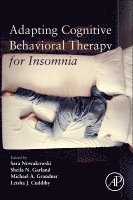
    Adapting Cognitive Behavioral Therapy for Insomnia

    AvSara Nowakowski,Sheila Garland

    Häftad, Engelska, 2021

    1 432 kr

    Beställningsvara. Skickas inom 10-15 vardagar. Fri frakt över 249 kr.

    Beskrivning

    Cognitive behavioral therapy for insomnia (CBT-I) has emerged as the standard first-line treatment for insomnia. The number of patients receiving non-medication treatments is increasing, and there is a growing need to address a wide range of patient backgrounds, characteristics, and medical and psychiatric comorbidities. Adapting Cognitive Behavioral Therapy for Insomnia identifies for clinicians how best to deliver and/or modify CBT-I based on the needs of their patients. The book recommends treatment modifications based on patient age, comorbid conditions, and for various special populations.

    • Summarizes research on cognitive behavior therapy for insomnia (CBT-I)
    • Directs clinicians how to modify CBT-I for comorbid patient conditions
    • Discusses comorbid sleep, psychiatric, and medical disorders
    • Specifies modifications across the lifespan for different client ages and conditions
    • Includes special populations: short sleepers�and more

    Produktinformation

    • Utgivningsdatum:2021-11-12
    • Mått:152 x 229 x 25 mm
    • Vikt:700 g
    • Format:Häftad
    • Språk:Engelska
    • Antal sidor:488
    • Förlag:Elsevier Science
    • ISBN:9780128228722

    Utforska kategorier

    • Klinisk psykologi inom Medicin
    • Psykologiska teorier och skolor inom Psykologi och pedagogik
    • Psykoterapi som behandlingsmetod inom Medicin

    Mer om författaren

    Sara Nowakowski Baylor College of Medicine Medicine-Health Services Research 2450 Holcombe Blvd., Suite 01Y Houston, TX 77586 United States. Dr. Nowakowski is a licensed clinical psychologist and board certified in sleep medicine. Her research in sleep includes projects on sleep and menopause; psychological well-being pre-post hysterectomy, sleep pre-post acute hospital stay in aging patients, and a bedrest study of aging participants. Her research and clinical expertise focuses on assessment and treatment of sleep disorders. Sheila N. Garland, PhD is a Registered Clinical Psychologist, Associate Professor in Psychology and Oncology at Memorial University in Newfoundland and Labrador, Canada, and Senior Scientist with the Beatrice Hunter Cancer Research Institute in Halifax Nova Scotia. She received her PhD in Clinical Psychology from the University of Calgary, Alberta, and completed a 3-year post-doctoral fellowship in Behavioral Sleep Medicine at the University of Pennsylvania. As Director of the Sleep, Health, and Wellness Lab, she delivers, evaluates, and provides training on behavioural sleep medicine interventions in chronic disease populations and in those with co-morbid psychiatric disorders. Her research explores the mechanisms and effectiveness of interventions to improve sleep and other symptoms in cancer survivors. Dr. Michael Grandner is a licensed clinical psychologist, Director of the Sleep and Heath Research Program at the University of Arizona, and Director of the Behavioral Sleep Medicine Clinic at the Banner-University Medical Center in Tucson, AZ. His work focuses on translational sleep research and Behavioral Sleep Medicine, including studies of sleep as a domain of health behavior and the development and implementation of behavioral interventions for insufficient sleep and sleep disorders. Specific areas of focus include: (1) Downstream cardiovascular, metabolic, and behavioral health outcomes associated with habitual sleep duration and/or insufficient sleep, (2) Upstream social, behavioral, and biological determinants of habitual sleep duration, insufficient sleep, and poor sleep quality, and (3) Development and implementation of behavioral interventions for sleep as a domain of health behavior. Leisha Cuddihy, PhD, DBSM is a licensed Clinical Psychologist providing behavioral sleep medicine services at the Spectrum Health Sleep Disorders Center and Helen DeVos Children’s Hospital Behavioral Health. She received her PhD in Clinical Psychology from the University of Arizona, and completed a 1-year post-doctoral fellowship in Behavioral Sleep Medicine at the University of Michigan. She is Certified in Behavioral Sleep Medicine by the American Board of Sleep Medicine and is a Diplomate in Behavioral Sleep Medicine by the Board of Behavioral Sleep Medicine. In her full-time clinical practice, she sees adult and pediatric patients struggling with insomnia, circadian rhythm disorders, positive airway pressure non-adherence, and disorders of excessive daytime sleepiness. In collaboration with her sleep medicine colleagues, she often assists patients with managing insomnia as they reduce or discontinue sleep aids. She specializes in CBT-I but is passionate about using a variety behavioral sleep medicine strategies to help patients resolve sleep problems.

    Recensioner i media

    *4 stars* "...discusses the cognitive behavioral therapy (CBT) approach to the treatment of insomnia [and] explores the specific components of CBT and the supporting research,… [including] co-morbid conditions and how to modify the treatment across the lifespan. The book aims to identify how best to deliver CBT based on the needs of patients, recommending modifications based on the patient’s age, co-morbid conditions, as well as various special-case populations…. The book is easy to read and contains numerous tables/figures, which help to clarify the text. This book is excellent. Written by experts in the field, it shows how to apply CBT-I principles to a variety of sleep disorders, including individuals with co-morbid psychiatric and medical disorders. The step-by-step approach makes it easier to learn." --©Doody’s Review Service, 2023, Gary B Kaniuk, PsyD (Cermak Health Services)

    Innehållsförteckning

    • PrefaceAcknowledgmentsPart 1: Traditional CBT-I components and delivery1. Standard cognitive behavioral therapy for insomnia (CBT-I)Alexandria Muench, Ivan Vargas, Donn Posner, and Michael L. PerlisPart 2: CBT-I in other sleep disorders2. CBT-I in patients with obstructive sleep apneaEarl Charles Crew3. CBT-I for patients with phase disorders or insomnia with circadian misalignmentMarissa A. Evans and Brant P. Hasler4. CBT-I for patients with shift work disorderPhilip Cheng5. CBT-I for patients with hypersomnia disordersJason C. Ong and Matthew D. Schuiling6. CBT-I for patients with orthosomniaKelly Glazer BaronPart 3: CBT-I in psychiatric disorders7. CBT-I for patients with depressionJennifer Goldschmied and Philip Gehrman8. CBT-I for patients with schizophrenia and other psychotic disordersAndrew Scott Tubbs and Michael A. Grandner9. CBT-I for people diagnosed with bipolar disorder: Moving from a disorder-focused to a transdiagnostic conceptualizationAllison G. Harvey and Caitlin E. Gasperetti10. CBT-I in patients with alcohol use and cannabis use disordersGabrielle E. Bowyer, Trevor M. Brooks, and Deirdre A. ConroyPart 4: CBT-I in medical disorders11. CBT-I for patients with chronic painLeisha J. Cuddihy, Sara Nowakowski, Michael A. Grandner, Jessica M. Meers,and Michael T. Smith12. CBT-I during and after a cancer diagnosisSheila N. Garland13. CBT-I in patients with a history of traumatic brain injuryErin A. Almklov, Guadalupe L. Rivera, and Henry OrffPart 5: CBT-I across the lifespan14. CBT-I for adolescentsMelisa E. Moore and Alison R. Hartman15. CBT-I in pregnancyAnna L. MacKinnon, Ivan D. Sedov, and Lianne M. Tomfohr-Madsen16. CBT-I for perimenopause and postmenopauseJessica M. Meers, Darius B. Dawson, and Sara Nowakowski17. CBT-I for older adultsJaime M. Hughes and Jennifer L. MartinPart 6: Other special considerations18. CBT-I in the short sleep duration phenotypeJulio Fernandez-Mendoza19. CBT-I for people who failed CBT-IMichael A. Grandner, Denise Rodriguez Esquivel, and Spencer Dawson20. CBT-I in patients who wish to reduce use of hypnotic medicationNorah Simpson and Rachel Manber