• Fri frakt över 249 kr
  • •
  • Snabba leveranser
  • •
  • Billiga böcker
Kundservice

Du är på sajten för privatpersoner.

Företag, bibliotek eller offentlig verksamhet?

Du handlar på classic.bokus.com, där alla dina funktioner finns intakta.
Till classic.bokus.com
Bokus logotyp. Gå till startsidan.
  • Erbjudanden
  • Nyheter
  • Student
  • Topplistor
  • Barn & ungdom
  • Bokus Play
  • E-böcker
  • Pocketböcker
  • Spel & pussel

10% rabatt på allt med kod: NYSTART10 →

Sidfot

Mina sidor

    Hjälp

    • Kundservice
    • Vanliga frågor och svar
    • Frakt och leverans
    • Retur vid ångerrätt
    • Reklamera vara
    • Betalning
    • Köpvillkor
    • Allmänna villkor
    • Information om webbplatsens tillgänglighet

    Om Bokus

    • Om oss
    • Pressrum
    • För studenter
    • För företag
    • För bibliotek och offentlig verksamhet
    • För leverantörer
    • Hållbarhet

    Populärt

    • Aktuella erbjudanden
    • Presentkort
    • Studentlitteratur
    • Nya böcker
    • Topplistor
    • Signerade böcker
    • Engelska böcker

    Inspiration

    • Boktips
    • BookTok
    • Populära bokserier
    • Barnbokskaraktärer
    • Populära författare
    Logotyp för Bokus
    Följ oss på Facebook (extern länk)Följ oss på Instagram (extern länk)Följ oss på YouTube (extern länk)Följ oss på TikTok (extern länk)
    bokus @ CookiesAnpassa cookiesIntegritetspolicyKöpvillkor
    Till Citymail hemsida (extern länk)Till Budbee hemsida (extern länk)Till Postnord hemsida (extern länk)Till Schenker hemsida (extern länk)Till Early Bird hemsida (extern länk)Till Walleys hemsida (extern länk)
    1. Medicin
    2. Klinisk medicin och internmedicin
    3. Sjukdomar och rubbningar
    4. Onkologi

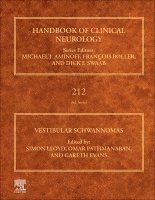
    Vestibular Schwannomas

    Inbunden, Engelska, 2025

    Del 212 i serien Handbook of Clinical Neurology

    2 894 kr

    Beställningsvara. Skickas inom 5-8 vardagar. Fri frakt över 249 kr.

    Beskrivning

    Vestibular Schwannomas covers multiple facets of vestibular schwannomas, including advancements in surgical techniques, radiological innovations, long-term patient outcomes, and implications for hearing preservation. It serves as a comprehensive guide for clinicians and researchers aiming to enhance diagnostic accuracy and therapeutic strategies in managing these complex tumors which are benign, slow-growing tumors that originate from the Schwann cells that line the vestibular nerve. They are the most prevalent neoplasms found in the cerebellopontine angle (CPA), the critical junction between the cerebellum and the brainstem.

    Their incidence, clinical presentation, and impact on surrounding neurological structures make them a focal point of research and medical intervention. Understanding their etiology, diagnosis, and treatment options requires an interdisciplinary approach bridging neurology, otology, and radiology.


    • Consolidates best practices on the diagnosis and treatment of vestibular schwannomas
    • Includes both sporadic and neurofibromatosis type 2 vestibular schwannomas
    • Covers stereotaxic radiosurgery and microsurgical resection
    • Discusses molecular biology, histopathology, and genomics
    • Presents rehabilitation for neurological deficits resulting from schwannomas and treatment

    Produktinformation

    • Utgivningsdatum:2025-10-10
    • Mått:216 x 276 x 28 mm
    • Vikt:1 520 g
    • Format:Inbunden
    • Språk:Engelska
    • Serie:Handbook of Clinical Neurology
    • Antal sidor:462
    • Förlag:Elsevier Science
    • ISBN:9780128245347

    Utforska kategorier

    • Onkologi inom Medicin
    • Audiologi och otologi inom Medicin

    Mer om författaren

    Professor Lloyd  is a  Consultant Skull Base and Auditory Implant Surgeon at the Manchester Royal Infirmary, Royal Manchester Children’s Hospital and Salford Royal Hospital. He is Professor of Otology and Skull Base Surgery at the University of Manchester and his research interests include the natural history of vestibular schwannomas and NF2-related schwannomatosis. He is widely published in his field and is frequently invited to speak both nationally and internationally. He has held a number of high profile positions including president of the British Society of Otology and secretary to the British Skull Base Society. He is president elect of the Royal Society of Medicine Otology section and is a member of the European Academy of Otology and Neuro-Otology and the Politzer Society. He has been awarded the Dalby Prize by the Royal Society of Medicine. This prize recognises the individual that has made the greatest contribution to otological research over the last 5 years. He is also the director of the UKs leading advanced otology course and skull base course. He has been deputy editor of the Mediterranean Journal of Advanced Otology and is on the editorial board of Cochlear Implants International. He has published over 100 peer reviewed papers and 17 book chapters. He has also edited two books. He regularly reviews submissions to peer reviewed medical journals including the Lancet, Otology and Neurotology, Cochlear Implants International and Clinical Otolaryngology amongst others. He is an examiner for the Intercollegiate FRCS(ORL-HNS) examinations.Dr. Pathmanaban is Professor of Neurosurgery in the Division of Neuroscience at the University of Manchester and Clinical Director of the Department of Neurosurgery at the Manchester Centre for Clinical Neurosciences, Salford Royal Hospital, UK. He is an internationally renowned skull base surgeon and is referred complex cases from across the UK and internationally. He trained in London, Manchester, Oxford, and Toronto. He was the Marjorie Newsome visiting fellow at the Barrow Neurological Institute, USA following the award of the Norman Dott Gold Medal for the most outstanding performance amongst graduating Neurosurgeons in the UK and Ireland in 2015. He is a popular invited speaker on the global skull base circuit and is on the faculty of numerous advanced microsurgery and endoscopic training courses. He has a PhD in molecular and cellular Neuro-Oncology and is group-leader of the Surgical Neuro-Oncology Manchester (SNO-Man) Laboratory, where he works as part of a team focused on translational tumor microenvironment research, including a program of work on inflammatory biomarkers and therapeutic targets in vestibular Schwannoma. He is past-secretary and current treasurer of the British Skull Base Society and has served as the Skull Base Lead for the council of the Society of British Neurological Surgeons. He sits on the Clinical Neurosciences Council of The Royal Society of Medicine and is on the panel of question writers for The Joint Committee on Intercollegiate Examinations in Neurosurgery. Professor Evans is Professor of Medical Genetics at the University of Manchester. He is one of the world’s leading experts on breast cancer genetics and Neurofibromatosis type 2. He is an NIHR Senior Investigator and has published over 760 peer reviewed research publications; 276 as first or senior author. He has published over 126 reviews and chapters and has had a book published by Oxford University Press on familial cancer. He has an ISI web of knowledge H-index of 100 and a google scholar H-index of 139 having only published his first article in 1990. In the last 5 years he has raised over £35 million in grants for multicentre and local studies – approximately £31 million to Manchester. He is Chief Investigator on two (£1.59 & £1 million) NIHR program grant (2009-2014 and 2016-2020) on breast cancer risk prediction and also has an NIHR RfPB grant as CI (2011).  He has led a successful bid for a Nationally funded NF2 service (£7.5 million pa) that started in 2010. He is theme lead and cancer lead on the All Manchester NIHR Biomedical Research Centre worth £28.5 Million (2016-2020). He also leads the NICE Familial Breast Cancer Guideline Development Group.

    Innehållsförteckning

    • 1. History of vestibular schwannoma managementSection I. Basic Science 2. Applied anatomy in vestibular schwannoma3. Molecular biology and disease models of vestibular schwannomas: State of the art4. Pathology and tumor microenvironment of vestibular schwannoma5. Genomics of vestibular schwannoma6. Vestibular schwannomas: Key research questions and prioritiesSection II. Assessment 7. Clinical evaluation and investigation of patients with a sporadic vestibular schwannoma8. Clinical evaluation and investigation of vestibular schwannoma in NF2-related schwannomatosis9. Vestibular schwannoma imaging and differential diagnosis10. Clinical epidemiology of sporadic vestibular schwannomas11. Clinical epidemiology of NF2-related schwannomatosisSection III. Treatment 12. Surveillance management of vestibular schwannoma: present and future strategies13. Medical therapy for vestibular schwannomas14. Translabyrinthine approach to the cerebellopontine angle15. Retrosigmoid approach to vestibular schwannoma16. Middle fossa approach to vestibular schwannomas17. The retrolabyrinthine approach18. Endoscopic vestibular schwannoma surgery19. Vestibular schwannoma microsurgical technique20. Outcomes following vestibular schwannoma surgery21. Salvage resection and radiosurgery following failed primary treatment of vestibular schwannomas22. Hearing preservation surgery for vestibular schwannoma23. Vestibular schwannoma, postsurgical complications24. Anesthesia for excision of vestibular schwannomaSection IV. Stereotactic radiosurgery for vestibular schwannomas 25. Gamma knife radiosurgery for vestibular schwannomas26. LINAC stereotactic radiosurgery for vestibular schwannomas27. Fractionated radiotherapy for vestibular schwannoma28. Proton therapy for vestibular schwannomasSection V. General Considerations 29. Decision making in sporadic VS30. Decision making in NF2-related schwannomatosis31. Management of vestibular schwannoma in the elderly32. Subtotal versus total excision of vestibular schwannomas33. Quality of life after treatment of vestibular schwannomas34. The role of the clinical nurse specialist in managing vestibular schwannoma35. Vestibular schwannoma: Global perspectivesSection VI. Rehabilitation 36. Secondary trigeminal neuralgia due to vestibular schwannoma37. Hearing rehabilitation in patients with vestibular schwannomas38. Prevention and rehabilitation of facial palsy in patients with vestibular schwannomas39. Dizziness in vestibular schwannomas40. Tinnitus and its management in patients with vestibular schwannoma