• Fri frakt över 249 kr
  • •
  • Snabba leveranser
  • •
  • Billiga böcker
Kundservice

Du är på sajten för privatpersoner.

Företag, bibliotek eller offentlig verksamhet?

Du handlar på classic.bokus.com, där alla dina funktioner finns intakta.
Till classic.bokus.com
Bokus logotyp. Gå till startsidan.
  • Erbjudanden
  • Nyheter
  • Student
  • Topplistor
  • Barn & ungdom
  • Bokus Play
  • E-böcker
  • Pocketböcker
  • Spel & pussel

10% rabatt på allt med kod NYSTART10 →

Sidfot

Mina sidor

    Hjälp

    • Kundservice
    • Vanliga frågor och svar
    • Frakt och leverans
    • Retur vid ångerrätt
    • Reklamera vara
    • Betalning
    • Köpvillkor
    • Allmänna villkor
    • Information om webbplatsens tillgänglighet

    Om Bokus

    • Om oss
    • Pressrum
    • För studenter
    • För företag
    • För bibliotek och offentlig verksamhet
    • För leverantörer
    • Hållbarhet

    Populärt

    • Aktuella erbjudanden
    • Presentkort
    • Studentlitteratur
    • Nya böcker
    • Topplistor
    • Signerade böcker
    • Engelska böcker

    Inspiration

    • Boktips
    • BookTok
    • Populära bokserier
    • Barnbokskaraktärer
    • Populära författare
    Logotyp för Bokus
    Följ oss på Facebook (extern länk)Följ oss på Instagram (extern länk)Följ oss på YouTube (extern länk)Följ oss på TikTok (extern länk)
    bokus @ CookiesAnpassa cookiesIntegritetspolicyKöpvillkor
    Till Citymail hemsida (extern länk)Till Budbee hemsida (extern länk)Till Postnord hemsida (extern länk)Till Schenker hemsida (extern länk)Till Early Bird hemsida (extern länk)Till Walleys hemsida (extern länk)
    1. Psykologi och pedagogik
    2. Pedagogik
    3. Undervisning i specifika ämnen

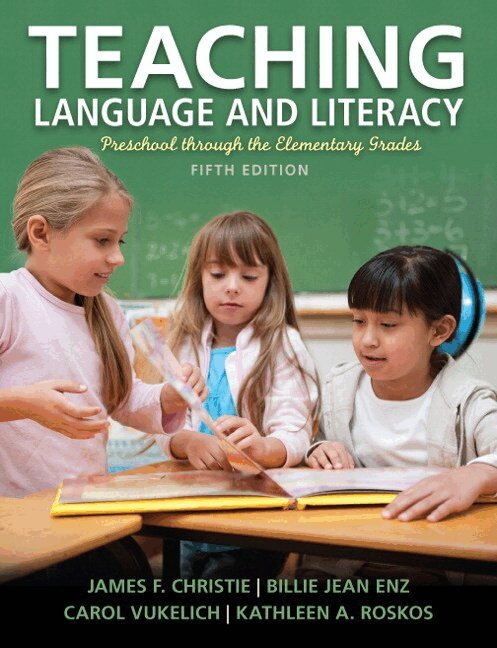
    Teaching Language and Literacy

    Preschool Through the Elementary Grades

    AvJames Christie,Carol Vukelich

    Häftad, Engelska, 2013

    2 119 kr

    Beställningsvara. Skickas inom 7-10 vardagar. Fri frakt över 249 kr.

    Beskrivning

    How children acquire language and literacy knowledge in many different contexts—and how teachers can effectively promote the development of oral and written language—is the focus of this highly regarded resource. Readers get an authoritative look at how children acquire language and literacy in a variety of contexts and how teachers can effectively promote development in oral and written language.


    Teaching Language and Literacy integrates a constructivist/emergent literacy perspective with scientifically-based instructional practices that are successful in supporting children’s reading, writing, listening and speaking development. This new edition features the work of a new author, Kathleen Roskos, and includes numerous up to date references, examples, and hands-on activities for putting theory into practice in today’s classrooms.

    Produktinformation

    • Utgivningsdatum:2013-07-11
    • Mått:179 x 229 x 15 mm
    • Vikt:570 g
    • Format:Häftad
    • Språk:Engelska
    • Antal sidor:448
    • Upplaga:5
    • Förlag:Pearson Education
    • ISBN:9780133066814

    Utforska kategorier

    • Undervisning i specifika ämnen inom Psykologi och pedagogik
    • Läromedel: modersmål inom Läromedel

    Mer om författaren

    James Christie is a professor of Social and Family Dynamics at Arizona State University, where he teaches courses in Family and Human Development. His research interests include early literacy development and children's play. Dr. Christie has co-authored Helping Young Children Learn Language and Literacy, 3rd ed. (2008) and Play, Development, and Early Education (2005). He has served as co-director of Early Reading First projects in San Luis and Somerton, AZ; Bullhead City, AZ; and Gallup, NM.  Billie Jean Enz is an emeritus professor of early childhood education at Arizona State University, where she taught and served as an administrator for 25 years.  She has co-authored several texts on mentorship and new teacher development and is the founder of the Beginning Educator Support Team (BEST) program.   Her research interests include language and literacy development and family literacy. Dr. Enz has co-authored Helping Young Children Learn Language and Literacy, 4th ed. (2011) and Assessing Preschool Literacy Development (International Reading Association, 2009). She also served as the founding executive director for Educare Arizona.  Carol Vukelich is the L. Sandra and Bruce L. Hammonds Professor in Teacher Education, Director of the Delaware Center for Teacher Education, and Deputy Dean of the College of Education and Human Development at the University of Delaware. Her research and teaching interests include children’s early literacy development and teachers’ professional development, specifically coaching strategies. Dr. Vukelich has served as President of the Association for Childhood Education International and the International Reading Association’s Literacy Development in Young Children Special Interest Group. She was a founder of the Delaware Writing Project, and serves as one of its co-directors. In addition to this book, other books by Dr. Vukelich include Helping Young Children Learn Language and Literacy, 3rd ed. (2012); Building a Foundation for Preschool Literacy: Effective Instruction for Children’s Reading and Writing Development, 2nd ed., (2009); and Achieving EXCELLENCE in Preschool Literacy Instruction (edited with Laura M. Justice, 2008). She has served as a co-director of three Early Reading First projects.   Kathleen Roskos is a professor of educationat John Carroll University, where she teaches courses in reading assessment and instruction. Formerly an elementary classroom teacher, Dr. Roskos has served in a variety of educational roles, including director of federal programs in the public schools, department chair in higher education and Director of the Ohio Literacy Initiative at the Ohio Department of Education from 2000-2002. She has developed and coordinated numerous educational grants, most recently Early Reading First projects in Lorain, OH and Akron, OH. Dr. Roskos studies early literacy development, teacher learning and reading curriculum, and has published articles, chapters and books on these topics. Her current research examines the use of ebooks in early childhood literacy education. She was one of the lead writers of the 2010 Educator Professional Standards of the International Reading Association. Other recent books by Dr. Roskos include The Early Literacy Materials Selector (co-authored with Lisa Lenhart and Brandi Noll), Nurturing Knowledge (co-authored with Susan B. Neuman), and Designing Professional Development in Literacy (co-authored with Catherine Rosemary and Leslie Landreth).

    Recensioner i media

    The text is thoughtfully designed and easy to navigate with useful and relevant information based on research.

    Innehållsförteckning

    • Preface PART ONE: FOUNDATIONS             1. Foundations of Language and Literacy            Before Reading This Chapter, Think About . . .    Focus Questions           Language and Literacy: Definitions and InterrelationshipsThe Common Core State StandardsA Continuum of Instructional Approaches or “The Reading Wars” A Comprehensive Literacy Instructional Program Summary          Linking Knowledge to Practice               2. Oral Language Development    Before Reading This Chapter, Think About . . .    Focus Questions           Language Acquisition Theories   Linguistic Vocabulary Lesson     Observing the Development of Children’s Language        What Is Normal Language Development?            Factors Contributing to Variation in Rate of Language Acquisition Family Focus: Developing Language Over Time  Summary          Linking Knowledge to Practice               3. Family Literacy            Before Reading This Chapter, Think About . . .    Focus Questions           Home Talk: A Natural Context for Learning and Using Language  Home Literacy Experiences        Family Focus: Parent Workshops           Case Studies    Summary          Linking Knowledge to Practice    4. Facilitating Oral Language Learning    Before Reading This Chapter, Think About . . .    Focus Questions Explicit Vocabulary InstructionRich Classroom Language Experiences  Contexts That Encourage Language Use            Language-Centered Activities for Children           Promoting Oral Language in the Elementary Grades Family Focus: Sharing the Fun and the Language Learning          Strategies for Teaching English Language Learners: Helping Children Develop Conversation and Academic Language Skills            Strategies for Children with Special Needs: Speech Delays         Summary          Linking Knowledge to Practice    PART TWO: EARLY LANGUAGE AND LITERACY INSTRUCTION    5. Emergent Literacy Strategies   Before Reading This Chapter, Think About . . .    Focus Questions           Print-Rich Classroom EnvironmentsSharing Books with Young Children        Shared WritingFamily Focus: Sharing Instructional Materials and Offering Guidance       Strategies for Teaching English Language Learners: Storybook Time       Strategies for Children with Special Needs: Reading Storybooks with Children with DisabilitiesSummary          Linking Knowledge to Practice               6. Teaching Early Reading and Writing    Before Reading This Chapter, Think About . . .    Focus Questions           Early Reading Instruction           Early Writing Instruction Family Focus: Creating a Book Nook and Author’s Corner           Strategies for Teaching English Language Learners: Modifying the Classroom Environment          Strategies for Children with Special Needs: On Your Mark, Get Set, GoSummary          Linking Knowledge to Practice    7. Assessing Early Literacy: Finding Out What Young Children Know and Can Do          Before Reading This Chapter, Think About . . .    Focus Questions           Determining What Children Know and Can Do     Ongoing Assessment     On-Demand Assessment           Using Assessment Data to Plan Early Literacy Instruction            Family Focus: Sharing Assessment Results With Parents            Strategies for Teaching ELLs: Assessing English Language Learners’ Language and Literacy       Summary          Linking Knowledge to Practice    PART THREE: ELEMENTARY GRADE LITERACY INSTRUCTION                     8. Beginning Reading Instruction: Helping Children Learn to ReadBefore Reading This Chapter, Think About . . .    Focus Questions           Understanding the Reading Process       Overview of Beginning Reading InstructionElements of Beginning Reading Instruction         Strategies for Children with Special Needs          Summary          Linking Knowledge to Practice               9. Continuing Reading Instruction in Grades 3-5  Before Reading This Chapter, Think About . . .    Focus Questions           The Content of G3 — G5 Reading InstructionReading Development Ages 9 — 11The Comprehension ProcessTeaching Read-to-Learn Skills and StrategiesThe Reading ProgramThe Reading LessonMonitoring Reading ProgressThe Reading LessonOrganizing for Reading InstructionStrategies for Teaching English Language Learners         Summary          Linking Knowledge to Practice               10. Creating Writers: Teaching Children to Write Well        Before Reading This Chapter, Think About . . .    Focus Questions           The Essentials of Teaching Writing         Preparing the Classroom Environment    The Structure of the Teaching of Writing: The Components of Writing Workshop  Using Technology in the Teaching of Writing       The Explicit Teaching of Writing Strategies for Teaching English Language Learners         Writing Instruction: Strategies for Children with Special Needs     Family Focus: Connecting Home and School      Summary          Linking Knowledge to Practice               11. Teaching the Mechanical Skills of Writing        Before Reading This Chapter, Think About . . .    Focus Questions           Spelling            Grammar           Capitalization and Punctuation   Handwriting       Strategies for Teaching English Language LearnersFamily Focus: Helping Children With Spelling     Summary          Linking Knowledge to Practice               12. Assessment: Determining What Older Students Know and Can Do       Before Reading This Chapter, Think About . . .    Focus Questions           An Assessment System  High Stakes Assessment of Reading and Writing AchievementClassroom —Based Assessment of Reading PerformanceAssessing Students’ Writing Performance          Family Focus: Explaining Tests and Test Scores to Parents Summary          Linking Knowledge to Practice    References Author Index     Subject Index