• Fri frakt över 249 kr
  • •
  • Snabba leveranser
  • •
  • Billiga böcker
Kundservice

Du är på sajten för privatpersoner.

Företag, bibliotek eller offentlig verksamhet?

Du handlar på classic.bokus.com, där alla dina funktioner finns intakta.
Till classic.bokus.com
Bokus logotyp. Gå till startsidan.
  • Erbjudanden
  • Student
  • Topplistor
  • Barn & ungdom
  • Bokus Play
  • E-böcker
  • Ljudböcker
  • Pocketböcker
  • Spel och pussel

Pocketfynda! Hundratals böcker för 49 kr/st →

Sidfot

Mina sidor

    Hjälp

    • Kundservice
    • Vanliga frågor och svar
    • Frakt och leverans
    • Retur vid ångerrätt
    • Reklamera vara
    • Betalning
    • Köpvillkor
    • Allmänna villkor
    • Information om webbplatsens tillgänglighet

    Om Bokus

    • Om oss
    • Pressrum
    • För studenter
    • För företag
    • För bibliotek och offentlig verksamhet
    • För leverantörer
    • Hållbarhet

    Populärt

    • Aktuella erbjudanden
    • Presentkort
    • Studentlitteratur
    • Nya böcker
    • Topplistor
    • Signerade böcker
    • Engelska böcker

    Inspiration

    • Boktips
    • BookTok
    • Barnbokskaraktärer
    • Populära författare
    Logotyp för Bokus
    Följ oss på Facebook (extern länk)Följ oss på Instagram (extern länk)Följ oss på YouTube (extern länk)Följ oss på TikTok (extern länk)
    bokus @ CookiesAnpassa cookiesIntegritetspolicyKöpvillkor
    Till Citymail hemsida (extern länk)Till Budbee hemsida (extern länk)Till Postnord hemsida (extern länk)Till Schenker hemsida (extern länk)Till Early Bird hemsida (extern länk)Till Walleys hemsida (extern länk)
    1. Data och IT
    2. Databaser

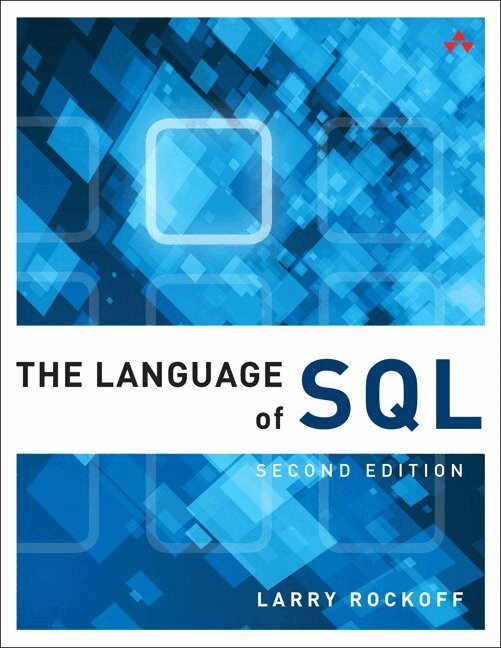
    Language of SQL, The

    AvLarry Rockoff

    Häftad, Engelska, 2016

    Del i serien Learning

    208 kr

    Beställningsvara. Skickas inom 7-10 vardagar. Fri frakt över 249 kr.

    Beskrivning

    The Language of SQL, Second Edition

    Many SQL texts attempt to serve as an encyclopedic reference on SQL syntax -- an approach that is often counterproductive, because that information is readily available in online references published by the major database vendors. 

    For SQL beginners, it’s more important for a book to focus on general concepts and to offer clear explanations and examples of what various SQL statements can accomplish. This is that book.

    A number of features make  The Language of SQL unique among introductory SQL books.

    First, you will not be required to download software or sit with a computer as you read the text. The intent of this book is to provide examples of SQL usage that can be understood simply by reading.

    Second, topics are organized in an intuitive and logical sequence. SQL keywords are introduced one at a time, allowing you to grow your understanding as you encounter new terms and concepts. 

    Finally, this book covers the syntax of three widely used databases: Microsoft SQL Server, MySQL, and Oracle. Special “Database Differences” sidebars clearly show you any differences in syntax among these three databases, and instructions are included on how to obtain and install free versions of the databases. 

    This is the only book you need to gain a quick working knowledge of SQL and relational databases.

    Learn How To...
    • Use SQL to retrieve data from relational databases
    • Apply functions and calculations to data
    • Group and summarize data in a variety of useful ways
    • Use complex logic to retrieve only the data you need
    • Update data and create new tables
    • Design relational databases so that data retrieval is easy and intuitive
    • Use spreadsheets to transform your data into meaningful displays
    • Retrieve data from multiple tables via joins, subqueries, views, and set logic 
    • Create, modify, and execute stored procedures
    • Install Microsoft SQL Server, MySQL, or Oracle
    Contents at a Glance

    1  Relational Databases and SQL
    2  Basic Data Retrieval
    3  Calculated Fields and Aliases
    4  Using Functions
    5  Sorting Data
    6  Selection Criteria
    7  Boolean Logic
    8  Conditional Logic
    9  Summarizing Data
    10 Subtotals and Crosstabs
    11 Inner Joins
    12 Outer Joins
    13 Self Joins and Views
    14 Subqueries
    15 Set Logic
    16 Stored Procedures and Parameters
    17 Modifying Data
    18 Maintaining Tables
    19 Principles of Database Design
    20 Strategies for Displaying Data

    A Getting Started with Microsoft SQL Server
    B Getting Started with MySQL
    C Getting Started with Oracle

    Produktinformation

    • Utgivningsdatum:2016-10-19
    • Mått:178 x 232 x 16 mm
    • Vikt:400 g
    • Format:Häftad
    • Språk:Engelska
    • Serie:Learning
    • Antal sidor:240
    • Upplaga:2
    • Förlag:Pearson Education
    • ISBN:9780134658254

    Utforska kategorier

    • Databaser inom Data och IT
    • Programspråk inom Data och IT

    Mer om författaren

    LARRY ROCKOFF has been involved with SQL and business intelligence development for many years. His primary area of interest is using reporting tools to explore and analyze data in complex databases. He holds an MBA from the University of Chicago, with a specialization in Management Science. He currently works with data warehouse and reporting applications for a major retail pharmacy. He also maintains a website that features book reviews on technology topics, focusing on analytics and business intelligence as well as broader societal issues at  larryrockoff.com

    Innehållsförteckning

    • The Language of SQL, 2nd Edition Introduction    Topics and Features    What’s New in the Second Edition    Plan of the Book    Companion Website 1. Relational Databases and SQL    What Is SQL?    Microsoft SQL Server, MySQL, and Oracle    Relational Databases    Primary and Foreign Keys     Datatypes    NULL Values    The Significance of SQL 2. Basic Data Retrieval    A Simple SELECT    Syntax Notes    Comments    Specifying Columns     Column Names with Embedded Spaces    Preview of the Full SELECT 3. Calculated Fields and Aliases    Literal Values    Arithmetic Calculations    Concatenating Fields    Column Aliases    Table Aliases 4. Using Functions    What Is a Function?    Character Functions    Composite Functions    Date/Time Functions    Numeric Functions    Conversion Functions 5. Sorting Data    Sorting in Ascending Order    Sorting in Descending Order    Sorting by Multiple Columns    Sorting by a Calculated Field    Sort Sequences 6. Selection Criteria    Applying Selection Criteria    WHERE Clause Operators    Limiting Rows    Limiting Rows with a Sort    Pattern Matching    Wildcards 7. Boolean Logic    Complex Logical Conditions    The AND Operator    The OR Operator    Using Parentheses    Multiple Sets of Parentheses    The NOT Operator    The BETWEEN Operator    The IN Operator    Boolean Logic and NULL Values 8. Conditional Logic    The CASE Expression    The Simple CASE Format    The Searched CASE Format    Conditional Logic in ORDER BY Clauses    Conditional Logic in WHERE Clauses 9. Summarizing Data    Eliminating Duplicates    Aggregate Functions    The COUNT Function    Grouping Data    Multiple Columns and Sorting    Selection Criteria on Aggregates    Conditional Logic in GROUP BY Clauses    Conditional Logic in HAVING Clauses    Ranking Functions    Partitions 10. Subtotals and Crosstabs     Adding Subtotals with ROLLUP     Adding Subtotals with CUBE     Creating Crosstab Layouts 11. Inner Joins     Joining Two Tables     The Inner Join     Table Order in Inner Joins     An Alternate Specification of Inner Joins     Table Aliases Revisited 12. Outer Joins     The Outer Join     Left Joins     Testing for NULL Values     Right Joins     Table Order in Outer Joins     Full Joins     Cross Joins 13. Self Joins and Views     Self Joins     Creating Views     Referencing Views     Benefits of Views     Modifying and Deleting Views 14. Subqueries     Types of Subqueries     Using a Subquery as a Data Source     Using a Subquery in Selection Criteria     Correlated Subqueries     The EXISTS Operator     Using a Subquery as a Calculated Column     Common Table Expressions 15. Set Logic     Using the UNION Operator     Distinct and Non-Distinct Unions     Intersecting Queries 16. Stored Procedures and Parameters     Creating Stored Procedures     Parameters in Stored Procedures     Executing Stored Procedures     Modifying and Deleting Stored Procedures     Functions Revisited 17. Modifying Data     Modification Strategies     Inserting Data     Deleting Data     Updating Data     Correlated Subquery Updates 18. Maintaining Tables     Data Definition Language     Table Attributes     Table Columns     Primary Keys and Indexes     Foreign Keys     Creating Tables     Creating Indexes 19. Principles of Database Design     Goals of Normalization     How to Normalize Data     The Art of Database Design     Alternatives to Normalization 20. Strategies for Displaying Data     Crosstab Layouts Revisited     Excel and External Data     Excel Pivot Tables A. Getting Started with Microsoft SQL Server    Installing SQL Server 2016 Express    Installing SQL Server 2016 Management Studio Express    Using SQL Server 2016 Management Studio Express B. Getting Started with MySQL    Installing MySQL on Windows    Installing MySQL on Mac    Using MySQL Workbench C. Getting Started with Oracle    Installing Oracle Database Express Edition    Using Oracle Database Express Edition