• Fri frakt över 249 kr
  • •
  • Snabba leveranser
  • •
  • Billiga böcker
Kundservice

Du är på sajten för privatpersoner.

Företag, bibliotek eller offentlig verksamhet?

Du handlar på classic.bokus.com, där alla dina funktioner finns intakta.
Till classic.bokus.com
Bokus logotyp. Gå till startsidan.
  • Erbjudanden
  • Nyheter
  • Student
  • Topplistor
  • Barn & ungdom
  • Bokus Play
  • E-böcker
  • Pocketböcker
  • Spel & pussel

10% rabatt på allt med kod: NYSTART10 →

Sidfot

Mina sidor

    Hjälp

    • Kundservice
    • Vanliga frågor och svar
    • Frakt och leverans
    • Retur vid ångerrätt
    • Reklamera vara
    • Betalning
    • Köpvillkor
    • Allmänna villkor
    • Information om webbplatsens tillgänglighet

    Om Bokus

    • Om oss
    • Pressrum
    • För studenter
    • För företag
    • För bibliotek och offentlig verksamhet
    • För leverantörer
    • Hållbarhet

    Populärt

    • Aktuella erbjudanden
    • Presentkort
    • Studentlitteratur
    • Nya böcker
    • Topplistor
    • Signerade böcker
    • Engelska böcker

    Inspiration

    • Boktips
    • BookTok
    • Populära bokserier
    • Barnbokskaraktärer
    • Populära författare
    Logotyp för Bokus
    Följ oss på Facebook (extern länk)Följ oss på Instagram (extern länk)Följ oss på YouTube (extern länk)Följ oss på TikTok (extern länk)
    bokus @ CookiesAnpassa cookiesIntegritetspolicyKöpvillkor
    Till Citymail hemsida (extern länk)Till Budbee hemsida (extern länk)Till Postnord hemsida (extern länk)Till Schenker hemsida (extern länk)Till Early Bird hemsida (extern länk)Till Walleys hemsida (extern länk)
    1. Historia och arkeologi
    2. Historia
    3. Asiens historia

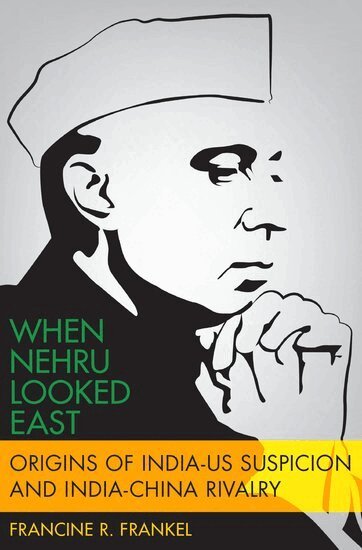
    When Nehru Looked East

    Origins of India-US Suspicion and India-China Rivalry

    AvFrancine Frankel

    Inbunden, Engelska, 2020

    Del i serien Modern South Asia

    1 005 kr

    Beställningsvara. Skickas inom 5-8 vardagar. Fri frakt över 249 kr.

    Fler format och utgåvor

    E-bok

    585 kr

    E-bok

    585 kr

    Beskrivning

    Jawaharlal Nehru, India's first Prime Minister and Minister of External Affairs from 1947 to 1964, set the framework of foreign policy which has remained India's reference point until the present. One of the most significant leaders of the twentieth century, Nehru came to power in the early years of the Cold War, determined to assert independent India's influence and interests in Asia and beyond. Drawing on the Nehru Papers, Francine Frankel's When Nehru Looked East reinterprets the doctrine of non-alignment with which Nehru is most closely identified to reveal its strategic purpose.Analyzing India-US and India-China relations during this period, Frankel explains how these parties came to distrust each other. From the outset, Nehru's vision of India's destiny as a great power collided with that of the US as leader and protector of the free world. He considered the US a rival in South and Southeast Asia and the Middle East and carried out an active diplomacy to dissuade newly independent nations from joining US-led anti-communist mutual security alliances and instead follow India's example of non-alignment. He did not see a threat from the Soviet Union and believed, despite the dispute with China over the northern border, that India's approach would bring India and China together as advocates of Asianism to counter American penetration in the region. This historic miscalculation, manifested in the 1962 China-India War, overthrew the pillars of Nehru's foreign policy.Frankel provides the most authoritative account yet of the origins of India-US suspicions and India-China rivalries. Outlasting the Cold War, Nehru's worldview lived on in the mindset of successor generations, making it difficult for the US and India to form a strategic partnership and establish a natural balance in Asia.

    Produktinformation

    • Utgivningsdatum:2020-01-31
    • Mått:236 x 160 x 33 mm
    • Vikt:676 g
    • Format:Inbunden
    • Språk:Engelska
    • Serie:Modern South Asia
    • Antal sidor:364
    • Förlag:OUP USA
    • ISBN:9780190064341

    Utforska kategorier

    • Asiens historia inom Historia och arkeologi
    • Statsvetenskap och politisk teori inom Samhälle och politik
    • Internationella relationer inom Samhälle och politik

    Mer om författaren

    Francine R. Frankel is Professor Emeritus of Political Science and Founding Director of the Center for the Advanced Study of India (CASI) at the University of Pennsylvania. She is a Founding Member of the University of Pennsylvania Institute for the Advanced Study of India (UPIASI), New Delhi, the counterpart institution of CASI. She is the author, or co-editor of eight books, including India's Political Economy, 1947-1977, and India's Political Economy, 1947-2004, second edition.

    Recensioner i media

    When Nehru Looked East is interpretative history at its best. It is a sobering tale of how discordant worldviews, unequal capabilities, incompatible strategies and sometimes, plain shortsightedness, conspired to subvert the construction of a U.S.-Indian partnership that could have made a real difference to Asia's evolution during the early Cold War-problems that unfortunately have not disappeared even today. This book is essential reading for scholars and policymakers in both countries.

    Innehållsförteckning

    • Preface AcknowledgmentsAbbreviationsChapter 1: First EncountersChapter 2: Partition: Anglo-U.S. Origins of Strategic Parity between India and PakistanChapter 3: Kashmir: Onset of India's Suspicion of the United StatesChapter 4: Different Worlds: U.S. and Indian Policies toward Nationalist Movements in Asia, Communist Victory in China, and the Chinese Claim to Tibet Chapter 5: Korea: India's "Un-Neutral" China Policy Stokes U.S. Suspicions Chapter 6: U.S. and Indian Policies in Direct Conflict, Part I: Collective Security in the Middle East and Pakistan Chapter 7: U.S. and Indian Policies in Direct Conflict, Part II: India's "Area of Peace" as a Strategy to Contain U.S. Intervention in Indi-China and Southeast Asia Chapter 8: India-China War, 1962EpilogueBibliography