• Fri frakt över 249 kr
  • •
  • Snabba leveranser
  • •
  • Billiga böcker
Kundservice

Du är på sajten för privatpersoner.

Företag, bibliotek eller offentlig verksamhet?

Du handlar på classic.bokus.com, där alla dina funktioner finns intakta.
Till classic.bokus.com
Bokus logotyp. Gå till startsidan.
  • Erbjudanden
  • Student
  • Topplistor
  • Barn & ungdom
  • Bokus Play
  • E-böcker
  • Ljudböcker
  • Pocketböcker
  • Spel och pussel

Pocketfynda! Hundratals böcker för 49 kr/st →

Sidfot

Mina sidor

    Hjälp

    • Kundservice
    • Vanliga frågor och svar
    • Frakt och leverans
    • Retur vid ångerrätt
    • Reklamera vara
    • Betalning
    • Köpvillkor
    • Allmänna villkor
    • Information om webbplatsens tillgänglighet

    Om Bokus

    • Om oss
    • Pressrum
    • För studenter
    • För företag
    • För bibliotek och offentlig verksamhet
    • För leverantörer
    • Hållbarhet

    Populärt

    • Aktuella erbjudanden
    • Presentkort
    • Studentlitteratur
    • Nya böcker
    • Topplistor
    • Signerade böcker
    • Engelska böcker

    Inspiration

    • Boktips
    • BookTok
    • Barnbokskaraktärer
    • Populära författare
    Logotyp för Bokus
    Följ oss på Facebook (extern länk)Följ oss på Instagram (extern länk)Följ oss på YouTube (extern länk)Följ oss på TikTok (extern länk)
    bokus @ CookiesAnpassa cookiesIntegritetspolicyKöpvillkor
    Till Citymail hemsida (extern länk)Till Budbee hemsida (extern länk)Till Postnord hemsida (extern länk)Till Schenker hemsida (extern länk)Till Early Bird hemsida (extern länk)Till Walleys hemsida (extern länk)
    1. Historia och arkeologi
    2. Historia
    3. Historia: särskilda händelser och ämnen
    4. Socialhistoria och kulturhistoria

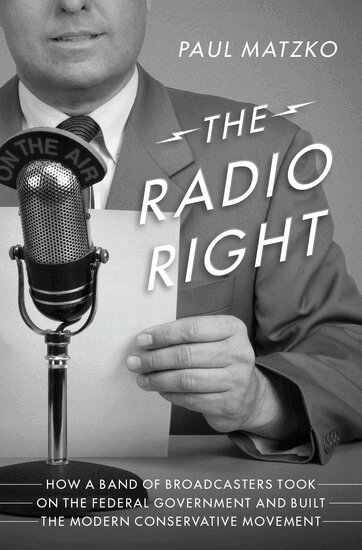
    The Radio Right

    How a Band of Broadcasters Took on the Federal Government and Built the Modern Conservative Movement

    AvPaul Matzko

    Inbunden, Engelska, 2020

    578 kr

    Beställningsvara. Skickas inom 5-8 vardagar. Fri frakt över 249 kr.

    Beskrivning

    In the past few years, trust in traditional media has reached new lows. Many Americans disbelieve what they hear from the "mainstream media," and have turned to getting information from media echo chambers which are reflective of a single party or ideology. In this book, Paul Matzko reveals that this is not the first such moment in modern American history. The Radio Right tells the story of the 1960s far Right, who were frustrated by what they perceived to be liberal bias in the national media, particularly the media's sycophantic relationship with the John F. Kennedy administration. These people turned for news and commentary to a resurgent form of ultra-conservative mass media: radio. As networks shifted their resources to television, radio increasingly became the preserve of cash-strapped, independent station owners who were willing to air the hundreds of new right-wing programs that sprang up in the late 1950s and 1960s. By the early 1960s, millions of Americans listened each week to conservative broadcasters, the most prominent of which were clergy or lay broadcasters from across the religious spectrum, including Carl McIntire, Billy James Hargis, and Clarence Manion. Though divided by theology, these speakers were united by their distrust of political and theological liberalism and their antipathy towards JFK. The political influence of the new Radio Right quickly became apparent as the broadcasters attacked the Kennedy administration's policies and encouraged grassroots conservative activism on a massive scale. Matzko relates how, by 1963, Kennedy was so alarmed by the rise of the Radio Right that he ordered the Internal Revenue Service and Federal Communications Commission to target conservative broadcasters with tax audits and enhanced regulatory scrutiny via the Fairness Doctrine. Right-wing broadcasters lost hundreds of stations and millions of listeners. Not until the deregulation of the airwaves under the Carter and Reagan administrations would right-wing radio regain its former prominence. The Radio Right provides the essential pre-history for the last four decades of conservative activism, as well as the historical context for current issues of political bias and censorship in the media.

    Produktinformation

    • Utgivningsdatum:2020-07-01
    • Mått:244 x 160 x 30 mm
    • Vikt:544 g
    • Format:Inbunden
    • Språk:Engelska
    • Antal sidor:320
    • Förlag:OUP USA
    • ISBN:9780190073220

    Utforska kategorier

    • Socialhistoria och kulturhistoria inom Historia och arkeologi
    • Amerikas historia inom Historia och arkeologi
    • Radio / podcasts inom Kultur

    Mer om författaren

    Paul Matzko is a historian who specializes in the intersection of politics, religion, and mass media in modern America. He currently works at the Cato Institute as the Assistant Editor for Tech and Innovation for Libertarianism.org and is the host of the weekly podcast Building Tomorrow.

    Recensioner i media

    Ultimately, The Radio Right provides a valuable corrective to a history of conservative American religion that too often centers on the powerful evangelical men of the 1980s and not enough on the marginalized fundamentalist women and men of the 1960s and '70s. As Matzko shows, fundamentalist efforts to establish an alternative media ecosystem bore fruit well before names like Jerry Falwell and Pat Robertson became shorthand for right wing religion, and the backlash they sparked raises timeless questions about the role of "alternative facts" and hateful rhetoric in a pluralistic democracy with a constitutional commitment to free speech, free religion, and a free press.

    Innehållsförteckning

    • List of Figures Glossary Chapter 1- Intro: "Every Hate-Monger, Radio Preacher and Backwoods Evangelist"Chapter 2- Conservative Radio, the Polish Ham Boycott, and the Creation of a Right-Wing Social MovementChapter 3- Seven Days in May or: How the Kennedys Learned to Stop Worrying and Love the Radio RightChapter 4- Just Because You're Paranoid Doesn't Mean They Aren't After You: Putting the Reuther Memorandum to WorkChapter 5- "The Red Lion Roars Again": The Fairness Doctrine, the Democratic National Committee, and the Election of 1964Chapter 6- Outsourcing Censorship: How the National Council of Churches Silenced Fundamentalist BroadcastersChapter 7- The Radio Right in DeclineChapter 8- Conclusion: From Radio Ronald Reagan to Donald Trump's Tweets Appendix Bibliography