• Fri frakt över 249 kr
  • •
  • Snabba leveranser
  • •
  • Billiga böcker
Kundservice

Du är på sajten för privatpersoner.

Företag, bibliotek eller offentlig verksamhet?

Du handlar på classic.bokus.com, där alla dina funktioner finns intakta.
Till classic.bokus.com
Bokus logotyp. Gå till startsidan.
  • Erbjudanden
  • Nyheter
  • Student
  • Topplistor
  • Barn & ungdom
  • Bokus Play
  • E-böcker
  • Pocketböcker
  • Spel & pussel

10% rabatt på allt med kod: NYSTART10 →

Sidfot

Mina sidor

    Hjälp

    • Kundservice
    • Vanliga frågor och svar
    • Frakt och leverans
    • Retur vid ångerrätt
    • Reklamera vara
    • Betalning
    • Köpvillkor
    • Allmänna villkor
    • Information om webbplatsens tillgänglighet

    Om Bokus

    • Om oss
    • Pressrum
    • För studenter
    • För företag
    • För bibliotek och offentlig verksamhet
    • För leverantörer
    • Hållbarhet

    Populärt

    • Aktuella erbjudanden
    • Presentkort
    • Studentlitteratur
    • Nya böcker
    • Topplistor
    • Signerade böcker
    • Engelska böcker

    Inspiration

    • Boktips
    • BookTok
    • Populära bokserier
    • Barnbokskaraktärer
    • Populära författare
    Logotyp för Bokus
    Följ oss på Facebook (extern länk)Följ oss på Instagram (extern länk)Följ oss på YouTube (extern länk)Följ oss på TikTok (extern länk)
    bokus @ CookiesAnpassa cookiesIntegritetspolicyKöpvillkor
    Till Citymail hemsida (extern länk)Till Budbee hemsida (extern länk)Till Postnord hemsida (extern länk)Till Schenker hemsida (extern länk)Till Early Bird hemsida (extern länk)Till Walleys hemsida (extern länk)
    1. Språk och ordböcker
    2. Språkvetenskap och lingvistik

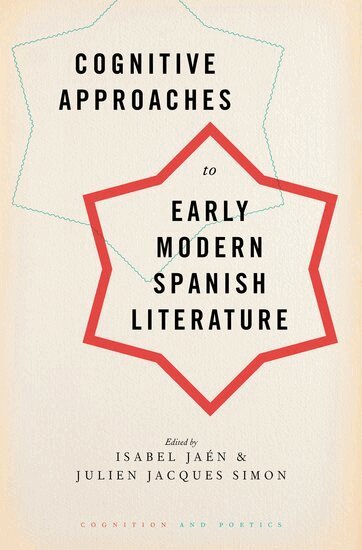
    Cognitive Approaches to Early Modern Spanish Literature

    AvIsabel Jaen,Julien Jacques Simon

    Inbunden, Engelska, 2016

    Del i serien Cognition and Poetics

    2 109 kr

    Beställningsvara. Skickas inom 5-8 vardagar. Fri frakt över 249 kr.

    Beskrivning

    Cognitive Approaches to Early Modern Spanish Literature is the first anthology exploring human cognition and literature in the context of early modern Spanish culture. It includes the leading voices in the field, along with the main themes and directions that this important area of study has been producing. The book begins with an overview of the cognitive literary studies research that has been taking place within early modern Spanish studies over the last fifteen years. Next, it traces the creation of self in the context of the novel, focusing on Cervantes's Don Quixote in relation to the notions of embodiment and autopoiesis as well as the faculties of memory and imagination as understood in early modernity. It continues to explore the concept of embodiment, showing its relevance to delve into the mechanics of the interaction between actors and audience both in the jongleuresque and the comedia traditions. It then centers on cognitive theories of perception, the psychology of immersion in fictional worlds, and early modern and modern-day notions of intentionality to discuss the role of perceiving and understanding others in performance, Don Quixote, and courtly conduct manuals. The last section focuses on the affective dimension of audience-performer interactions in the theatrical space of the Spanish corrales and how emotion and empathy can inform new approaches to presenting Las Casas's work in the literature classroom. The volume closes with an afterword offering strategies to design a course on mind and literature in early modernity.

    Produktinformation

    • Utgivningsdatum:2016-05-19
    • Mått:239 x 157 x 25 mm
    • Vikt:499 g
    • Format:Inbunden
    • Språk:Engelska
    • Serie:Cognition and Poetics
    • Antal sidor:254
    • Förlag:OUP USA
    • ISBN:9780190256555

    Utforska kategorier

    • Språkvetenskap och lingvistik inom Språk och ordböcker
    • Litteraturvetenskap inom Skönlitteratur
    • Referensverk och tvärvetenskap inom Samhälle och politik

    Mer om författaren

    Isabel Jaén is Associate Professor of Spanish at Portland State University. She is co-founder and co-coordinator of the Literary Theory, Cognition, and the Brain working group at the Whitney Humanities Center in Yale University and former executive member of the Cognitive Approaches to Literature Division of the MLA (chair in 2011). She is co-editor of Cognitive Literary Studies and has recently published on Cervantes and human development, cognitive approaches to teaching Don Quixote, and empathy and gender activism in Zayas' Amorous and Exemplary Novels, among other topics.Julien J. Simon is Associate Professor of Spanish and French at Indiana University East. He is co-founder of the Literary Theory, Cognition, and the Brain working group at the Whitney Humanities Center in Yale University (2005), former member of the executive committee for the MLA Division on Cognitive Approaches to Literature (chair in 2013), and former steering committee member of the Center for Cognitive Literary Studies at Purdue University. He has recently co-edited Cognitive Literary Studies and the special cluster Cognitive Cervantes of the Bulletin of the Cervantes Society of America.

    Recensioner i media

    The book is interesting in that the essays are quite convincing, and rather than raise questions and possible objections, at least in my mind, they open up new avenues, new opportunities for analysis, and new insights. They introduce, orient, and make viable the field of cognitive studies without the obfuscation normally associated with literary theory. They make it seem like a good idea to come on board, and make cognitive studies seem like a viable alternative for the future of literary studies, although it must be admitted that innovation and logical coherence have yet to be shown to be deciding factors in literary fashion.

    Innehållsförteckning

    • IntroductionIsabel Jaén and Julien J. Simon Section I - An Overview of Cognitive Approaches to Early Modern Spanish Literature 1. Contextualizing Cognitive Approaches to Early Modern Spanish LiteratureJulien J. Simon Section II - The Creation of Self2. Embodied Cognition and Autopoiesis in Don Quixote Howard Mancing 3. Why Autopoiesis and Memory Matter to Cervantes, Don Quixote, and the Humanities Catherine Connor-Swietlicki 4. The Janus Hypothesis in Don Quixote: Memory and Imagination in CervantesJulia Domínguez Section III - Embodied Cognition and Performance 5. Cognitive Theatricality: Jongleuresque Imagination on the Early Spanish StageBruce Burningham 6. A Mindful Audience: Embodied Spectatorship in Early Modern Madrid Elizabeth M. Cruz Petersen Section IV - Perceiving and Understanding Others7. Wearing Gender on One's Sleeve: Cross-dressing in Ángela de Azevedo's El muerto disimulado Judith Caballero 8. Don Quixote's Response to Fiction in Maese Pedro's Puppet Show: Madman or Transported Reader?Domingo Ródenas de Moya and José Valenzuela 9. Theory of Mind in Early Modern Spanish Manuals of Courtly Conduct Ryan Schmitz Section V - Feeling and Ethics 10. Embodiment and Empathy in Early Modern Drama: The Case of Cervantes's El trato de Argel Cory A. Reed 11. The Role of Empathy in Reading, Interpreting, and Teaching Las Casas's Brevísima relación de la destrucción de las Indias Barbara Simerka AfterwordTeaching Early Modern Spanish Literature with a Cognitive Approach Isabel Jaén