• Fri frakt över 249 kr
  • •
  • Snabba leveranser
  • •
  • Billiga böcker
Kundservice

Du är på sajten för privatpersoner.

Företag, bibliotek eller offentlig verksamhet?

Du handlar på classic.bokus.com, där alla dina funktioner finns intakta.
Till classic.bokus.com
Bokus logotyp. Gå till startsidan.
  • Erbjudanden
  • Nyheter
  • Student
  • Topplistor
  • Barn & ungdom
  • Bokus Play
  • E-böcker
  • Pocketböcker
  • Spel & pussel

10% rabatt på allt med kod NYSTART10 →

Sidfot

Mina sidor

    Hjälp

    • Kundservice
    • Vanliga frågor och svar
    • Frakt och leverans
    • Retur vid ångerrätt
    • Reklamera vara
    • Betalning
    • Köpvillkor
    • Allmänna villkor
    • Information om webbplatsens tillgänglighet

    Om Bokus

    • Om oss
    • Pressrum
    • För studenter
    • För företag
    • För bibliotek och offentlig verksamhet
    • För leverantörer
    • Hållbarhet

    Populärt

    • Aktuella erbjudanden
    • Presentkort
    • Studentlitteratur
    • Nya böcker
    • Topplistor
    • Signerade böcker
    • Engelska böcker

    Inspiration

    • Boktips
    • BookTok
    • Populära bokserier
    • Barnbokskaraktärer
    • Populära författare
    Logotyp för Bokus
    Följ oss på Facebook (extern länk)Följ oss på Instagram (extern länk)Följ oss på YouTube (extern länk)Följ oss på TikTok (extern länk)
    bokus @ CookiesAnpassa cookiesIntegritetspolicyKöpvillkor
    Till Citymail hemsida (extern länk)Till Budbee hemsida (extern länk)Till Postnord hemsida (extern länk)Till Schenker hemsida (extern länk)Till Early Bird hemsida (extern länk)Till Walleys hemsida (extern länk)
    1. Kultur
    2. Arkitektur
    3. Arkitekturhistoria

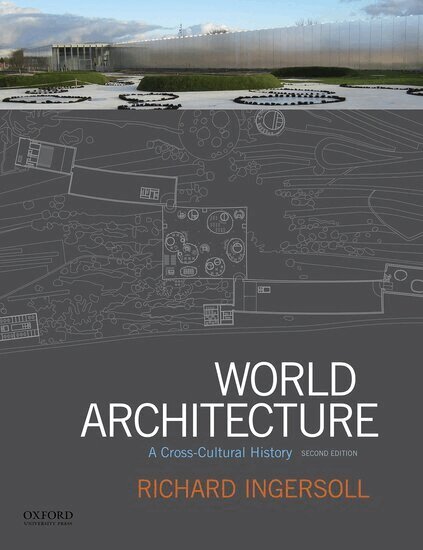
    World Architecture

    A Cross-Cultural History

    AvRichard Ingersoll

    Häftad, Engelska, 2018

    2 310 kr

    Beställningsvara. Skickas inom 5-8 vardagar. Fri frakt över 249 kr.

    Fler format och utgåvor

    E-bok

    700 kr

    Beskrivning

    Richard Ingersoll's World Architecture: A Cross-Cultural History, Second Edition, provides the most comprehensive and contemporary survey in the field. Each chapter within the text's chronological organization focuses on three unique architectural cultures, giving instructors the flexibility to choose which traditions are the most relevant to their courses. The text also provides students with numerous pedagogical tools, including timelines, comparative maps, a glossary, and text boxes devoted to social factors and specific issues in technology and philosophy. The result is a compendious method for understanding and appreciating the history, cultural significance, beauty, and diversity of architecture from around the world.

    Produktinformation

    • Utgivningsdatum:2018-06-29
    • Mått:213 x 277 x 33 mm
    • Vikt:1 996 g
    • Format:Häftad
    • Språk:Engelska
    • Antal sidor:1 008
    • Upplaga:2
    • Förlag:OUP USA
    • ISBN:9780190646455

    Utforska kategorier

    • Arkitekturhistoria inom Kultur

    Mer om författaren

    Richard Ingersoll teaches courses in Renaissance and contemporary art, architecture, and urbanism at Syracuse University in Florence, Italy.

    Recensioner i media

    I am overall very satisfied with the book, I have used other text books before and found them either too encyclopedic or too summarized. This book exhibits a great balance of in-depth information and overview. I would and have highly recommended it to colleagues.

    Innehållsförteckning

    • Preface Chapter 1 Prehistory 1.1 ARCHITECTURE as a SECOND NATURE: Sacred Caves and Primitive Huts 1.2 VERNACULAR ARCHITECTURE: A Language of Mud, Logs, Hides, and Stones 1.3 MEGALITHS and STONE CIRCLES: Building as Memory Chapter 2 3000-1500 bce 2.1 CITIES of MESOPOTAMIA: Mud, Gods, and Urbanism 2.2 OLD KINGDOM EGYPT: Architecture for the Afterlife 2.3 THE INDUS VALLEY: Cities without Monuments Chapter 3 1500-750 bce 3.1 THE AEGEAN in the BRONZE AGE: Labyrinths and Cyclopean Walls 3.2 NEW KINGDOM EGYPT: Axial Temples and Colossal Statues 3.3 BIBLICAL JERUSALEM: Architecture and Memory Chapter 4 700-200 bce 4.1 SOUTHWEST ASIA and ACHAEMENID PERSIA: A Cycle of Empires 4.2 THE GREEK CITY-STATE: Classical Architecture at the Acropolis and the Agora 4.3 MAURYAN INDIA: Emblems of Peace in Stone Chapter 5 200 bce-300 ce 5.1 ANCIENT ROME: Governing through Architecture 5.2 ANCIENT CHINA: The Pivot of the Cosmos in Mud and Wood 5.3 ANCIENT MEXICO: Pyramids and Sacrifice Chapter 6 300-600 6.1 EARLY CHRISTIAN ITALY: The Inward Orientation of the Church 6.2 BYZANTIUM: The Dome as an Act of Faith 6.3 GUPTA INDIA: Rock-Cut Architecture and the Art of Subtraction Chapter 7 600-800 7.1 THE SPREAD of ISLAM: Hypostyle Mosques and Soaring Minarets 7.2 TANG CHINA and EAST ASIA: Gridded Capitals and Lofty Pagodas 7.3 THE MAYA of CENTRAL AMERICA: Reproducing the Mountain of Creation Chapter 8 800-1200 8.1 SOUTHEAST ASIA and SOUTHERN INDIA: Lived-in Models of Cosmic Order 8.2 ISLAMIC SPAIN and MOROCCO: Interlacing Forms in al-Andalus and the Maghreb 8.3 WESTERN EUROPE after the ROMAN EMPIRE: Monks, Knights, and Pilgrims Chapter 9 1200-1350 9.1 THE MERCANTILE MEDITERRANEAN: New Facades for Old Cities 9.2 GOTHIC EUROPE: The Fabric of the Great Cathedrals 9.3 SUB-SAHARAN AFRICA: Living Architecture Chapter 10 1350-1500 10.1 HUMANIST ITALY: Public Spaces and Private Palaces of the Renaissance 10.2 EASTERN EUROPE: From the Spirit of Wood to the Conventions of Masonry 10.3 PRE-CONTACT AMERICA: Empires of the Sun Chapter 11 1500-1600 11.1 CHINA after 1000: The Mandate of Heaven Made to Last 11.2 THE OTTOMAN EMPIRE: A Culture of Local Symmetries 11.3 PAPAL ROME: The Fountainhead of Renaissance Classicism Chapter 12 1600-1700 12.1 ISLAMIC REALMS in CENTRAL ASIA: The Dome of Power, the Garden of Paradise 12.2 CATHOLIC EUROPE: The Settings of Absolutism 12.3 EDO JAPAN: Isolation from the World, Integration with Nature Chapter 13 1700-1750 13.1 PROTESTANT EUROPE: An Architecture of Essentials 13.2 THE DIFFUSION of the BAROQUE: Life as Theater 13.3 THE AMERICAN COLONIES: Domination and Liberty on the Grid Chapter 14 1750-1800 14.1 THE PICTURESQUE: Landscapes of the Informal, the Exotic, and the Sublime 14.2 ENLIGHTENMENT EUROPE: Theory, Revolution, and Architecture 14.3 INDUSTRY AND PUNISHMENT: Factories and Warehouses, Prisons and Workhouses Chapter 15 1800-1850 15.1 AFTER the REVOLUTION: The Ideological Uses of Neoclassicism 15.2 THE GOTHIC REVIVAL: Antimodern and Proto-Nationalist 15.3 THE NEW IRON AGE: The Spread of Metal and Glass Technologies Chapter 16 1850-1890 16.1 THE RISE of the METROPOLIS: Urbanism and the New Scale of Architecture 16.2 LIFESTYLES and HOUSE FORM: Apartments, Row Houses, Bungalows, and Utopias 16.3 THE BEAUX-ARTS: Eclecticism and Professionalism Chapter 17 1890-1920 17.1 ARTS and CRAFTS: Design and the Dignity of Labor 17.2 THE TWILIGHT of WESTERN IMPERIALISM: Monuments to the White Man's Burden 17.3 ART NOUVEAU and the SEARCH for MODERN FORM: Architecture without Precedents Chapter 18 1920-1940 18.1 AMERICAN SKYSCRAPERS and AUTOMOBILES: Mass Production Meets Individualism 18.2 EUROPEAN MODERNISMS: A Dialogue between Form and Function 18.3 TOTALITARIAN SETTINGS in MODERN EUROPE: Architecture as Propaganda Chapter 19 1940-1970 19.1 THE INTERNATIONAL STYLE and the ADVENT of the WELFARE STATE: Modernism Becomes Conventional 19.2 THE BIRTH of the THIRD WORLD: Experiments in Postcolonial Architecture 19.3 THE EXPRESSIONIST RESURGENCE: Hybrids amid Mass Culture Chapter 20 After 1970 20.1 POSTMODERN MOVEMENTS: Populism, Radicalism, and Irony 20.2 MULTINATIONAL PRATICE: Globalization, High Tech, and Hypertecture 20.3 TOWARD an ECOLOGICAL WORLDVIEW: Architecture and the Anthropocene Glossary Credits Index