• Fri frakt över 249 kr
  • •
  • Snabba leveranser
  • •
  • Billiga böcker
Kundservice

Du är på sajten för privatpersoner.

Företag, bibliotek eller offentlig verksamhet?

Du handlar på classic.bokus.com, där alla dina funktioner finns intakta.
Till classic.bokus.com
Bokus logotyp. Gå till startsidan.
  • Erbjudanden
  • Nyheter
  • Student
  • Topplistor
  • Barn & ungdom
  • Bokus Play
  • E-böcker
  • Pocketböcker
  • Spel & pussel

10% rabatt på allt med kod NYSTART10 →

Sidfot

Mina sidor

    Hjälp

    • Kundservice
    • Vanliga frågor och svar
    • Frakt och leverans
    • Retur vid ångerrätt
    • Reklamera vara
    • Betalning
    • Köpvillkor
    • Allmänna villkor
    • Information om webbplatsens tillgänglighet

    Om Bokus

    • Om oss
    • Pressrum
    • För studenter
    • För företag
    • För bibliotek och offentlig verksamhet
    • För leverantörer
    • Hållbarhet

    Populärt

    • Aktuella erbjudanden
    • Presentkort
    • Studentlitteratur
    • Nya böcker
    • Topplistor
    • Signerade böcker
    • Engelska böcker

    Inspiration

    • Boktips
    • BookTok
    • Populära bokserier
    • Barnbokskaraktärer
    • Populära författare
    Logotyp för Bokus
    Följ oss på Facebook (extern länk)Följ oss på Instagram (extern länk)Följ oss på YouTube (extern länk)Följ oss på TikTok (extern länk)
    bokus @ CookiesAnpassa cookiesIntegritetspolicyKöpvillkor
    Till Citymail hemsida (extern länk)Till Budbee hemsida (extern länk)Till Postnord hemsida (extern länk)Till Schenker hemsida (extern länk)Till Early Bird hemsida (extern länk)Till Walleys hemsida (extern länk)
    1. Historia och arkeologi
    2. Historia
    3. Historia: särskilda händelser och ämnen
    4. Folkmord och etnisk rensning

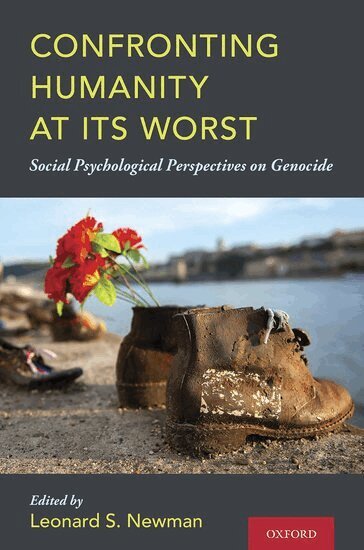
    Confronting Humanity at its Worst

    Social Psychological Perspectives on Genocide

    AvLeonard S. Newman

    Inbunden, Engelska, 2019

    1 222 kr

    Beställningsvara. Skickas inom 5-8 vardagar. Fri frakt över 249 kr.

    Beskrivning

    How do otherwise ordinary people become perpetrators of genocide? Why are groups targeted for mass killing? How do groups justify these terrible acts? While there are no easy answers to these questions, social psychologists are especially well positioned to contribute to our understanding of genocide and mass killing. With research targeting key questions -such as how negative impressions of outgroups develop and how social influence can lead people to violate their moral principles and other norms - social psychologists have much to teach us about why groups of people attempt to exterminate other groups, why people participate in such atrocious projects, and how they live with themselves afterwards. By bringing together research previously available only to readers of academic journals, this volume sheds crucial light on human behavior at the extremes and in doing so, helps us take one more step towards preventing future tragedies.

    Produktinformation

    • Utgivningsdatum:2019-12-06
    • Mått:155 x 236 x 27 mm
    • Vikt:680 g
    • Format:Inbunden
    • Språk:Engelska
    • Antal sidor:372
    • Förlag:OUP USA
    • ISBN:9780190685942

    Utforska kategorier

    • Folkmord och etnisk rensning inom Historia och arkeologi
    • Socialpsykologi och gruppsykologi inom Psykologi och pedagogik

    Mer om författaren

    Leonard S. Newman earned his PhD in social-personality psychology at New York University. He is an associate professor at Syracuse University, where he serves as Associate Chair of the psychology department. Dr. Newman is co-editor of Understanding Genocide: The Social Psychology of the Holocaust and co-author of Social Psychology: A Storytelling Approach (both with Ralph Erber). His research interests include social stigma, dehumanization, psychological defense, and public perceptions of psychological research.

    Recensioner i media

    Genocides are profound moral failures, that much is obvious. The thoughtful, provocative chapters in this superb volume go beyond that to explain the ways in which genocides are human failures. The book's gift to readers is in positioning them to see how social psychology helps us to prevent, and respond to, genocides, and can help all of humanity to heal."

    Innehållsförteckning

    • Acknowledgements PART 1: Lighting the Fuse: Psychological and Emotional Predispositions For Extreme Intergroup Violence Chapter 1: Genocide and the Male Warrior PsychologyAdam Tratner and Melissa McDonald Chapter 2: Obedient authoritarians or lay Darwinists? Ideological motivations of genocideMicha? Bilewicz Chapter 3: How Envy Can Incite Anti-Semitism and GenocideRichard H. Smith and Charles E. Hoogland PART 2: The Genocidal Mindset Chapter 4: Emotional Sources of Intergroup AtrocitiesMichael J. A. Wohl, Nassim Tabri, and Eran Halperin Chapter 5: The many roles of dehumanization in genocideNick Haslam Chapter 6: Moral Courage and Moral Disregard: Different Sides of the Same Coin?Allison B. Mueller and Linda J. Skitka Chapter 7: Understanding Intergroup Violence and Its Aftermath From Perpetrator and Victim PerspectivesMengyao Li and Bernhard Leidner PART 3: Evil is Not Inevitable: New Perspectives on Obedience and Social Influence Chapter 8: Engaged Followership and Engaged Fellowship: Towards a Unified Analysis of Harm-doing and Helping Stephen D. Reicher and S. Alexander Haslam Chapter 9: In what way is evil 'banal'? Hanna Arendt's (interactionist) thesisLeonard S. Newman PART 4: Never Again, Never Forget, Never Forgive, or Never Mind: The Aftermath of Extreme Intergroup Violence Chapter 10: The Aftermath of Genocide: Divergent Social Psychological Processes among Victim and Perpetrator GroupsJohanna Ray Vollhardt and Michelle Sinayobye Twali Chapter 11: Understanding and Counteracting Genocide DenialRezarta Bilali, Yeshim Iqbal, and Samuel Freel Chapter 12: Why do people become perpetrators of genocide? The dangers of explanationYing Tang and Leonard S. Newman