• Fri frakt över 249 kr
  • •
  • Snabba leveranser
  • •
  • Billiga böcker
Kundservice

Du är på sajten för privatpersoner.

Företag, bibliotek eller offentlig verksamhet?

Du handlar på classic.bokus.com, där alla dina funktioner finns intakta.
Till classic.bokus.com
Bokus logotyp. Gå till startsidan.
  • Erbjudanden
  • Nyheter
  • Student
  • Topplistor
  • Barn & ungdom
  • Bokus Play
  • E-böcker
  • Pocketböcker
  • Spel & pussel

10% rabatt på allt med kod: NYSTART10 →

Sidfot

Mina sidor

    Hjälp

    • Kundservice
    • Vanliga frågor och svar
    • Frakt och leverans
    • Retur vid ångerrätt
    • Reklamera vara
    • Betalning
    • Köpvillkor
    • Allmänna villkor
    • Information om webbplatsens tillgänglighet

    Om Bokus

    • Om oss
    • Pressrum
    • För studenter
    • För företag
    • För bibliotek och offentlig verksamhet
    • För leverantörer
    • Hållbarhet

    Populärt

    • Aktuella erbjudanden
    • Presentkort
    • Studentlitteratur
    • Nya böcker
    • Topplistor
    • Signerade böcker
    • Engelska böcker

    Inspiration

    • Boktips
    • BookTok
    • Populära bokserier
    • Barnbokskaraktärer
    • Populära författare
    Logotyp för Bokus
    Följ oss på Facebook (extern länk)Följ oss på Instagram (extern länk)Följ oss på YouTube (extern länk)Följ oss på TikTok (extern länk)
    bokus @ CookiesAnpassa cookiesIntegritetspolicyKöpvillkor
    Till Citymail hemsida (extern länk)Till Budbee hemsida (extern länk)Till Postnord hemsida (extern länk)Till Schenker hemsida (extern länk)Till Early Bird hemsida (extern länk)Till Walleys hemsida (extern länk)
    1. Juridik
    2. Internationell rätt
    3. Folkrätt

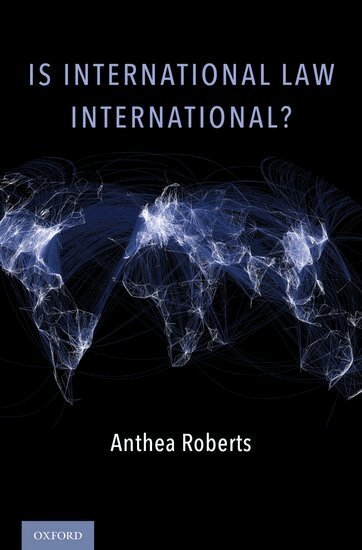
    Is International Law International?

    AvAnthea Roberts

    Inbunden, Engelska, 2017

    693 kr

    Beställningsvara. Skickas inom 5-8 vardagar. Fri frakt över 249 kr.

    Fler format och utgåvor

    Häftad

    363 kr

    E-bok

    206 kr

    E-bok

    213 kr

    Beskrivning

    This book takes the reader on a sweeping tour of the international legal field to reveal some of the patterns of difference, dominance, and disruption that belie international law's claim to universality. Pulling back the curtain on the "divisible college of international lawyers", Anthea Roberts shows how international lawyers in different states, regions, and geopolitical groupings are often subject to distinct incoming influences and outgoing spheres of influence in ways that reflect and reinforce differences in how they understand and approach international law. These divisions manifest themselves in contemporary controversies, such as debates about Crimea and the South China Sea. Not all approaches to international law are created equal, however. Using case studies and visual representations, the author demonstrates how actors and materials from some states and groups have come to dominate certain transnational flows and forums in ways that make them disproportionately influential in constructing the "international". This point holds true for Western actors, materials, and approaches in general, and for Anglo-American (and sometimes French) ones in particular. However, these patterns are set for disruption. As the world moves past an era of Western dominance and toward greater multipolarity, it is imperative for international lawyers to understand the perspectives and approaches of those coming from diverse backgrounds. By taking readers on a comparative tour of different international law academies and textbooks, the author encourages them to see the world through the eyes of others - an essential skill in this fast changing world of shifting power dynamics and rising nationalism.

    Produktinformation

    • Utgivningsdatum:2017-10-19
    • Mått:160 x 236 x 33 mm
    • Vikt:762 g
    • Format:Inbunden
    • Språk:Engelska
    • Antal sidor:432
    • Förlag:OUP USA
    • Medarbetare:Martti Koskenniemi
    • ISBN:9780190696412
    • Utmärkelser:Winner of the ASIL 2018 Certificate of Merit for a preeminent contribution to creative scholarship Winner of the 2017 Global Discourse Award for interdisciplinary contemporary thought applied to global problems Shortlisted for the 2019 Hart-SLSA Book Prize Longlisted for the CHASS (Council for the Humanities, Arts, and Social Sciences) Australia Book Prize Honorable Mention for the International Studies Association's Best International Law Book Award

    Utforska kategorier

    • Folkrätt inom Juridik
    • Juridisk kompetens och praktik inom Juridik
    • Komparativ rätt inom Juridik

    Mer om författaren

    Anthea Roberts is Associate Professor in the School of Regulation and Global Governance (RegNet) at the Australian National University. She specializes in public international law, investment treaty law and arbitration, and comparative international law. Anthea previously taught at the London School of Economics as well as Columbia and Harvard Law Schools. She is on the Editorial Boards of the American Journal of International Law, ICSID Review, and the Journal of World Investment and Trade, and blogs for EJIL: Talk! She has twice won the Francis Deák Prize for the best AJIL article by a younger scholar. Anthea serves as a Reporter for the Restatement (Fourth) of the Foreign Relations Law of the United States, and has experience serving as an arbitrator, counsel, and expert in international disputes.

    Recensioner i media

    In her masterful work, Is International Law International?, Anthea Roberts convincingly shatters our illusions about international law's universality, and makes the case for comparison in international law. Having already won the American Society of International Law's prestigious Certificate of Merit, the book needs no further praise.

    Innehållsförteckning

    • List of FiguresList of TablesForeword by Martii KoskenniemiPrefaceAcknowledgmentsAbbreviations1: The Divisible College of International LawyersI. DifferenceII. DominanceIII. Disruption2: Project DesignI. General FrameworkII. The Actors and Materials StudiedIII. The States and Universities StudiedIV. Important Concepts and FactorsV. Three Points of Method3: Comparing International Law AcademicsI. The Global Flow of Students and IdeasII. Comparing Educational ProfilesIII. Comparing Publication PlacementsIV. Comparing Links Between Academia and Practice4: Comparing International Law Textbooks and Casebooks I. Preliminary Points of MethodII. The Nationalized/Denationalized DivideIII. Inconsistent ApproachesIV. A Tendency to Look WestV. A Lack of Diverse ComparativismVI. Divisions Between the Western and Non-Western BooksVII. Divisions Between Western Books5: Patterns of Difference and Dominance I. Comparing International Legal AcademiesII. Identifying Scholarly Silos and Attempts to ConnectIII. Identifying Patterns of Dominance6: Disruptions Leading to a Competitive World Order I. Shifting to a Competitive World OrderII. Disagreements in Practice, Not Just WordsConclusionAppendix A. Academics Included in the StudyAppendix B. Scholars Referred to in Select Chinese and Russian International Law TextbooksAppendix C. Tables of Content for International Law TextbooksAppendix D. Chinese Research Funding by TopicBibliography*Books and ReportsBook ChaptersJournal Articles and Book ReviewsNewspapers, Magazines, and BlogsCasesInternet SourcesSpeeches and AudioStatutes, Government Statements and DecreesOtherIndex