E-bok, Engelska, 2019
Moment of Reckoning
1210 kr
Läs direkt i Bokus Reader – eller ladda ned till din enhet
Beskrivning
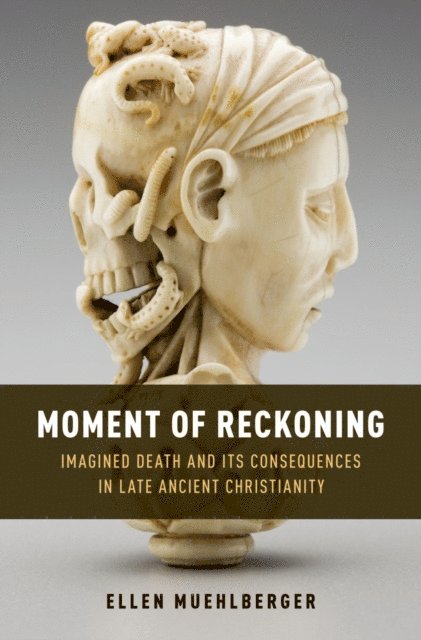
Late antiquity saw a proliferation of Christian texts dwelling on the emotions and physical sensations of dying, not as a heroic martyr in a public square or a judge''s court, but as an individual, at home in a bed or in a private room. In sermons, letters, and ascetic traditions, late ancient Christians imagined the last minutes of life and the events that followed death in elaborate detail. The majority of these imagined scenarios linked the quality of the experience to the moral state of the person who died. Death was no longer the "happy ending," in Judith Perkins''s words, it had been to Christians of the first three centuries, an escape from the difficult and painful world. Instead, death was most often imagined as a terrifying, desperate experience. This book is the first to trace how, in late ancient Christianity, death came to be thought of as a moment of reckoning: a physical ordeal whose pain is followed by an immediate judgment of one''s actions by angels and demons and, after that, fitting punishment.
Because late ancient Christian culture valued the use of the imagination as a religious tool and because Christian teachers encouraged Christians to revisit the prospect of their deaths often, this novel description of death was more than an abstract idea. Rather, its appearance ushered in a new ethical sensibility among Christians, in which one''s death was to be imagined frequently and anticipated in detail. This was, at first glance, meant as a tool for individuals: preachers counted on the fact that becoming aware of a judgment arriving at the end of one''s life tends to sharpen one''s scruples. But, as this book argues, the change in Christian sensibility toward death did not just affect individuals. Once established, it shifted the ethics of Christianity as a tradition.
This is because death repeatedly and frequently imagined as the moment of reckoning created a fund of images and ideas about what constituted a human being and how variances in human morality should be treated. This had significant effects on the Christian assumption of power in late antiquity, especially in the case of the capacity to authorize violence against others. The thinking about death traced here thus contributed to the seemingly paradoxical situation in which Christians proclaimed their identity with a crucified person, yet were willing to use force against their ideological opponents.
Because late ancient Christian culture valued the use of the imagination as a religious tool and because Christian teachers encouraged Christians to revisit the prospect of their deaths often, this novel description of death was more than an abstract idea. Rather, its appearance ushered in a new ethical sensibility among Christians, in which one''s death was to be imagined frequently and anticipated in detail. This was, at first glance, meant as a tool for individuals: preachers counted on the fact that becoming aware of a judgment arriving at the end of one''s life tends to sharpen one''s scruples. But, as this book argues, the change in Christian sensibility toward death did not just affect individuals. Once established, it shifted the ethics of Christianity as a tradition.
This is because death repeatedly and frequently imagined as the moment of reckoning created a fund of images and ideas about what constituted a human being and how variances in human morality should be treated. This had significant effects on the Christian assumption of power in late antiquity, especially in the case of the capacity to authorize violence against others. The thinking about death traced here thus contributed to the seemingly paradoxical situation in which Christians proclaimed their identity with a crucified person, yet were willing to use force against their ideological opponents.
Produktinformation
- Utgivningsdatum: 2019-03-01
- Språk: Engelska
- Filformat: EPUB
- Kopieringsskydd: LCP
- ISBN: 9780190937874
- Förlag: Oxford University Press
Utforska kategorier
Betyg & recensioner
0 recensioner
Inga recensioner tillgängliga.