
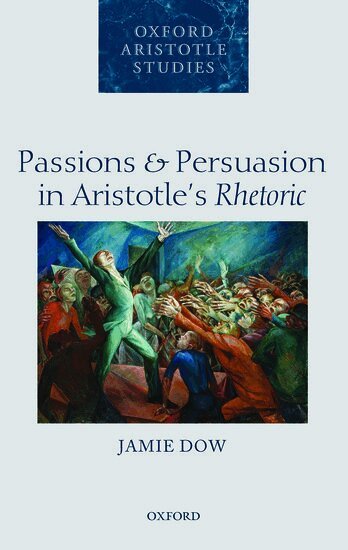
Passions and Persuasion in Aristotle's Rhetoric
E-bok
PDF, Engelska, 2015951 kr
Läs direkt i Bokus Reader – eller ladda ned till din enhet (PDF kräver ofta zoom och scroll på små skärmar).
Fler format och utgåvor
Beskrivning
For Aristotle, arousing the passions of others can amount to giving them proper grounds for conviction. On that basis a skill in doing so can be something valuable, an appropriate constituent of the kind of expertise in rhetoric that deserves to be cultivated and given expression in a well-organised state. Such are Jamie Dow''s principal claims in Passions and Persuasion in Aristotle''s Rhetoric. He attributes to Aristotle a normative view of rhetoric and itsrole in the state, and ascribes to him a particular view of the kinds of cognitions involved in the passions.In the first sustained treatment of these issues, and the first major monograph on Aristotle''s Rhetoric in twenty years, Dow argues that Aristotle held distinctive and philosophically interesting views of both rhetoric and the nature of the passions. In Aristotle''s view, he argues, rhetoric is exercised solely in the provision of proper grounds for conviction (pisteis). This is rhetoric''s valuable contribution to the proper functioning of the state. Dow explores, throughcareful examination of the text of the Rhetoric, what normative standards must be met for something to qualify in Aristotle''s view as ''proper grounds for conviction'', and how he supposed these standards could be met by each of his trio of ''technical proofs'' (entechnoi pisteis)—those using reason, character and emotion.In the case of the passions, Dow suggests, meeting these standards is a matter of arousing passions that constitute the reasonable acceptance of premises in arguments supporting the speaker''s conclusion. Dow then seeks to show that Aristotle''s view of the passions is compatible with this role in rhetorical expertise. This involves taking a stand on a number of controversial issues in Aristotle studies. In Passions and Persuasion, Dow rejects the view that Aristotle''s Rhetoricexpresses inconsistent views on emotion-arousal. Aristotle''s treatment of the passions in the Rhetoric is, he argues, best understood as expressing a substantive theory of the passions as pleasures and pains. This is supported by a new representationalist reading of Aristotle''s account of pleasure (and pain) inRhetoric 1. Dow also defends a distinctive understanding of how Aristotle understood the contribution of phantasia (''appearance'') to the cognitive component of the passions. On this interpretation, Aristotelian passions must involve the subject''s affirming things to be the way that they are represented. Thus understood, the passions of an emotionally-engaged audience can constitute a part of their reasonable acceptance of a speaker''s argument.
Produktinformation
Utforska kategorier
Hoppa över listan







Du kanske också är intresserad av
- Signerad!
Del 3
- Nyhet
- Nyhet
Del 11
- -21%
- -30%
- Nyhet
- Nyhet
- Nyhet
Del 3