E-bok, Engelska, 2015
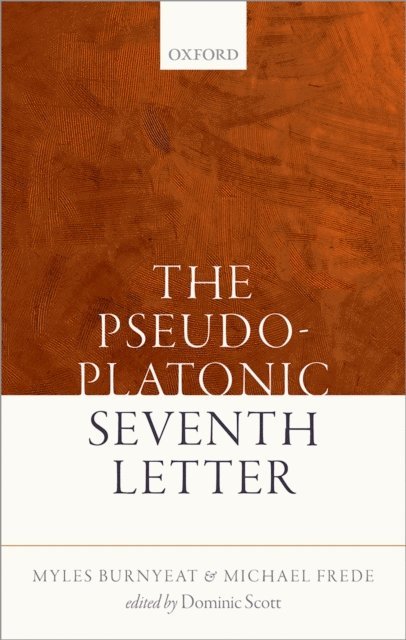
Pseudo-Platonic Seventh Letter
Av Michael Frede, Myles Burnyeat, Dominic Scott
972 kr
Läs direkt i Bokus Reader – eller ladda ned till din enhet (PDF kräver ofta zoom och scroll på små skärmar).
Beskrivning
The Seventh Platonic Letter describes Plato''s attempts to turn the ruler of Sicily, Dionysius II, into a philosopher ruler along the lines of the Republic. It explains why Plato turned from politics to philosophy in his youth and how he then tried to apply his ideas to actual politics later on. It also sets out his views about language, writing and philosophy. As such, it represents a potentially crucial source of information about Plato, who tells us almost nothing about himself in his dialogues. But is it genuine? Scholars have debated the issue for centuries, although recent opinion has moved in its favour. The origin of this book was a seminar given in Oxford in 2001 by Myles Burnyeat and Michael Frede, two of the most eminent scholars of ancient philosophy in recent decades. Michael Frede begins by casting doubt on the Letter by looking at it from the general perspective of letter writing in antiquity, when it was quite normal to fabricate letters by famous figures from the past. Both then attack the authenticity of the letter head-on by showing how its philosophical content conflicts with what we find in the Platonic dialogues. They also reflect on the question of why the Letter was written, whether as an attempt to exculpate Plato from the charge of meddling in politics (Frede), or as an attempt to portray, through literary means, the ways in which human weakness and emotions can lead to disasters in political life (Burnyeat).
Produktinformation
- Utgivningsdatum: 2015-06-11
- Språk: Engelska
- Filformat: PDF
- Kopieringsskydd: LCP
- ISBN: 9780191053382
- Förlag: OUP Oxford
Utforska kategorier
Betyg & recensioner
0 recensioner
Inga recensioner tillgängliga.