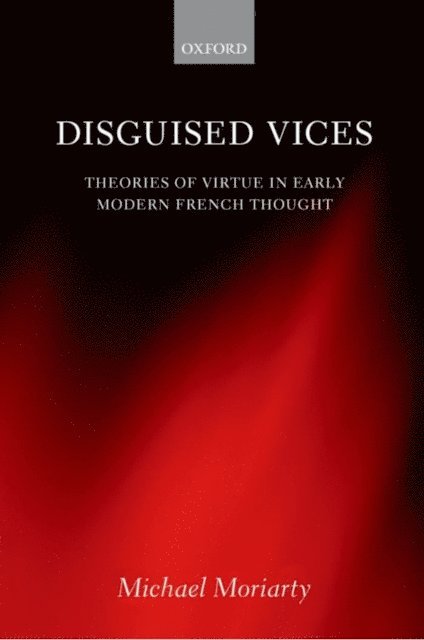
E-bok, Engelska, 2011
Disguised Vices
2108 kr
Läs direkt i Bokus Reader – eller ladda ned till din enhet (PDF kräver ofta zoom och scroll på små skärmar).
Beskrivning
The notions of virtue and vice are essential components of the Western ethical tradition. But in early modern France they were called into question, as writers, most famously La Rochefoucauld, argued that what appears as virtue is in fact disguised vice: people carry out praiseworthy deeds because they stand to gain in some way; they deserve no credit for their behaviour because they have no control over it; they are governed by feelings and motives of which they may not be aware. Disguised Vices analyses the underlying logic of these arguments, and investigates what is at stake in them. It traces the arguments back to their sources in earlier writers, showing how ancient philosophers, particularly Aristotle and Seneca, formulated the distinction between behaviour that counts as virtuous and behaviour that only seems so. It explains how St Augustine reinterpreted the distinction in the light of the difference between pagans and Christians, and how medieval and early modern theologians strove to reconcile Augustine''s position with that of Aristotle. It examines the restatement of Augustine''s position by his hard-line early modern followers (especially the Jansenists), and the controversy to which this gave rise. Finally, it examines La Rochefoucauld''s critique of virtue and assesses the extent of its links with the Augustinian current of thought.
Produktinformation
- Utgivningsdatum: 2011-09-08
- Språk: Engelska
- Filformat: PDF
- Kopieringsskydd: LCP
- ISBN: 9780191618185
- Förlag: OUP Oxford
Utforska kategorier
Betyg & recensioner
0 recensioner
Inga recensioner tillgängliga.