E-bok, Engelska, 2017
Anatomy of Dance Discourse
1813 kr
Läs direkt i Bokus Reader – eller ladda ned till din enhet (PDF kräver ofta zoom och scroll på små skärmar).
Beskrivning
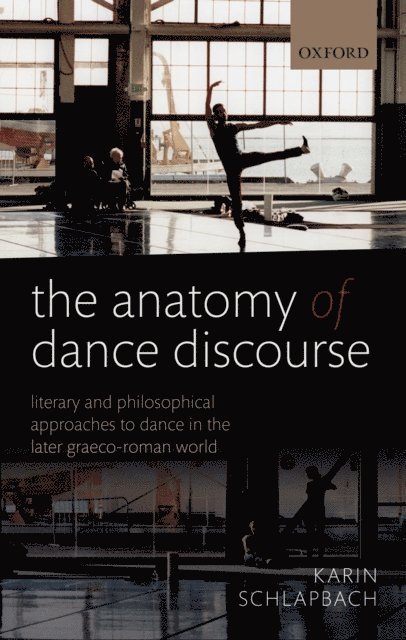
Within the newly thriving field of ancient Greek and Roman performance and dance studies, The Anatomy of Dance Discourse offers a fresh and original perspective on ancient perceptions of dance. Focusing on the second century CE, it provides an overview of the dance discourse of this period and explores the conceptualization of dance across an array of different texts, from Plutarch and Lucian of Samosata, to the apocryphal Acts of John, Longus, and Apuleius.
The volume is divided into two parts: while the second part discusses ekphraseis of dance performance in prose and poetry of the Roman imperial period, the first delves more deeply into an examination of how both philosophical and literary treatments of dance interacted with other areas of cultural expression, whether language and poetry, rhetoric and art, or philosophy and religion. Its distinctive contribution lies in this juxtaposition of ancient theorizations of dance and philosophical analyses of the medium with literary depictions of dance scenes and performances, and it attends not only to the highly encoded genre of pantomime, which dominated the stage in the Roman Empire, but also to acrobatic, non-representational dances. This twofold nature of dance sparked highly sophisticated reflections on the relationship between dance and meaning in the ancient world, and the volume defends the novel claim that in the imperial period it became more and more palpable that dance, unlike painting or sculpture, could be representational or not: a performance of nothing but itself. It argues that dance was understood as a practice in which human beings, whether as dancers or spectators, are confronted with the irreducible reality of their own physical existence, which is constantly changing, and that its way to cognition and action is physical experience.
The volume is divided into two parts: while the second part discusses ekphraseis of dance performance in prose and poetry of the Roman imperial period, the first delves more deeply into an examination of how both philosophical and literary treatments of dance interacted with other areas of cultural expression, whether language and poetry, rhetoric and art, or philosophy and religion. Its distinctive contribution lies in this juxtaposition of ancient theorizations of dance and philosophical analyses of the medium with literary depictions of dance scenes and performances, and it attends not only to the highly encoded genre of pantomime, which dominated the stage in the Roman Empire, but also to acrobatic, non-representational dances. This twofold nature of dance sparked highly sophisticated reflections on the relationship between dance and meaning in the ancient world, and the volume defends the novel claim that in the imperial period it became more and more palpable that dance, unlike painting or sculpture, could be representational or not: a performance of nothing but itself. It argues that dance was understood as a practice in which human beings, whether as dancers or spectators, are confronted with the irreducible reality of their own physical existence, which is constantly changing, and that its way to cognition and action is physical experience.
Produktinformation
- Utgivningsdatum: 2017-12-01
- Språk: Engelska
- Filformat: PDF
- Kopieringsskydd: LCP
- ISBN: 9780192534781
- Förlag: Oxford University Press
Utforska kategorier
Betyg & recensioner
0 recensioner
Inga recensioner tillgängliga.