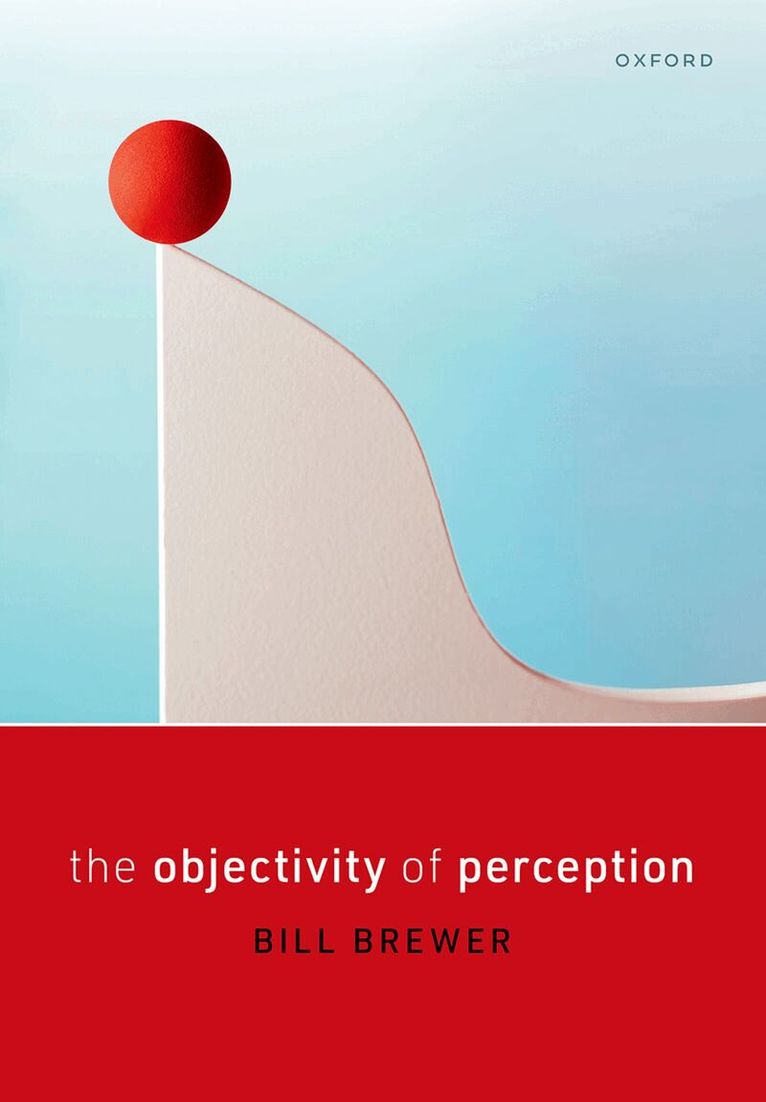
Inbunden, Engelska, 2027
The Objectivity of Perception
Av Bill Brewer
1193 kr
Ej publicerad ännu
Beskrivning
Hume famously asked what the source is of our belief that the ordinary objects that we perceive continue to exist unperceived. A natural and intuitively compelling answer is that this is how things strike us in our perceptual experience of the world around us. The subjective nature of our perceptual experience itself presents its worldly objects in a way that makes our belief in their continued existence unperceived entirely intelligible to us. That is how conscious perceptual experience of the world is for us. Equally famously, though, Hume argues that this belief cannot possibly be the product of perception itself in this way, or even of perception aided by reason.In The Objectivity of Perception, Bill Brewer provides a sustained investigation into whether the intuitively compelling answer to Hume's question may ultimately be vindicated--in spite of the powerful considerations Hume offers to the contrary. This is the Problem of the Objectivity of Perception: to account for the way in which the subjective nature of our perceptual experience intelligibly explains our belief in the continued existence unperceived of the ordinary objects that we perceive. After clarifying the Problem and setting out a framework for its solution, he considers in the first half of the book, the current solutions within this framework and finds them all wanting. This includes discussions of Intellectualism, Enactivism, Inferentialism, and Subpersonalism. The second half of the book constitutes an extended elaboration, development, motivation, and defence of his own solution to the Problem of the Objectivity of Perception. This is Perceptualism, according to which it is the metaphysics of conscious perceptual experience itself that ultimately accounts for the way in which its subjective nature intelligibly explains our belief in the continued existence unperceived of its ordinary objects. In particular, its key explanatory resource is the fact that it is in the nature of perceptual experience that this is our conscious acquaintance, from a particular position and orientation, with the worldly objects and their properties that we perceive.
Produktinformation
- Utgivningsdatum: 2027-04-01
- Mått: 156 x 234 x undefined mm
- Format: Inbunden
- Språk: Engelska
- Antal sidor: 224
- Förlag: OUP OXFORD
- ISBN: 9780192868176
Utforska kategorier
Betyg & recensioner
0 recensioner
Inga recensioner tillgängliga.