• Fri frakt över 249 kr
  • •
  • Snabba leveranser
  • •
  • Billiga böcker
Kundservice

Du är på sajten för privatpersoner.

Företag, bibliotek eller offentlig verksamhet?

Du handlar på classic.bokus.com, där alla dina funktioner finns intakta.
Till classic.bokus.com
Bokus logotyp. Gå till startsidan.
  • Erbjudanden
  • Nyheter
  • Student
  • Topplistor
  • Barn & ungdom
  • Bokus Play
  • E-böcker
  • Pocketböcker
  • Spel & pussel

Må bättre, för mindre! Upp till 50% rabatt på hälsoböcker

Sidfot

Mina sidor

    Hjälp

    • Kundservice
    • Vanliga frågor och svar
    • Frakt och leverans
    • Retur vid ångerrätt
    • Reklamera vara
    • Betalning
    • Köpvillkor
    • Allmänna villkor
    • Information om webbplatsens tillgänglighet

    Om Bokus

    • Om oss
    • Pressrum
    • För studenter
    • För företag
    • För bibliotek och offentlig verksamhet
    • För leverantörer
    • Hållbarhet

    Populärt

    • Aktuella erbjudanden
    • Presentkort
    • Studentlitteratur
    • Nya böcker
    • Topplistor
    • Signerade böcker
    • Engelska böcker

    Inspiration

    • Boktips
    • BookTok
    • Populära bokserier
    • Barnbokskaraktärer
    • Populära författare
    Logotyp för Bokus
    Följ oss på Facebook (extern länk)Följ oss på Instagram (extern länk)Följ oss på YouTube (extern länk)Följ oss på TikTok (extern länk)
    bokus @ CookiesAnpassa cookiesIntegritetspolicyKöpvillkor
    Till Citymail hemsida (extern länk)Till Budbee hemsida (extern länk)Till Postnord hemsida (extern länk)Till Schenker hemsida (extern länk)Till Early Bird hemsida (extern länk)Till Walleys hemsida (extern länk)
    1. Historia och arkeologi
    2. Arkeologi
    3. Arkeologiska perioder och områden

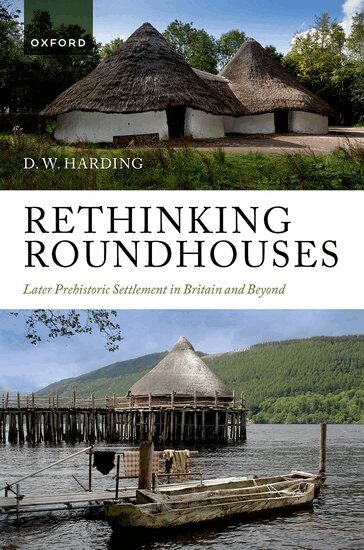
    Rethinking Roundhouses

    Later Prehistoric Settlement in Britain and Beyond

    AvD. W. Harding

    Inbunden, Engelska, 2023

    1 536 kr

    Beställningsvara. Skickas inom 5-8 vardagar. Fri frakt över 249 kr.

    Fler format och utgåvor

    E-bok

    1 371 kr

    E-bok

    1 371 kr

    Beskrivning

    Excavated plans of roundhouses may compound multiple episodes of activity, design, construction, occupation, repair, and closure, reflecting successive stages of a building's biography. What does not survive archaeologically, through use of materials or methods that leave no tangible trace, may be as important for reconstruction as what does survive, and can only be inferred from context or comparative evidence. The great diversity in structural components suggests a greater diversity of superstructure than was implied by the classic Wessex roundhouses, including split-level roofs and penannular ridge roofs. Among the stone-built houses of the Atlantic north and west there likewise appears to have been a range of regional and chronological variants in the radial roundhouse series, and probably within the monumental Atlantic roundhouses too.Important though recognition of structural variants may be, morphological classification should not be allowed to override the social use of space for which the buildings were designed, whether their structural footprint was round or rectangular. Atlantic roundhouses reveal an important division between central space and peripheral space, and a similar division may be inferred for lowland timber roundhouses, where the surviving evidence is more ephemeral. Some larger houses were evidently byre-houses or barn houses, some with upper or mezzanine floor levels, in which livestock might be brought in or agricultural produce stored. Such 'great houses' doubtless served community needs beyond those of the resident extended family. The massively-increased scale of development-led excavations of recent years has resulted in an increased database that enables evaluation of individual sites in a wider landscape environment than was previously possible. Circumstances of recovery and recording in commercially-driven excavations, however, are not always compatible with research objectives, and the undoubted improvements in standards of environmental investigation are sometimes offset by shortcomings in the publication of basic structural or stratigraphic detail.

    Produktinformation

    • Utgivningsdatum:2023-01-26
    • Mått:164 x 242 x 18 mm
    • Vikt:638 g
    • Format:Inbunden
    • Språk:Engelska
    • Antal sidor:304
    • Förlag:OUP OXFORD
    • ISBN:9780192893802

    Utforska kategorier

    • Arkeologiska perioder och områden inom Historia och arkeologi

    Mer om författaren

    D. W. Harding graduated from Keble College, Oxford in English Language and Literature before gaining his D. Phil under the supervision of Professor Christopher Hawkes. He was temporary Assistant Keeper in the Ashmolean Museum before being appointed lecturer in Archaeology at Durham University in 1966. He was Abercromby Professor of Prehistoric Archaeology at Edinburgh University (1977-2007), serving as Dean of Arts (1983-6) and Vice-Principal of the University (1988-91). He has excavated later prehistoric sites from Wessex to the Western Isles, and had a particular interest in aerial archaeology, holding a current pilot's license for nearly thirty years.

    Recensioner i media

    While Rethinking Roundhouses provides a useful snapshot of the state of knowledge on the subject, its most exciting aspect lies in the author's suggestion that we should reconceptualise roundhouses in terms of both design and function. Rethinking Roundhouses will deservedly find its way on to the shelves of university libraries...I would recommend it to anyone with an interest in architecture and settlement in late prehistoric Britain.

    Innehållsförteckning

    • 1: Landmarks in roundhouse studies 2: Twenty-first century archaeology: radical change 3: Analyzing and interpreting timber roundhouses 4: Analyzing and interpeting stone-built houses 5: Roundhouses in context: settlements and landscape 6: Archaeotectural alternatives 7: Regional diversity in Britain and beyond 8: Chronology, origins, and aftermath 9: Roundhouses; space, time, and social use