• Fri frakt över 249 kr
  • •
  • Snabba leveranser
  • •
  • Billiga böcker
Kundservice

Du är på sajten för privatpersoner.

Företag, bibliotek eller offentlig verksamhet?

Du handlar på classic.bokus.com, där alla dina funktioner finns intakta.
Till classic.bokus.com
Bokus logotyp. Gå till startsidan.
  • Erbjudanden
  • Student
  • Topplistor
  • Barn & ungdom
  • Bokus Play
  • E-böcker
  • Ljudböcker
  • Pocketböcker
  • Spel och pussel

5% studentrabatt – använd koden KURSBOK27 →

Sidfot

Mina sidor

    Hjälp

    • Kundservice
    • Vanliga frågor och svar
    • Frakt och leverans
    • Retur vid ångerrätt
    • Reklamera vara
    • Betalning
    • Köpvillkor
    • Allmänna villkor
    • Information om webbplatsens tillgänglighet

    Om Bokus

    • Om oss
    • Pressrum
    • För studenter
    • För företag
    • För bibliotek och offentlig verksamhet
    • För leverantörer
    • Hållbarhet

    Populärt

    • Aktuella erbjudanden
    • Presentkort
    • Studentlitteratur
    • Nya böcker
    • Topplistor
    • Signerade böcker
    • Engelska böcker

    Inspiration

    • Boktips
    • BookTok
    • Barnbokskaraktärer
    • Populära författare
    Logotyp för Bokus
    Följ oss på Facebook (extern länk)Följ oss på Instagram (extern länk)Följ oss på YouTube (extern länk)Följ oss på TikTok (extern länk)
    bokus @ CookiesAnpassa cookiesIntegritetspolicyKöpvillkor
    Till Citymail hemsida (extern länk)Till Budbee hemsida (extern länk)Till Postnord hemsida (extern länk)Till Schenker hemsida (extern länk)Till Early Bird hemsida (extern länk)Till Walleys hemsida (extern länk)
    1. Psykologi och pedagogik
    2. Psykologi

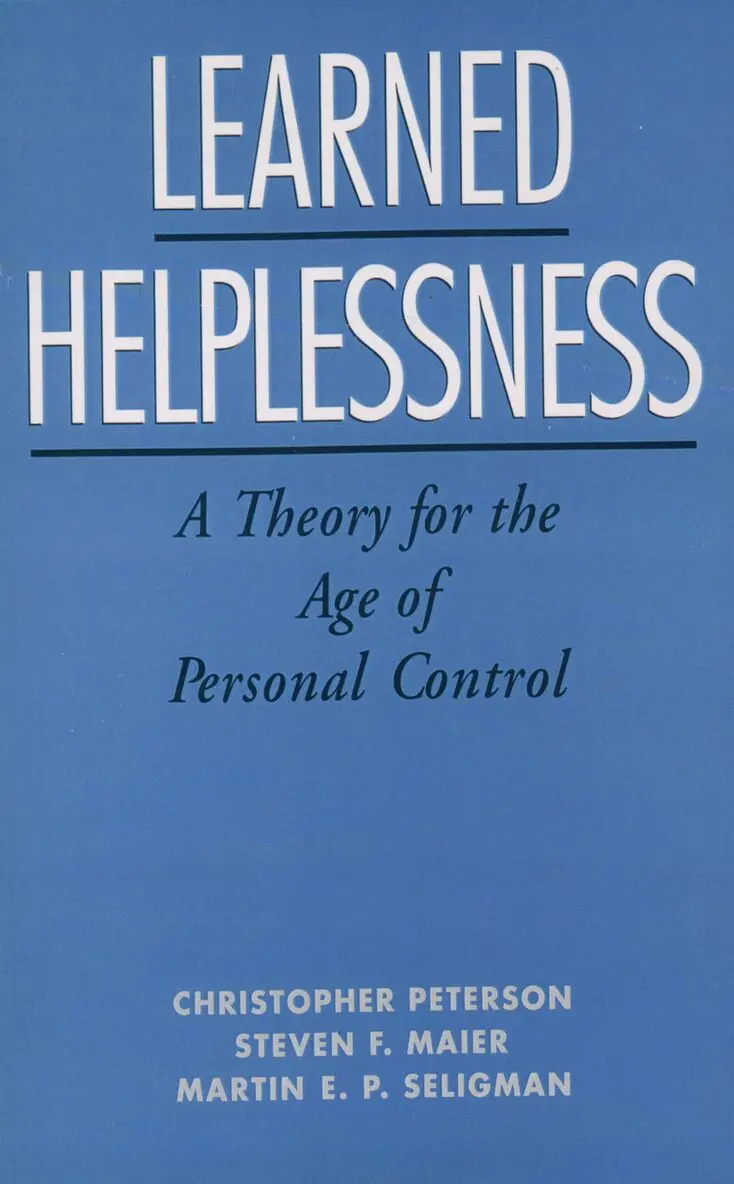
    Learned Helplessness

    A Theory for the Age of Personal Control

    AvPeterson,Maier

    Häftad, Engelska, 1996

    841 kr

    Skickas . Fri frakt över 249 kr.

    Beskrivning

    The psychological syndrome of learned helplessness is a uniquely modern phenomenon, deeply rooted in cultural concepts of personal power and security. This timely and valuable work examines learned helplessness with reference to the salient emphases in contemporary culture of individuality and personal control.An indispensable reference of interest to a broad spectrum of researchers in psychology.

    Produktinformation

    • Utgivningsdatum:1996-01-18
    • Mått:155 x 234 x 28 mm
    • Vikt:585 g
    • Format:Häftad
    • Språk:Engelska
    • Antal sidor:376
    • Förlag:OUP USA
    • ISBN:9780195044676

    Utforska kategorier

    • Psykologi inom Psykologi och pedagogik

    Recensioner i media

    the application of the theory to current issues (including depression, academic achievement, and physical well-being) are exciting, thought provoking, and highly relevant

    Innehållsförteckning

    • 1. Introduction ; 1.1 The Phenomena of Helplessness and Personal Control ; 1.2 The Theory of Learned Helplessness ; 1.3 Three Uses of "Learned Helplessness" ; 1.4 Learned Helplessness: Inward, Downward, and Outward ; 1.5 Why Learned Helplessness Has Been Controversial ; 1.6 Why Learned Helplessness Has Been Popular ; 2. Learned Helplessness in Animals ; 2.1 Learned Helplessness Theory ; 2.2 The Controversy ; 2.3 Contiguity Versus Contingency ; 2.4 Representation and Expectation ; 2.5 What We Know ; 2.6 What We Don't Know ; 3. The Biology of Learned Helplessness ; 3.1 Norepinephrine ; 3.2 Gamma-Aminobutyric Acid ; 3.3 Endogenous Opiates ; 3.4 Transmitters, Neuromodulators, and Hormones ; 3.5 Corticotrophin Releasing Hormone (CRH) ; 3.6 Issues Omitted ; 3.7 What We Know ; 3.8 What We Don't Know ; 4. Learned Helplessness in People ; 4.1 Criteria of Learned Helplessness ; 4.2 Operationalizing Learned Helplessness in the Laboratory ; 4.3 A Meta-Analysis of Human Helplessness Studies ; 4.4 Other Aspects of Human Helplessness ; 4.5 The Generality of Learned Helplessness Among People ; 4.6 Cognition and Self-Report ; 4.7 Other Explanations ; 4.8 What We Know ; 5. The Attributional Reformulation ; 5.1 Historical Background: Attribution Theory and Theorizing ; 5.2 Causal Explanations and Locus of Control ; 5.3 The Reformulated Learned Helplessness Model ; 5.4 Assessing Explanatory Style ; 5.5 Empirical Studies of Explanatory Style ; 5.6 What We Know ; 5.7 What We Don't Know ; 6. Learned Helplessness and Depression ; 6.1 What Is Depression? ; 6.2 The Reformulation of the Learned Helplessness Model of Depression ; 6.3 Modernity and Depression ; 6.4 Controversies ; 6.5 What We Know ; 6.6 What We Don't Know ; 7. Learned Helplessness and Social Problems ; 7.1 Survey of Applications ; 7.2 What We Know ; 7.3 What We Don't Know ; 8. Learned Helplessness and Physical Health ; 8.1 Some Groundrules ; 8.2 Risk Factors for Illness ; 8.3 Mechanisms ; 8.4 Health and Illness in Animals Versus People ; 8.5 What We Know ; 8.6 What We Don't Know ; 9. Epilogue ; 9.1 A Brief History of Choices ; 9.2 The Importance of Control ; 9.3 Learned Helplessness as a Model of Scientific Dispute and Progress ; 9.5 Optimism Institutes