• Fri frakt över 249 kr
  • •
  • Snabba leveranser
  • •
  • Billiga böcker
Kundservice

Du är på sajten för privatpersoner.

Företag, bibliotek eller offentlig verksamhet?

Du handlar på classic.bokus.com, där alla dina funktioner finns intakta.
Till classic.bokus.com
Bokus logotyp. Gå till startsidan.
  • Erbjudanden
  • Nyheter
  • Student
  • Topplistor
  • Barn & ungdom
  • Bokus Play
  • E-böcker
  • Pocketböcker
  • Spel & pussel

10% rabatt på allt med kod NYSTART10 →

Sidfot

Mina sidor

    Hjälp

    • Kundservice
    • Vanliga frågor och svar
    • Frakt och leverans
    • Retur vid ångerrätt
    • Reklamera vara
    • Betalning
    • Köpvillkor
    • Allmänna villkor
    • Information om webbplatsens tillgänglighet

    Om Bokus

    • Om oss
    • Pressrum
    • För studenter
    • För företag
    • För bibliotek och offentlig verksamhet
    • För leverantörer
    • Hållbarhet

    Populärt

    • Aktuella erbjudanden
    • Presentkort
    • Studentlitteratur
    • Nya böcker
    • Topplistor
    • Signerade böcker
    • Engelska böcker

    Inspiration

    • Boktips
    • BookTok
    • Populära bokserier
    • Barnbokskaraktärer
    • Populära författare
    Logotyp för Bokus
    Följ oss på Facebook (extern länk)Följ oss på Instagram (extern länk)Följ oss på YouTube (extern länk)Följ oss på TikTok (extern länk)
    bokus @ CookiesAnpassa cookiesIntegritetspolicyKöpvillkor
    Till Citymail hemsida (extern länk)Till Budbee hemsida (extern länk)Till Postnord hemsida (extern länk)Till Schenker hemsida (extern länk)Till Early Bird hemsida (extern länk)Till Walleys hemsida (extern länk)
    1. Naturvetenskap och teknik
    2. Teknik och industri
    3. Elektronik och kommunikationer

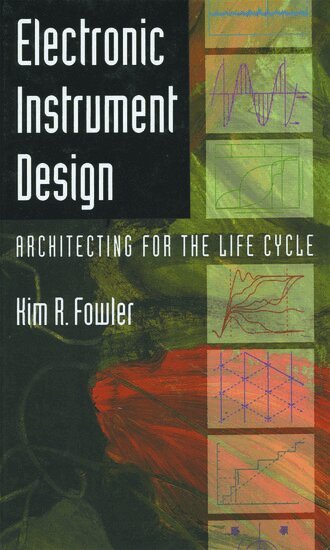
    Electronic Instrument Design

    Architecting for the Life Cycle

    AvKim R. Fowler

    Inbunden, Engelska, 1996

    4 386 kr

    Beställningsvara. Skickas inom 3-6 vardagar. Fri frakt över 249 kr.

    Beskrivning

    This text integrates engineering principles with real applications from a systems perspective, providing a framework for developing electronic instrumentation, from hand-held devices to consoles. It offers practical design solutions, describes the interactions, trade-offs, and priorities encountered and then gives specific examples. Written as a principle text for a senior design class, it also serves as a reference handbook for practising engineers. While the focus is on projects often found in medium sized companies, many of the principles presented apply to larger companies as well.

    Produktinformation

    • Utgivningsdatum:1996-10-03
    • Mått:154 x 240 x 30 mm
    • Vikt:966 g
    • Format:Inbunden
    • Språk:Engelska
    • Antal sidor:576
    • Förlag:OUP USA
    • ISBN:9780195083712

    Utforska kategorier

    • Elektronik och kommunikationer inom Naturvetenskap och teknik
    • Teknik: allmänt inom Naturvetenskap och teknik

    Recensioner i media

    This is a comprehensive introduction to the design of electronic products developed from the author's "real world experience". It is a useful reference book as well as good potential to support undergraduate systems and product design courses as it provides useful guidelines and case studies. Aslib Book Guide

    Innehållsförteckning

    • PREFACE ; ACKNOWLEDGMENTS ; ABBREVIATIONS ; 1. Systems Engineering ; 1.1 Introduction ; 1.2 Overview of Systems Engineering ; 1.3 The Systems Perspective ; 1.4 Documentation ; 1.5 Concept Development ; 1.6 Requirements ; 1.7 Design Development ; 1.8 Rapid Prototyping and Field Testing ; 1.9 Validation, Verification, and Integration ; 1.10 Maintenance and Life-Cycle Costs ; 1.11 Failure, Iteration, and Judgment ; 1.12 Summary ; 1.13 Recommended Reading ; 1.14 References ; 2. Architecting and Engineering Judgment ; 2.1 Good Engineering ; 2.2 Questions to Ask ; 2.3 Architecting ; 2.4 Design Concerns and Heuristics ; 2.5 Teamwork and Trust ; 2.6 A Common Problem: Real-Time Control ; 2.7 Case Studies ; 2.8 Summary ; 2.9 Recommended Reading ; 2.10 References ; 3. Documentation ; 3.1 Don't Skip This Chapter ; 3.2 Types of Documentation ; 3.3 Records, Accountability, and Liability ; 3.4 Audience ; 3.5 Preparation, Presentation, and Preservation ; 3.6 Methods ; 3.7 Visual Techniques ; 3.8 Layout ; 3.9 Writing Well ; 3.10 Summary ; 3.11 Recommended Reading ; 3.12 References ; 4. The Human Interface ; 4.1 Man-Machine Dialgoue and Industrial Design ; 4.2 User-Centered Design ; 4.3 Five Elements of Successful Design ; 4.4 Cognition ; 4.5 Ergonomics ; 4.6 Utility ; 4.7 Principles for Appropriate Operation ; 4.8 Image ; 4.9 Ownership ; 4.10 Practical Applications and System Implications ; 4.11 Some Sources of Errors ; 4.12 Interface Design Specifications ; 4.13 Case Studies ; 4.14 Summary ; 4.15 Recommended Reading ; 4.16 References ; 5. Packaging and Enclosures ; 5.1 Packaging's Influence and Its Factors ; 5.2 Design for Manufacture, Assembly and Disassembly ; 5.3 Wiring ; 5.4 Temperature ; 5.5 Vibration and Shock ; 5.6 Rugged Systems ; 5.7 Component Packaging ; 5.8 Other Mechanical Issues ; 5.9 Case Studies ; 5.10 Summary ; 5.11 Recommended Reading ; 5.12 References ; 6. Grounding and Shielding ; 6.1 Foundations of Circuit Operation ; 6.2 Outline for Grounding and Shielding Design ; 6.3 Safety ; 6.4 Noise ; 6.5 Priniples of Energy Coupling ; 6.6 Grounding ; 6.7 Filtering ; 6.8 Shielding ; 6.9 Protecting Against Electrostatic Discharge ; 6.10 General Rules for Design ; 6.11 Case Study ; 6.12 Summary ; 6.13 Recommended Reading ; 6.14 References ; 7. Circuit Design ; 7.1 From Symbols to Substance ; 7.2 Convert Requirements into Design ; 7.3 Reliability ; 7.4 Fault Tolerance ; 7.5 High-Speed Design ; 7.6 Low-Power Design ; 7.7 Noise and Error Budgets ; 7.8 Standard Data Buses and Networks ; 7.9 Reset and Power Failure Detection ; 7.10 Interface: Input ; 7.11 Interface: Output ; 7.12 Breadboards, Evaluation Boards, and Prototypes ; 7.13 Summary ; 7.14 Recommended Reading ; 7.15 References ; 8. Circuit Layout ; 8.1 Mundane but Necessary Circuit Boards ; 8.2 Circuit Boards ; 8.3 Component Placement ; 8.4 Routing Signal Traces ; 8.5 Ground, Returns, and Shields ; 8.6 Connectors and Cables ; 8.7 Design for Manufacture ; 8.8 Testing and Maintenance ; 8.9 Summary ; 8.10 Recommended Reading ; 8.11 References ; 9. Power ; 9.1 Sources and Requirements ; 9.2 Outline for Power Design ; 9.3 Buy versus Build ; 9.4 Power Conversion Choices ; 9.5 Definitions and Specifications ; 9.6 Power Distribution ; 9.7 Line Conditioning ; 9.8 Electromagnetic Distribution ; 9.9 Reliability ; 9.10 Batteries ; 9.11 Other Power Sources ; 9.12 Case Studies ; 9.13 Summary ; 9.14 Recommended Reading ; 9.15 References ; 10. Cooling ; 10.1 Heat Transfer ; 10.2 Approach to Thermal Management ; 10.3 Mechanisms for Cooling ; 10.4 Operating Range ; 10.5 Basic Thermal Calculations ; 10.6 Cooling Choices ; 10.7 Heat Sink Selection ; 10.8 Heat Pipes and Thermal Pillows ; 10.9 Fans and Forced Air Cooling ; 10.10 Liquid Cooling ; 10.11 Evaporation and Refrigeration ; 10.12 Trade-offs in Design ; 10.13 Analysis and Experimentation ; 10.14 Case Studies ; 10.15 Summary ; 10.16 Recommended Reading ; 10.17 References ; 11. Software ; 11.1 Why Software in a Book about Exercises? ; 11.2 Types of Software ; 11.3 Traditional Software Life Cycle ; 11.4 Models, Metrics, and Software Limitations ; 11.5 Risk Abatement and Failure Prevention ; 11.6 Software Bugs and Testing ; 11.7 Good Programming Practice ; 11.8 User Interface ; 11.9 Embedded, Real-Time Software ; 11.10 Case-Studies and Design Examples ; 11.11 Summary ; 11.12 Recommended Reading ; 11.13 References ; 12. Debugging and Testing ; 12.1 Understand Your Components and Circuits ; 12.2 Steps to Debugging ; 12.3 Techniques for Troubleshooting ; 12.4 Characterization ; 12.5 Electromechanical Components ; 12.6 Passive Components ; 12.7 Active Devices ; 12.8 Operational Amplifiers ; 12.9 Analog-Digital Conversion ; 12.10 Digital Components ; 12.11 Case Study: Sensor Calibration ; 12.12 Summary ; 12.13 Recommended Reading ; 12.14 References ; 13. Integration, Production, and Logistics ; 13.1 Putting It All Together ; 13.2 Inspection and Tests of Components ; 13.3 Simulation, Protyping, and Testing ; 13.4 Integration ; 13.5 Validation and Verification ; 13.6 Procurement ; 13.7 Manufacturing ; 13.8 Maintenance and Repair ; 13.9 Training ; 13.10 Disposal and Environmental Concerns ; 13.11 Case Study: Test System for Avionics ; 13.12 Summary ; 13.13 References ; Appendix A Outline of Milestones and Documents for Developing Electronic Instruments ; Appendix B Design Review Checklists ; Appendic C Software Design Tools ; INDEX