• Fri frakt över 249 kr
  • •
  • Snabba leveranser
  • •
  • Billiga böcker
Kundservice

Du är på sajten för privatpersoner.

Företag, bibliotek eller offentlig verksamhet?

Du handlar på classic.bokus.com, där alla dina funktioner finns intakta.
Till classic.bokus.com
Bokus logotyp. Gå till startsidan.
  • Erbjudanden
  • Student
  • Topplistor
  • Barn & ungdom
  • Bokus Play
  • E-böcker
  • Ljudböcker
  • Pocketböcker
  • Spel & pussel

10% rabatt på allt med kod NYSTART10 →

Sidfot

Mina sidor

    Hjälp

    • Kundservice
    • Vanliga frågor och svar
    • Frakt och leverans
    • Retur vid ångerrätt
    • Reklamera vara
    • Betalning
    • Köpvillkor
    • Allmänna villkor
    • Information om webbplatsens tillgänglighet

    Om Bokus

    • Om oss
    • Pressrum
    • För studenter
    • För företag
    • För bibliotek och offentlig verksamhet
    • För leverantörer
    • Hållbarhet

    Populärt

    • Aktuella erbjudanden
    • Presentkort
    • Studentlitteratur
    • Nya böcker
    • Topplistor
    • Signerade böcker
    • Engelska böcker

    Inspiration

    • Boktips
    • BookTok
    • Populära bokserier
    • Barnbokskaraktärer
    • Populära författare
    Logotyp för Bokus
    Följ oss på Facebook (extern länk)Följ oss på Instagram (extern länk)Följ oss på YouTube (extern länk)Följ oss på TikTok (extern länk)
    bokus @ CookiesAnpassa cookiesIntegritetspolicyKöpvillkor
    Till Citymail hemsida (extern länk)Till Budbee hemsida (extern länk)Till Postnord hemsida (extern länk)Till Schenker hemsida (extern länk)Till Early Bird hemsida (extern länk)Till Walleys hemsida (extern länk)
    1. Psykologi och pedagogik
    2. Pedagogik
    3. Pedagogisk psykologi

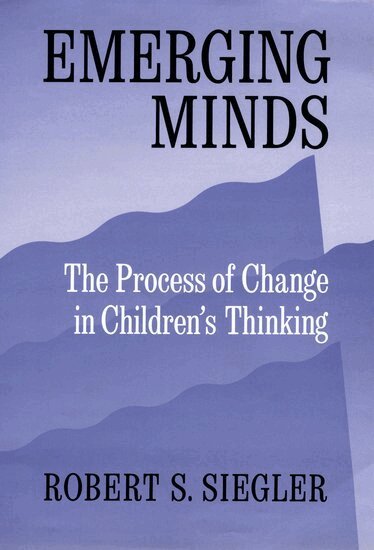
    Emerging Minds

    The Process of Change in Children's Thinking

    AvRobert S. Siegler

    Häftad, Engelska, 1999

    1 049 kr

    Beställningsvara. Skickas inom 5-8 vardagar. Fri frakt över 249 kr.

    Fler format och utgåvor

    E-bok

    673 kr

    Beskrivning

    How do children acquire the vast array of concepts, strategies, and skills that distinguish the thinking of infants and toddlers from that of preschoolers, older children, and adolescents? In this new book, Robert Siegler addresses these and other fundamental questions about children's thinking. Previous theories have tended to depict cognitive development much like a staircase. At an early age, children think in one way; as they get older, they step up to increasingly higher ways of thinking. Siegler proposes that viewing the development within an evolutionary framework is more useful than a staircase model. The evolution of species depends on mechanisms for generating variability, for choosing adaptively among the variants, and for preserving the lessons of past experience so that successful variants become increasingly prevalent. The development of children's thinking appears to depend on mechanisms to fulfill these same functions. Siegler's theory is consistent with a great deal of evidence. It unifies phenomena from such areas as problem solving, reasoning, and memory, and reveals commonalities in the thinking of people of all ages. Most important, it leads to valuable insights regarding a basic question about children's thinking asked by cognitive, developmental, and educational psychologists: How does change occur?

    Produktinformation

    • Utgivningsdatum:1999-06-24
    • Mått:156 x 227 x 18 mm
    • Vikt:445 g
    • Format:Häftad
    • Språk:Engelska
    • Antal sidor:288
    • Förlag:OUP USA
    • ISBN:9780195126631

    Utforska kategorier

    • Pedagogisk psykologi inom Psykologi och pedagogik
    • Barnpsykologi och utvecklingspsykologi inom Psykologi och pedagogik

    Recensioner i media

    This is one of those rare books that promises to change the way that psychologists view the central problem of developmental psychology. . .Siegler provides a cogent and convincing argument that variability is a constant in thought at all levels and provides the key to cutting through to the problem of cognitive change. In addition to providing a wide range of examples showing the centrality of adaptive variability in children's thinking at all levels, Siegler describes a methodology for describing developmental change as it progresses. Few will be able to read it without considering how to apply this model and methods to their own domain of interest. This book will serve as a handbook for anyone who wants to take up the challenge of taking development seriously.

    Innehållsförteckning

    • 1. Whose Children are we Talking About? ; 2. Evolution and Cognitive Development ; 3. Cognitive Variability: The Ubiquity of Multiplicity ; 4. Strategic Development: Trudging up the Staircase or Swimming with the Tide ; 5. The Adaptivity of Multiplicity ; 6. Formal Models of Strategy Choice or Plasterers and Professors ; 7. How Children Generate New Ways of Thinking ; 8. A New Agenda for Cognitive Development