• Fri frakt över 249 kr
  • •
  • Snabba leveranser
  • •
  • Billiga böcker
Kundservice

Du är på sajten för privatpersoner.

Företag, bibliotek eller offentlig verksamhet?

Du handlar på classic.bokus.com, där alla dina funktioner finns intakta.
Till classic.bokus.com
Bokus logotyp. Gå till startsidan.
  • Erbjudanden
  • Nyheter
  • Student
  • Topplistor
  • Barn & ungdom
  • Bokus Play
  • E-böcker
  • Pocketböcker
  • Spel & pussel

10% rabatt på allt med kod: NYSTART10 →

Sidfot

Mina sidor

    Hjälp

    • Kundservice
    • Vanliga frågor och svar
    • Frakt och leverans
    • Retur vid ångerrätt
    • Reklamera vara
    • Betalning
    • Köpvillkor
    • Allmänna villkor
    • Information om webbplatsens tillgänglighet

    Om Bokus

    • Om oss
    • Pressrum
    • För studenter
    • För företag
    • För bibliotek och offentlig verksamhet
    • För leverantörer
    • Hållbarhet

    Populärt

    • Aktuella erbjudanden
    • Presentkort
    • Studentlitteratur
    • Nya böcker
    • Topplistor
    • Signerade böcker
    • Engelska böcker

    Inspiration

    • Boktips
    • BookTok
    • Populära bokserier
    • Barnbokskaraktärer
    • Populära författare
    Logotyp för Bokus
    Följ oss på Facebook (extern länk)Följ oss på Instagram (extern länk)Följ oss på YouTube (extern länk)Följ oss på TikTok (extern länk)
    bokus @ CookiesAnpassa cookiesIntegritetspolicyKöpvillkor
    Till Citymail hemsida (extern länk)Till Budbee hemsida (extern länk)Till Postnord hemsida (extern länk)Till Schenker hemsida (extern länk)Till Early Bird hemsida (extern länk)Till Walleys hemsida (extern länk)
    1. Filosofi och religion
    2. Filosofi
    3. Filosofiska discipliner

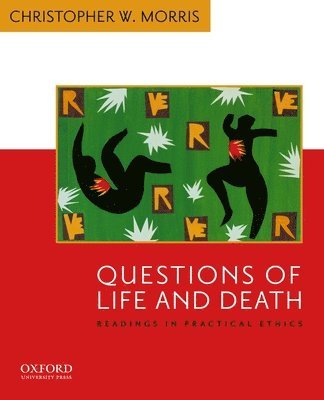
    Questions of Life and Death

    Readings in Practical Ethics

    AvMorris

    Häftad, Engelska, 2011

    2 548 kr

    Beställningsvara. Skickas inom 3-6 vardagar. Fri frakt över 249 kr.

    Beskrivning

    Featuring sixty-seven classic and contemporary selections, Questions of Life and Death: Readings in Practical Ethics is ideal for courses in contemporary moral problems, applied ethics, and introduction to ethics. In contrast with other moral problems anthologies, it deals exclusively with current moral issues concerning life and death, the ethics of killing, and the ethics of saving lives. By focusing on these specific questions-rather than on an unrelated profusion of moral problems-this volume offers a theoretically unified presentation that enables students to see how their conclusions regarding one moral issue can affect their positions on other debates. Questions of Life and Death includes readings on socially and politically relevant controversies including famine, killing in war, terrorism, capital punishment, killing animals, suicide, euthanasia, and abortion. The essays include classic works by Thomas Aquinas, Thomas Hobbes, Immanuel Kant, and John Locke alongside contemporary selections by Thomas Nagel, James Rachels, Peter Singer, Judith Jarvis Thomson, Michael Walzer, and many others.Rather than presenting students with readings on abstract and complex moral theories, editor Christopher Morris has chosen works that reflect "middle-level moral theory" and inspire everyday questions like "What if everyone did that?" Each reading is preceded by a brief introduction and followed by discussion questions. For additional theoretical background, students can consult the final chapter, a "Moral Theory Primer" (by Mark Timmons), which clearly outlines various theories.

    Produktinformation

    • Utgivningsdatum:2011-09-08
    • Vikt:810 g
    • Format:Häftad
    • Språk:Engelska
    • Antal sidor:560
    • Förlag:Oxford University Press Inc
    • ISBN:9780195156980

    Utforska kategorier

    • Filosofiska discipliner inom Filosofi och religion

    Mer om författaren

    Christopher Morris is Professor of Philosophy at the University of Maryland. He is the author of An Essay on the Modern State (1998) and the editor or coeditor of several books, including Amartya Sen (2009) and Violence, Terrorism, and Justice (1991).

    Recensioner i media

    "Questions of Life and Death is an excellent, well-designed textbook. Its chief strength is the coherence of the book as a whole. Rather than simply sampling from a variety of contemporary moral debates, it allows students to systematically explore the ethics of life and death. Because all of the topics in Morris's text share the theme of life and death, it more consistently challenges students to inquire deeply."--Linda Radzik, Texas A&MUniversity"This is the best text I've ever seen that deals with issues of life and death. The introductions will really give students a sense of what hangs on each issue, why the two sides do not see eye to eye, and so on. For the issues selected, Morris has done an excellent job of compiling the best imaginable readings."--David J. Yount, Mesa Community College"This text is a welcome breath of fresh air in the area of teaching applied ethics. Through fifteen extensive chapters, it combines older classic articles with new sparkling thought to engage not only the casual reader or the undergraduate student required to read it, but also the instructor of a class on applied ethics."--Vasileios Tsompanidis

    Innehållsförteckning

    • I. WHY IS KILLING USUALLY WRONG? ; 1. R. M. Hare, "What Is Life?" ; 2. Thomas Aquinas, "Of Murder" ; 3. John Locke, "The Natural State of Men" ; 4. John Paul II, "Thou Shall Not Kill" ; 5. Thomas Hobbes, "The Value of a Man Is His Price" ; 6. Jeff McMahan, "Killing" ; 7. Jonathan Glover, "Not Playing God" ; II. WHY IS DEATH AN EVIL? ; 8. James Rachels, "Death and Evil" ; 9. Thomas Nagel, "Death" ; 10. Robert Nozick, "Death" ; III. WHAT MAKES OUR LIVES GO WELL? ; 11. Thomas Aquinas, "Happiness" ; 12. Thomas Hobbes, "Felicity" ; 13. Robert Nozick, "The Experience Machine" ; 14. Martha Nussbaum, "A Conception of the Human Being: The Central Human Capabilities" ; 15. Derek Parfit, "What Makes Someone's Life Go Best?" ; 16. Thomas Nagel, "The Meaning of Life" ; IV. SAVING LIVES: FAMINE ; 17. Peter Singer, "Famine, Affluence, and Morality" ; 18. David Schmidtz, "Islands in a Sea of Obligation: Limits of the Duty to Rescue" ; V. KILLING IN WAR ; 19. Christopher W. Morris, "Notes on War and Peace" ; 20. Thomas Hobbes, "War of Every One against Every One" ; 21. Thomas Aquinas, "Of War" ; 22. Harry Truman, "Address to the American People, 9 August 1945" ; 23. John Rawls, "Fifty Years after Hiroshima" ; 24. Thomas Nagel, "War and Massacre" ; 25. Michael Walzer, "Supreme Emergency" ; 26. George Orwell, "On the Futility of Limiting War" ; 27. George I. Mavrodes, "Conventions and the Morality of War" ; 28. Jeff McMahan, "The Ethics of Killing in War" ; VI. TERRORISM ; 29. R. G. Frey and Christopher W. Morris, "Violence, Terrorism, and Justice" ; 30. Loren Lomasky, "The Political Significance of Terrorism" ; 31. Douglas Lackey, "The Evolution of the Modern Terrorist State: Area Bombing and Nuclear Deterrence" ; 32. Robert K. Fullinwider, "Terrorism, Innocence, and War" ; VII. CAPITAL PUNISHMENT ; 33. Thomas Aquinas, "Whether it is Lawful to Kill Sinners" ; 34. Immanuel Kant, "The Right of Punishing" ; 35. John Paul II, "The Death Penalty" ; 36. Amnesty International, "The Death Penalty and the Right to Life" ; 37. Hugo Adam Bedau, "The Case against the Death Penalty" ; 38. Louis P. Pojman, "Why the Death Penalty Is Morally Permissible" ; 39. Christopher W. Morris, "Punishment and Loss of Moral Standing" ; VIII. ANIMALS ; 40. Thomas Aquinas, "The Status of Animals" ; 41. Immanuel Kant, "Duties to Animals and Spirits" ; 42. Peter Singer, "All Animals are Equal" ; 43. Peter Carruthers, "Against the Moral Standing of Animals" ; 44. Alastair Norcross, "Puppies, Pigs, and People: Eating Meat and Marginal Cases" ; IX. SUICIDE ; 45. Seneca, "On the Proper Time to Slip the Cable" ; 46. Thomas Aquinas, "Whether it is Lawful to Kill Oneself" ; 47. David Hume, "Of Suicide" ; X. EUTHANASIA ; 48. John Paul II, "The Tragedy of Euthanasia" ; 49. James Rachels, "Active and Passive Euthanasia" ; 50. F. M. Kamm, "A Right to Choose Death? A Moral Argument for the Permissibility of Euthanasia and Physician-assisted Suicide" ; 51. David Velleman, "Against the Right to Die" ; 52. Allen Buchanan, "Intending Death: The Structure of the Problem and Proposed Solutions" ; XI. WHEN DO WE DIE? ; 53. President's Commission, "Defining Death" ; 54. David DeGrazia, "Biology, Consciousness, and the Definition of Death" ; 55. Jeff McMahan, "When Do We Die, or Cease to Exist?" ; XII. ABORTION ; 56. John Paul II, "The Unspeakable Crime of Abortion" ; 57. Judith Jarvis Thomson, "A Defense of Abortion" ; 58. Mary Ann Warren, "On the Moral and Legal Status of Abortion" (and "Postscript on Infanticide," 1982) ; 59. Donald Marquis, "Why Abortion Is Immoral" ; 60. Jeff McMahan, "Beginnings" ; 61. Eugene Mills, "The Egg and I: Conception, Identity, and Abortion" ; 62. Paul Gomberg, "Abortion and the Morality of Nurturance" ; XIII. MAKING PEOPLE: GENETIC ENGINEERING, CLONING ; 63. Leon Kass, "Preventing a Brave New World" ; 64. Robert George and Alfonso Gomez-Lobo, "Human Cloning and Human Dignity" ; 65. Michael Tooley, "The Moral Status of Cloning" ; XIV. FUTURE GENERATIONS ; 66. Gregory S. Kavka, "The Paradox of Future Individuals" ; XV. MORAL THEORIES ; 67. Mark Timmons, "A Moral Theory Primer"