• Fri frakt över 249 kr
  • •
  • Snabba leveranser
  • •
  • Billiga böcker
Kundservice

Du är på sajten för privatpersoner.

Företag, bibliotek eller offentlig verksamhet?

Du handlar på classic.bokus.com, där alla dina funktioner finns intakta.
Till classic.bokus.com
Bokus logotyp. Gå till startsidan.
  • Erbjudanden
  • Nyheter
  • Student
  • Topplistor
  • Barn & ungdom
  • Bokus Play
  • E-böcker
  • Pocketböcker
  • Spel & pussel

Må bättre, för mindre! Upp till 50% rabatt på hälsoböcker

Sidfot

Mina sidor

    Hjälp

    • Kundservice
    • Vanliga frågor och svar
    • Frakt och leverans
    • Retur vid ångerrätt
    • Reklamera vara
    • Betalning
    • Köpvillkor
    • Allmänna villkor
    • Information om webbplatsens tillgänglighet

    Om Bokus

    • Om oss
    • Pressrum
    • För studenter
    • För företag
    • För bibliotek och offentlig verksamhet
    • För leverantörer
    • Hållbarhet

    Populärt

    • Aktuella erbjudanden
    • Presentkort
    • Studentlitteratur
    • Nya böcker
    • Topplistor
    • Signerade böcker
    • Engelska böcker

    Inspiration

    • Boktips
    • BookTok
    • Populära bokserier
    • Barnbokskaraktärer
    • Populära författare
    Logotyp för Bokus
    Följ oss på Facebook (extern länk)Följ oss på Instagram (extern länk)Följ oss på YouTube (extern länk)Följ oss på TikTok (extern länk)
    bokus @ CookiesAnpassa cookiesIntegritetspolicyKöpvillkor
    Till Citymail hemsida (extern länk)Till Budbee hemsida (extern länk)Till Postnord hemsida (extern länk)Till Schenker hemsida (extern länk)Till Early Bird hemsida (extern länk)Till Walleys hemsida (extern länk)
    1. Juridik
    2. Internationell rätt

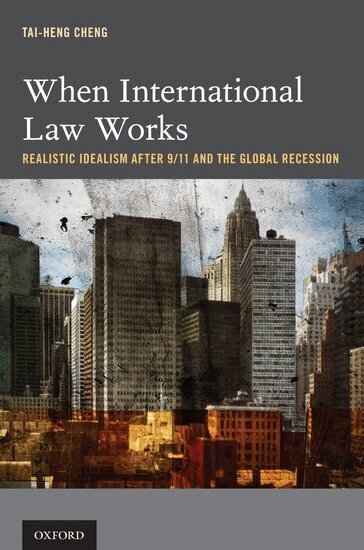
    When International Law Works

    Realistic Idealism After 9/11 and the Global Recession

    AvTai-Heng Cheng

    Inbunden, Engelska, 2012

    Del i serien Academic

    1 598 kr

    Beställningsvara. Skickas inom 5-8 vardagar. Fri frakt över 249 kr.

    Beskrivning

    When International Law Works stands to change the way states and scholars look at this contentious topic. In this seminal work, Professor Tai-Heng Cheng addresses the current international law debates and transcends them. Responding to influential statements on international law by such scholars as Goldsmith, Posner, O'Connell, and Guzman, Cheng presents a new framework that decisionmakers should consider when they confront an international problem that implicates the often competing policies and interests of their own communities and global order. Instead of advocating for or against international law as legitimate or binding, as many commentators do, Cheng adknowledges both its shortcomings while presenting a practical means of deciding whether compliance in a given circumstance is beneficial, moral, or necessary. In this manner Cheng shows how it is possible for decisionmakers to take international law and its limitations seriously without actually needing to determine whether or not international law is "law."To demonstrate how his new proposal for approaching international law would work in a real crisis, Cheng provides numerous case studies from contemporary history that test his theory. Ranging topically from the current global economic crisis to the West's war on Islamist terrorism, these detailed and demonstrative case studies set this book apart from similar works of international legal scholarship. By combining theory with practice, When International Law Works gives lawyers, judges, policymakers, academics and students 'real world' guidance on how to face new global problems. In doing so, this new book challenges readers to rethink the role of law in an increasingly crisis-driven world.

    Produktinformation

    • Utgivningsdatum:2012-02-16
    • Mått:236 x 163 x 27 mm
    • Vikt:658 g
    • Format:Inbunden
    • Språk:Engelska
    • Serie:Academic
    • Antal sidor:364
    • Förlag:OUP USA
    • ISBN:9780195370171

    Utforska kategorier

    • Internationell rätt inom Juridik
    • Rättshistoria inom Juridik

    Mer om författaren

    Tai-Heng Cheng is Professor of International Law and Director of the Institute for Global Law, Justice, and Policy at New York Law School. His published scholarship includes the book State Succession and Commercial Obligations (2006) and articles in the University of Illinois Law Review, the Cornell Journal of International Law, and the Michigan Journal of International Law. Professor Cheng is an elected member of the American Society of International Law's Executive Council, and co-chair of ASIL's 2011 Annual Meeting and chair of its 2012 Awards Committee. He holds degrees from Yale Law School and Oxford University.

    Recensioner i media

    The book opens a door to thinking further about how international law plays a significant role in the 21st century. ... Cheng shows his academic courage by bravely confronting tough issues, and makes frank and honest comments about them.

    Innehållsförteckning

    • Chapter One: Confronting Anxieties About International Law ; I. The Relevance and Irrelevance of Law ; II. Contemporary Debates ; III. Thesis ; A. The Central Case ; B. Effectiveness ; C. Legitimacy ; IV. Terms ; V. Outline of Inquiry ; VI. Conclusion ; Chapter Two: The Politics of Theorizing ; I. A Historical Survey ; II. Antiquity ; III. Middle Ages ; IV. Early Modernism ; V. Late Modernism ; VI. Post-Modernism ; VII. Choices in Theorizing ; VIII. Political and Normative Values in Theorizing ; IX. Conclusion ; Chapter Three: Legalism and Morality ; I. Framing the Inquiry ; II. Choices ; III. Legalism ; A. The UN Security Council ; B. International Court of Justice ; C. Conclusions About Legalism ; IV. The Morality of International Law ; A. Basic Values ; B. Moral Obligations ; C. Realist Critiques ; D. Liberal Critique ; E. Legal Obligations ; V. Guidance to Officials ; A. Morality ; B. Institutional Functions ; C. Effectiveness ; D. The Indeterminacy Paradox ; VI. Conclusion ; Chapter Four: Judges ; I. Theory ; A. Judicial Functions ; B. General Morality ; C. Specific Morality ; D. Effectiveness ; II. Praxis ; A. The Pedra Branca Case ; 1. Legalism ; 2. Morality ; 3. Effectiveness ; B. The Nicaragua Case ; 1. Legalism ; a. Provisional Measures ; b. El Salvador's Intervention ; c. Decision on Jurisdiction ; d. Merits ; 2. Effectiveness ; 3. Morality ; 4. Feedback Loops ; C. The Avena Case ; 1. Legalism ; 2. Effectiveness ; 3. Morality ; 4. Feedback Loops ; III. Conclusion ; Chapter Five: Arbitrators ; I. Theory ; A. Arbitral Functions ; B. General Morality ; C. Specific Morality ; D. Effectiveness ; II. Praxis. ; A. United States-Stainless Steel (Mexico), Implementing Award ; B. Loewen Group, Inc. v. United States of America ; C. CMS Gas Transmission Co. v. Argentine Republic, Decision on Annulment ; III. Conclusion ; Chapter Six: Regulators ; I. Theory ; II. Praxis ; A. The Global Financial Crisis ; B Responses and Decisions of Regulators ; C. The Financial Stability Board ; D. Guidance for Regulators ; III. Conclusion ; Chapter Seven: Legal Advisors ; I. Theory ; A. The Legal Advisor's Functions ; B. General Morality ; C. Specific Morality ; D. Interests and Effectiveness ; II. Praxis ; A. Abu Ghraib Prison ; B. Waterboarding ; 1. Factual Assumptions ; 2. International Legal Prescriptions ; 3. The Interrogation Memoranda ; 4. General Morality ; 5. Specific Morality ; 6. Guidance to Advisors ; 7. Alternative Scenarios ; III. Conclusion ; Chapter Eight: Officials ; I. Theory ; II. Praxis ; A. The 1990 Gulf War ; 1. Specific Morality ; 2. General Morality and Effectiveness ; 3. Feedback Loops ; B. NATO Bombing of the Federal Republic of Yugoslavia ; 1 General Morality ; 2. Specific Morality ; 3. Feedback Loops ; C. The 2003 Invasion of Iraq ; 1. General Morality ; 2. Specific Morality ; 3. Feedback Loops ; III. Conclusion ; Chapter Nine: Law Beyond Laws ; I. Reframing Debates ; II. Situating Among Theories ; III. Results from Case Studies ; IV. Conclusion