• Fri frakt över 249 kr
  • •
  • Snabba leveranser
  • •
  • Billiga böcker
Kundservice

Du är på sajten för privatpersoner.

Företag, bibliotek eller offentlig verksamhet?

Du handlar på classic.bokus.com, där alla dina funktioner finns intakta.
Till classic.bokus.com
Bokus logotyp. Gå till startsidan.
  • Erbjudanden
  • Nyheter
  • Student
  • Topplistor
  • Barn & ungdom
  • Bokus Play
  • E-böcker
  • Pocketböcker
  • Spel & pussel

10% rabatt på allt med kod NYSTART10 →

Sidfot

Mina sidor

    Hjälp

    • Kundservice
    • Vanliga frågor och svar
    • Frakt och leverans
    • Retur vid ångerrätt
    • Reklamera vara
    • Betalning
    • Köpvillkor
    • Allmänna villkor
    • Information om webbplatsens tillgänglighet

    Om Bokus

    • Om oss
    • Pressrum
    • För studenter
    • För företag
    • För bibliotek och offentlig verksamhet
    • För leverantörer
    • Hållbarhet

    Populärt

    • Aktuella erbjudanden
    • Presentkort
    • Studentlitteratur
    • Nya böcker
    • Topplistor
    • Signerade böcker
    • Engelska böcker

    Inspiration

    • Boktips
    • BookTok
    • Populära bokserier
    • Barnbokskaraktärer
    • Populära författare
    Logotyp för Bokus
    Följ oss på Facebook (extern länk)Följ oss på Instagram (extern länk)Följ oss på YouTube (extern länk)Följ oss på TikTok (extern länk)
    bokus @ CookiesAnpassa cookiesIntegritetspolicyKöpvillkor
    Till Citymail hemsida (extern länk)Till Budbee hemsida (extern länk)Till Postnord hemsida (extern länk)Till Schenker hemsida (extern länk)Till Early Bird hemsida (extern länk)Till Walleys hemsida (extern länk)
    1. Samhälle och politik
    2. Sociologi och antropologi
    3. Antropologi

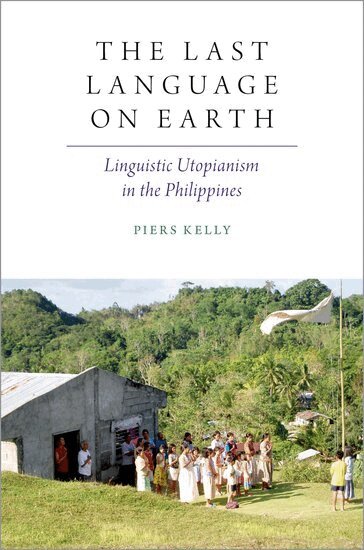
    The Last Language on Earth

    Linguistic Utopianism in the Philippines

    AvPiers Kelly

    Häftad, Engelska, 2022

    Del i serien Oxford Studies in the Anthropology of Language

    504 kr

    Beställningsvara. Skickas inom 5-8 vardagar. Fri frakt över 249 kr.

    Fler format och utgåvor

    Inbunden

    1 236 kr

    Beskrivning

    The Last Language on Earth is an ethnographic history of the disputed Eskayan language, spoken today by an isolated upland community living on the island of Bohol in the southern Philippines. After Eskaya people were first 'discovered' in 1980, visitors described the group as a lost tribe preserving a unique language and writing system. Others argued that the Eskaya were merely members of a utopian rural cult who had invented their own language and script. Rather than adjudicating outsider polemics, this book engages directly with the language itself as well as the direct perspectives of those who use it today. Through written and oral accounts, Eskaya people have represented their language as an ancestral creation derived from a human body. Reinforcing this traditional view, Piers Kelly's linguistic analysis shows how a complex new register was brought into being by fusing new vocabulary onto a modified local grammar. In a synthesis of linguistic, ethnographic, and historical evidence, a picture emerges of a coastal community that fled the ravages of the U.S. invasion of the island in 1901 in order to build a utopian society in the hills. Here they predicted that the world's languages would decline leaving Eskayan as the last language on earth. Marshalling anthropological theories of nationalism, authenticity, and language ideology, along with comparisons to similar events across highland Southeast Asia, Kelly offers a convincing account of this linguistic mystery and also shows its broader relevance to linguistic anthropology. Although the Eskayan situation is unusual, it has the power to illuminate the pivotal role that language plays in the pursuit of identity-building and political resistance.

    Produktinformation

    • Utgivningsdatum:2022-05-25
    • Mått:157 x 236 x 23 mm
    • Vikt:477 g
    • Format:Häftad
    • Språk:Engelska
    • Serie:Oxford Studies in the Anthropology of Language
    • Antal sidor:328
    • Förlag:OUP USA
    • ISBN:9780197509920

    Utforska kategorier

    • Antropologi inom Samhälle och politik
    • Språkvetenskap och lingvistik inom Språk och ordböcker

    Mer om författaren

    Piers Kelly is a linguistic anthropologist whose research centers on the varied uses of writing and graphic codes in non-state societies, especially in West Africa, Southeast Asia, and Australia. He has previously worked as a linguist with the National Commission on Indigenous People, Philippines, and is currently affiliated with the Centre for Australian Studies at the University of Cologne, the Max Planck Institute for the Science of Human History in Leipzig, and the University of New England in Armidale, Australia. He is a co-editor of Skin, Kin and Clan: The Dynamics of Social Categories in Indigenous Australia (ANU Press, 2018).

    Recensioner i media

    This fascinating work of linguistic anthropology is based on both the author's fieldwork in the Philippines and his meticulous and wide-ranging research...this engaging monograph is likely to be of interest to students and scholars in the fields of anthropology, sociology, history, political science, linguistics, and Southeast Asian studies.

    Innehållsförteckning

    • Maps Acknowledgments A Note on Terminology Prologue Chapter One: Introduction What this Book is About What Pinay Understood About Language A Language Forgotten, a Language Foretold PART I: Locating the Eskaya Chapter Two: Language, Literacy and Revolt in the Southern Philippines Pre-contact Visayan Literacy The 'Problem' of Language Diversity in the Colonial and Early Commonwealth periods (1593-1937) Shamanic Rebellion and Indigenous Outlaws in Bohol (1621-1829) Enter the Eskaya (1902-1937) Chapter Three: Contact and Controversy First Contact Media Institutional Tribehood A Formal Alliance and a Lost Report Eskaya Responses and a New Research Agenda PART II: Language, Letters, Literature Chapter Four: How Eskayan is Used Today Bohol in the Visayas Language use in Bohol A picture of the Fieldsite The Spoken and Sung Somains of Eskayan The Written Domains of Eskayan and Ideologies of Writing Chapter Five: The Writing System Writing Eskayan Sounds Numbers Script The Past and Future of Eskayan writing Chapter Six: Words and Their Origins Eskayan Grammar The Lexicon Sources of Inspiration Pinay's Lexical Agenda Chapter Seven: Eskaya Literature and Traditional Historiography The Origins and Scope of Eskaya literature Language History in Eskaya Literature: A Summary and Analysis Discussion PART III: Insurrection and Resurrection Chapter Eight: From Pinay to Mariano Datahan (and Back Again) Datahan and the Origins of the Biabas Encampment The Return of Militant Cults 1902-1922 Accommodation with the US Regime ca. 1914-1937 Datahan's Final War and Posthumous legacy Chapter Nine: Eskayan Revealed: A Scenario The Rise of English in Bohol as a Catalyst for Eskayan How Pinay's Language was Revealed Prophecy, Prolepsis and Time Depth Summary Chapter Ten: Conclusion: The First Language and the Last Word Imagining Indigeneity from Above: The View from the Helicopter The Form of Eskayan and the Identity of Pinay Imagining Indigeneity from Below: The View from the Village Regional Parallels The (Re)invention of Linguistic Tradition The Future of Eskayan References Glossary of Eskayan Terms Used in this Volume Index